

Lowering CPA in performance marketing campaigns isn’t about one big hack. It’s about noticing the little things that quietly add up. Reaching the right audience matters most; throwing money at uninterested clicks rarely works. Then comes the creative: clear, punchy ads that get rotated before people tune out.
Landing pages need to load fast and guide users toward a single action. Small tweaks in bids, retargeting warm leads, and pausing underperforming campaigns all chip away at costs.
Over time, these adjustments compound, making a noticeable difference in efficiency. This guide walks through practical strategies, common mistakes, tools, and examples that show how real campaigns bring CPA down without blowing the budget.
Table of Contents
Introduction
CPA, or Cost Per Acquisition, is one of those metrics that keeps marketers awake at night. Not because it’s complicated, but because it hits straight where it counts: your bottom line. You can run a campaign with tons of clicks, tons of traffic… and still feel like you’re bleeding money if the conversions aren’t there.
Bringing CPA down isn’t about a single hack. It’s about understanding the levers that move it, being patient, and making incremental adjustments. Lower CPA means budgets stretch further, campaigns feel less like a gamble, and scaling becomes possible without constantly biting your nails.
Clicks and impressions are nice. They make dashboards look busy. But conversions? That’s where the rubber meets the road. If that number’s high, it usually points to something somewhere in the funnel that needs fixing: audience, creative, landing page, or all of the above.
Understanding CPA in Performance Marketing
Let’s break it down, because knowing CPA superficially isn’t enough.
CPA is basically how much it costs to get someone to do what you want: buy, sign up, or download. The math is simple:
CPA = Total Spend ÷ Number of Conversions
Simple, yes. But context matters. $30 CPA might be fine for a high-ticket product, awful for a cheap one.
A quick note on related metrics:
CPC (Cost Per Click): Paying for clicks doesn’t mean people convert. You can have a ton of clicks and zero customers.
CPL (Cost Per Lead): Leads are closer to value, but some will never turn into buyers.
CPA (Cost Per Acquisition): This is the one that actually tells you what’s happening at the conversion level.
Why keep an eye on it? Because it tells you quickly what’s working and what’s not. If CPA creeps up, something is leaking somewhere. Maybe the audience isn’t right. Maybe the ad isn’t resonating. Maybe the landing page is confusing. Or maybe a bit of all three.
CPA isn’t just a number on a report; it’s a compass. Ignore it, and campaigns can look okay while quietly draining your budget.
Factors That Influence CPA in Performance Marketing Campaigns
There’s no single reason why CPA goes up or down. It’s usually a mix of several things. Knowing the usual suspects helps you troubleshoot.
Audience Relevance and Segmentation
Throw ads at the wrong people, and you’re paying for clicks that will never convert. Audience tuning is huge; think interests, behavior, demographics, even small hints from past engagement.
Ad Creative and Messaging
Even with perfect targeting, weak ads fail. Copy that doesn’t speak to the audience, or visuals that don’t catch attention, tank conversion rates. The messaging needs to hit right, but not overcomplicate things.
Landing Page Experience
People click ads and expect the next step to be easy. Slow pages, cluttered design, unclear CTAs… those all push CPA higher. Often, a simple, focused page converts better than a flashy but confusing one.
Bid Strategy and Budget Allocation
Overpaying for competitive audiences or ignoring high-performing segments can spike CPA. Small bid tweaks often make a surprisingly big difference.
Seasonality and Market Shifts
CPA isn’t fixed. Holidays, economic changes, and even competitor activity can move the needle. What worked last month might cost more this month. Watching trends is key.
The point: CPA isn’t random. It reacts to the choices you make across targeting, creative, landing pages, and spending. Tweak those thoughtfully, and you’ll see it move in the right direction. Ignore them, and even campaigns that “look good” can quietly eat your budget.
How to Reduce CPA in Performance Marketing: Step-by-Step Strategies
Bringing down CPA is never about a single trick. It’s more like a bunch of small levers; tweak one thing here, adjust something there, and over time, it adds up. Campaigns are messy, people behave differently, and sometimes what works today stops working tomorrow. So, it’s a lot about testing, watching, and adjusting.
1. Optimize Audience Targeting
You can have the flashiest creative person in the world, but if it lands in front of the wrong people, it won’t matter.
Lookalike Audiences: Targeting people similar to your best customers usually gives better results. It’s not perfect, but it’s a starting point.
Retarget Past Visitors: Folks who’ve already poked around your site are more likely to convert than random clicks. Nudge them gently; different messaging sometimes works better.
Segment Thoughtfully: Don’t just lump everyone together. Age, location, behavior, interests; they all matter. Tiny changes can make a surprisingly big difference in CPA.
The trick is not to reach everyone. It’s about reaching the right ones, even if it feels counterintuitive.
2. Improve Ad Creative and Copy
A lot of people underestimate how much copy and creative actually affect CPA. Even a well-targeted ad can flop if the message doesn’t click.
- Clarity Wins: Say what the user gets, quickly. Don’t overcomplicate.
- Test Variations: Headlines, images, even tiny tweaks in wording; test them. You’ll be surprised at what moves the needle.
- Rotate Creatives: Audiences get tired. If the same ad keeps showing, conversions drop. Switching things up can help.
Ads that work aren’t always the prettiest; they’re the ones that make people act fast.
3. Enhance Landing Pages for Conversion
A click is cheap if it doesn’t turn into something real. That’s where the landing page comes in.
Speed and Mobile-Friendly: If a page drags or looks clunky on a phone, people leave. Fast, simple, easy.
Clear Calls-to-Action: One main action per page. Too many buttons? Confusing. CPA goes up.
Social Proof: Reviews, testimonials, trust badges; they don’t have to be fancy, but they reassure visitors and push conversions.
Think of the landing page as the final handoff. If it’s confusing or slow, all the targeting and creative work goes to waste.
4. Tweak Bid Strategies
How much you pay can swing CPA big time. But it’s not about just lowering bids blindly.
Smart Bidding: Let the system adjust for performance in the moment, but watch it. It’s not foolproof.
CPC vs CPM: Sometimes paying per click is better, sometimes paying for impressions makes more sense. Know the difference.
Adjust for Winners: High-performing segments deserve more budget. Low performers? Pull back before they drain money.
Even small adjustments here and there can make a noticeable dent in CPA over time.
5. Keep an Eye on Campaigns
Campaigns don’t run themselves. And no two days are the same.
Track CPA Regularly: Look at what’s working and what isn’t. Don’t just check once a week and hope for the best.
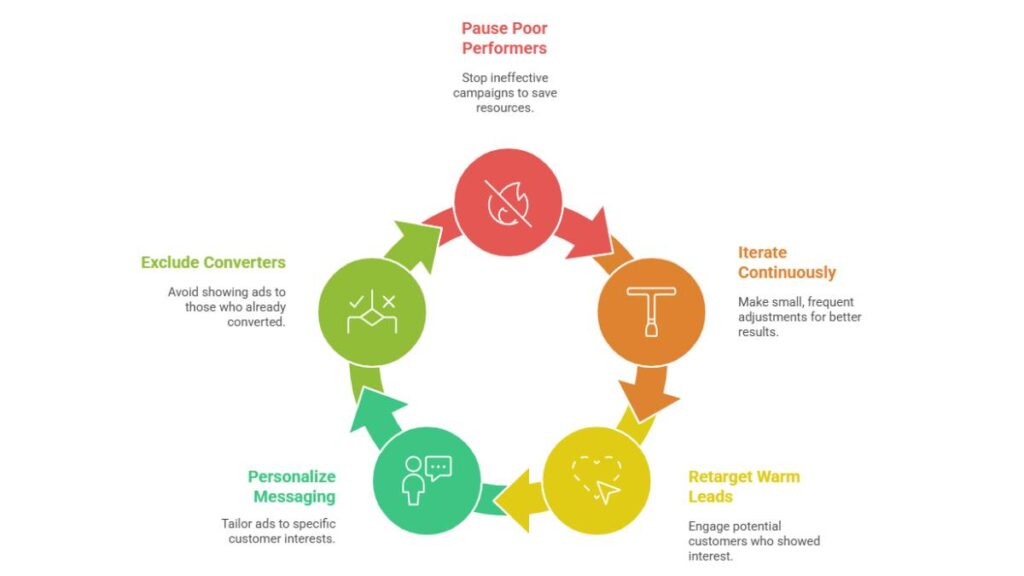
Pause Poor Performers: If an audience or ad is burning money without conversions, stop it. Fast
Iterate Continuously: Small, repeated tweaks beat one big change once in a while. It’s a bit like gardening. You water, you prune, you adjust for the light. Ignore it, and weeds, aka wasted spend, take over.
6. Retargeting and Remarketing
The people who already know you are gold. Don’t leave them hanging.
Warm Leads: Retarget those who engaged but didn’t convert. Sometimes all they need is a little reminder.
Personalized Messaging: Speak to what they looked at, not a generic ad. It works better.
Exclude Converters: Don’t waste money showing ads to people who already acted. Just… don’t.
Retargeting isn’t flashy, but it often gives the quickest win in lowering CPA.
The point here: there’s no magic switch. CPA goes down through a bunch of small, smart, practical moves. Done right, over time, the difference can be huge.

Apply Now: Performance Marketing Course
Common Mistakes That Increase CPA
Sometimes campaigns start off okay and then, slowly, costs creep up. Usually, it’s not one big mistake; it’s a bunch of small things stacking up.
Over-Segmentation: It sounds smart to break your audience into tiny groups, right? But too much splitting often means higher costs and messy data. The numbers start jumping around, and suddenly your CPA spikes.
Ad Fatigue: Running the same ad to the same people over and over? They stop noticing, click less, and conversions drop. Simple as that. Sometimes, a fresh creative is all it takes to breathe life back into a campaign.
Landing Page Issues: Slow load times, confusing layouts, unclear calls to action… these things kill conversions silently. People leave before they even see what you’re offering.
Ignoring Data: Assuming what “should” work instead of actually checking the numbers is risky. Some campaigns quietly bleed money because no one bothered to notice underperforming segments.
Catch these early, and you prevent unnecessary spending. Let them linger, and CPA quietly climbs.
Tools and Platforms to Help Reduce CPA
Tools don’t magically lower CPA. They’re just helpers; you still have to make smart calls. But the right ones can make life easier.
Smart Bidding Options: Platforms like Google Ads and Meta allow automatic bid adjustments based on performance. Not foolproof, but they save a lot of manual tweaking.
Analytics Dashboards: Keeping track of conversions, audience behavior, and cost trends matters. Sometimes just spotting a pattern early prevents wasted spend.
Heatmaps and User Behavior Tools: A simple scroll map or click tracking can show where visitors get stuck. Fixing one tiny bottleneck can have a surprisingly big impact on conversions.
Testing Features: Platforms let you run multiple creatives or landing pages at once. Use it to see what actually works, not what looks good on paper.
Bottom line: tools are only as good as the decisions you make with them. Don’t collect dashboards; you need to act on the insights.
Measuring Success: KPIs for CPA Reduction
Watching CPA alone isn’t enough. You need context.
CPA Trends Over Time: Track changes rather than one-off numbers. A spike or drop tells a story about what’s happening in your campaign.
Conversion Rate: Low CPA is nice, but if conversions are tiny, it doesn’t matter. Watch both.
ROAS and Customer Lifetime Value: Sometimes, a slightly higher CPA is okay if customers stick around and buy again. Don’t look at CPA in isolation.
Regular Monitoring: Campaigns drift. If you check numbers regularly, you can tweak bids, pause poor performers, and prevent runaway costs.
The point is simple: track, watch, and adjust. Small, consistent attention usually beats huge overhauls done sporadically.
Conclusion
Reducing CPA isn’t glamorous. It’s not a “one trick” thing. Mostly, it’s small, steady adjustments; done consistently, that really move the needle. Getting the right audience is key; spend money on clicks that might actually convert, not everyone who happens to scroll past. Ads should stay simple and rotate often, or people tune out fast.
Landing pages matter more than most give them credit for; fast, clear, with one obvious action. Keep an eye on campaigns. Pause the weak performers, tweak what isn’t working, and don’t wait for costs to blow up. Retargeting warm leads helps, but showing ads to people who already bought? Waste. At the end of the day, lowering CPA is a slow grind, not a flashy win. Patient, repeated small actions almost always beat tricks, and sticking to the basics pays off over time.
FAQ Section
1. What’s a good CPA benchmark?
It really depends. High-ticket software has different numbers than small e‑commerce stuff. Instead of obsessing over averages, track your own campaigns. If CPA goes down and conversions hold, or better yet, rise, you’re moving in the right direction. Past performance matters more than generic industry numbers.
2. How long does it take to see improvements?
Some changes show effects in a few days. Others take weeks, especially if the audience is large or the campaign is broad. The trick is consistency: keep watching trends and adjusting. Don’t expect instant magic; results take a bit of patience.
3. Can CPA be reduced automatically?
Not fully. Automation helps with bids or delivery, but someone still has to interpret the numbers, pause poor performers, and decide what signals really matter. Machines assist, they don’t replace thinking.
4. How does ad frequency affect CPA?
Show the same ad too often, and people ignore it. Engagement drops, conversions drop, CPA climbs. Rotating creatives or tweaking messaging keeps the audience interested and prevents costs from creeping up unnoticed.
5. Which audience segments usually convert the cheapest?
Warm audiences, people who’ve interacted before, like previous website visitors or cart abandoners, usually cost less to convert. Cold traffic is almost always more expensive. Focusing on warm leads is generally the safer, cheaper path.
6. How does landing page design affect CPA?
Slow, cluttered, or confusing pages kill conversions silently. Users click, get frustrated, and leave. Clean, fast pages with one clear action convert better, which directly lowers CPA. Small changes can save a lot of money.
7. Can remarketing reduce CPA?
Yes. People who know your brand are cheaper to convert than strangers. Smart retargeting, messaging based on past activity, usually brings them back at a lower cost.
8. What’s the difference between lowering CPA and increasing ROI?
CPA shows how much each acquisition costs. ROI looks at the value gained from that acquisition. You can lower CPA, but still have poor ROI if customers don’t spend much or stick around. Both need attention.
9. How often should campaigns be reviewed?
Weekly is usually enough. Campaigns drift, and audiences change fast. CPA can creep up silently if left unchecked. Pausing weak ads and shifting budgets quickly prevents waste.
10. Are automated bidding strategies always better?
Not really. They help, especially with bigger campaigns, but they’re not perfect. Manual checks, guardrails, and tweaks are still necessary to make sure spend goes where it counts.