
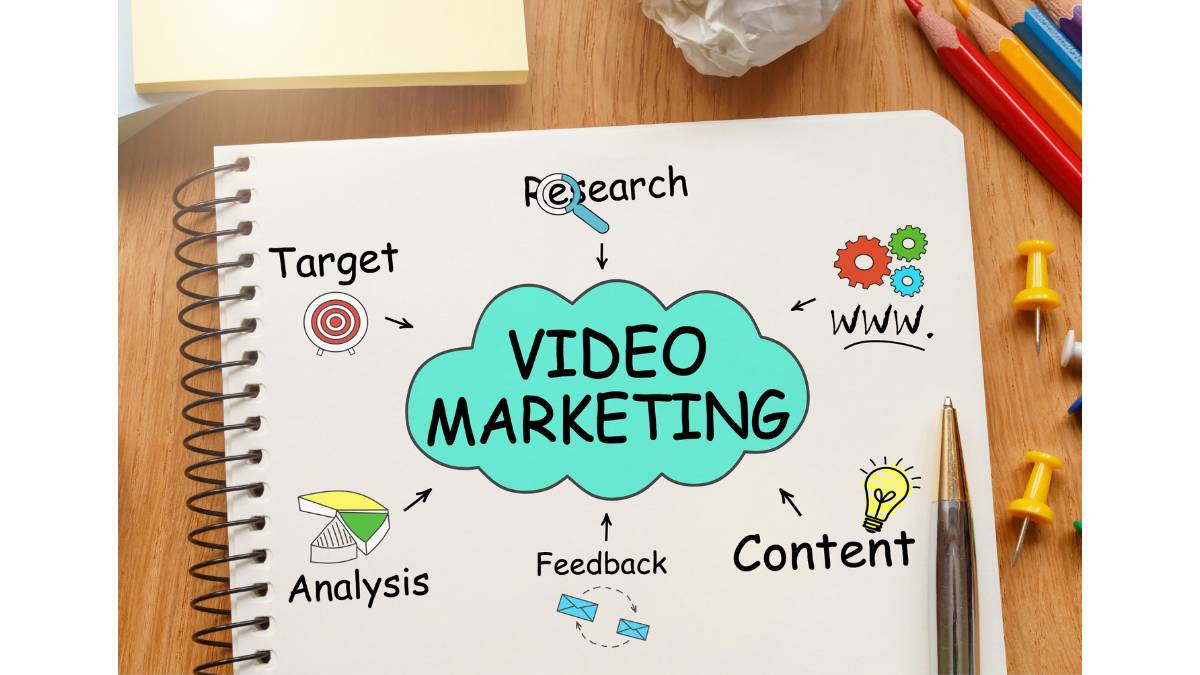
A video marketing strategy isn’t just about recording something and hoping it sticks. It’s about figuring out why a video matters, who actually needs to see it, and what should happen once it does. This guide looks at the whole picture;from getting a feel for your audience, picking the platforms that make sense, to choosing the right video type for the moment. It talks through production, distribution, and measuring results in a way that’s grounded, not theoretical. Small, careful choices;when to post, how long, how to frame a message;end up mattering way more than flashy edits. Over time, that’s what turns views into trust and engagement.
Table of Contents
Introduction to Video Marketing Strategy
What Is a Video Marketing Strategy?
A video marketing strategy is the thinking that happens before the camera turns on and long after the video goes live. It’s the difference between “let’s post something this week” and knowing exactly why a piece of video exists, who it’s meant to reach, and what should happen after someone watches it.
Without that thinking, video turns into noise. Content gets made because competitors are doing it or because a platform is pushing a new format. With a strategy in place, every video earns its spot. Some are built to introduce the brand. Others exist to explain, reassure, or nudge someone closer to a decision. All of them serve a purpose.
Why an Intentional, Documented Strategy Matters
Video is one of those things that feels deceptively simple. Press record. Upload. Repeat. That’s usually where problems start.
When there’s no written strategy, teams chase trends instead of outcomes. Messaging shifts depending on who’s posting. Results are hard to explain, let alone improve. A documented approach creates guardrails. It helps teams say no to ideas that look exciting but don’t actually support the business.
More importantly, it brings consistency. Not just visual consistency, but clarity of voice, tone, and intent. Over time, that’s what builds trust. Audiences can tell when a brand knows what it’s trying to say, even if the execution isn’t perfect every time.
How Video Strategy Fits into Your Overall Digital Marketing Plan
Video doesn’t live in a separate box. Or at least, it shouldn’t.
A solid video strategy connects directly to content marketing, social media, email, sales enablement, and even customer support. One core idea can show up in multiple places, shaped to fit the context. A long-form explanation becomes short clips. A webinar turns into onboarding material. A customer question inspires a quick social video.
When video is treated as part of the larger marketing system, it stops competing for resources and starts amplifying everything else.
Why Video Marketing Strategy Is Critical in 2026
Video isn’t optional anymore. It’s often the first interaction people have with a brand, whether that’s a short clip in a feed or a longer explainer they actively searched for.
What’s changed is behavior. People expect answers in video form. They compare products through video. They judge credibility based on how clearly something is explained on screen. Text still matters, but video sets the tone.
In 2026, brands without a clear video strategy don’t just fall behind on visibility. They struggle to explain themselves. And that’s a much bigger problem.
Video Marketing Strategy Goals and Objectives
Setting SMART Video Marketing Goals
Vague goals lead to vague results. “More views” sounds nice, but it doesn’t guide decisions. Strong video goals are specific enough to influence what gets made and how success is judged.
Some videos exist to introduce the brand to new audiences. Others are meant to answer questions, remove doubts, or help someone feel confident taking the next step. Post-purchase videos serve a different role entirely, helping customers get value and stay engaged.
When goals are clear, the creative decisions become easier. Length, tone, platform, and even pacing start to make sense. Without that clarity, everything blends together.
Aligning Video Strategy with Business KPIs
Not every video needs to sell something directly. That’s a common misconception. But every video should connect to a business outcome, even if the impact is indirect.
Awareness videos are about reach and retention. Educational content is about engagement and intent. Decision-stage videos often tie back to conversions, pipeline, or sales conversations. Retention content shows up in customer health and repeat usage.
The mistake is measuring everything the same way. A strategy works when the right metrics are applied to the right type of video. Context matters.
Understanding Your Target Audience for Video
Audience Research and Persona Development
Good video doesn’t feel generic. It feels familiar. Like it was made with a specific person in mind.
That comes from understanding more than age or job title. It’s about knowing how people prefer to learn, what frustrates them, and what kind of content they actually finish watching. Some audiences want quick clarity. Others want depth. Some respond to polished storytelling. Others prefer straightforward explanations with no fluff.
When those nuances are ignored, even well-produced videos fall flat.
Using Analytics and Observation to Inform Strategy
Audience insight isn’t a one-time exercise. It shows up in small signals. Where viewers drop off. Which videos get saved or shared. What questions keep appearing in comments or sales calls.
Paying attention here keeps the strategy grounded. It also prevents teams from relying on assumptions that sound logical but don’t match real behavior.
Audience Intent Mapping
Not everyone watching a video is ready for the same message. Some are just discovering a problem. Others are comparing options. A smaller group is already close to deciding.
A thoughtful video strategy accounts for that. It doesn’t push everyone toward a sale. It meets people where they are and moves them forward, one step at a time.
When intent and content line up, video stops feeling like marketing. It feels useful. And that’s usually when it starts working.
Core Types of Videos in Your Strategy
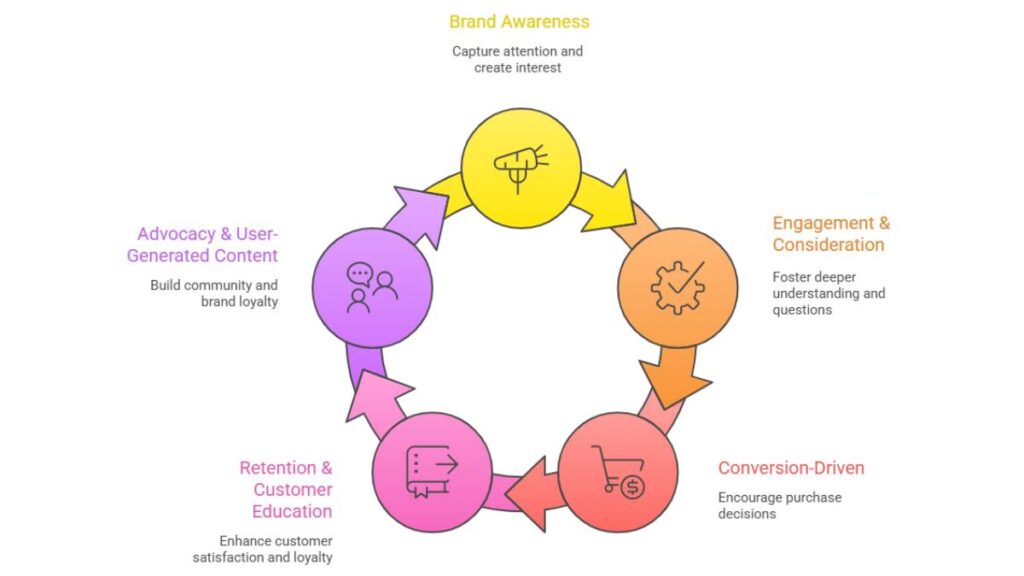
This is usually where things go sideways. Too many teams treat “video” as one thing, when in reality it plays very different roles depending on where someone is in the journey. Mixing those roles leads to confused messaging and underwhelming results. Clear separation helps. It also makes planning easier.
Brand Awareness Video Types
Brand awareness videos aren’t here to explain everything. They’re here to make someone pause and think, okay, this feels relevant.
Introductory brand story videos work best when they focus less on what the company does and more on why it exists in the first place. Viewers don’t need the full backstory. They need a reason to care.
Narrative and emotionally driven content tends to land when it reflects something familiar ; a frustration, a shift in the market, a shared belief. Not dramatic. Just honest. A bit restrained, even.
Short-form social teasers play a different game. These are quick, imperfect, and often disposable by design. Their job is to interrupt scrolling, not to educate in depth. A single idea is enough.
Industry trend videos and thought leadership pieces help establish credibility over time. They don’t shout. They observe. They connect dots. When done right, they feel less like marketing and more like perspective.
Engagement & Consideration Content
This is where people start asking better questions.
Explainer videos and product demos should feel like a clear conversation, not a feature dump. Viewers are usually trying to understand whether something fits their situation. Overloading them rarely helps.
Educational how-tos and tutorials perform well because they’re useful. Someone has a problem, finds a video, and gets an answer. Simple as that. These videos don’t need hype. They need clarity.
Case study and success story videos work when they show context, not just outcomes. What was messy before? What changed? What didn’t? Those details matter more than polished results.
Influencer and expert interviews add value when the insight leads, not the personality. Audiences can sense when a conversation exists just to borrow reach.
Conversion-Driven Videos
At this stage, viewers are closer to deciding. Small doubts carry more weight.
Customer testimonial videos help reduce risk. They work best when they sound natural, slightly unscripted, and grounded in real experience. Perfect phrasing often hurts credibility.
Comparison and feature highlight videos should respect the viewer’s intelligence. Clear distinctions. Honest framing. No unnecessary exaggeration.
Product walkthroughs guide decisions by showing what actually happens after someone signs up or buys. Transparency builds confidence here.
Retention & Customer Education
This part is often overlooked, which is a mistake.
Onboarding walkthrough videos help customers get value quickly. They prevent frustration and reduce the learning curve. Quietly powerful content.
Feature-specific education clips work well when released over time. People rarely need everything at once.
FAQ and troubleshooting videos answer the same questions support teams hear every week. They may not feel glamorous, but they protect the overall experience.
Advocacy & User-Generated Content
Advocacy can’t be forced. It has to be invited.
User-generated videos work when the barrier to participation is low. Clear prompts help. Over-direction doesn’t.
Community highlight videos shift attention away from the brand and toward the people around it. That shift matters.
Employee advocacy content adds texture. It shows how work actually happens, not just how it’s marketed.
Platform Strategy for Video Marketing
Where a video lives changes how it’s interpreted. Same message, different setting, different expectations. Platform strategy is really about context.
Choosing Platforms Based on Audience & Goals
YouTube supports deeper discovery. People arrive with intent and time. Longer explanations make sense here.
Instagram Reels and TikTok reward immediacy. The opening seconds matter more than polish. Videos either earn attention quickly or disappear.
LinkedIn leans toward professional curiosity. Educational clips, industry takes, and practical insights tend to perform better than overt promotion.
Facebook, Pinterest, and Reddit can deliver strong results in specific niches. These platforms favor relevance over reach. Matching content to community norms is key.
Native Optimization Across Platforms
Videos shouldn’t feel copy-pasted. Subscription video agencies can help brands consistently produce platform-specific content, ensuring the right format, pacing, and style for each audience while saving internal teams time and effort.
Aspect ratios, pacing, captions, and thumbnails all signal whether a video belongs in a feed. Many viewers watch without sound. Others watch quickly, then move on.
Titles and descriptions set expectations. When those expectations match the content, engagement follows.
Strong platform strategy doesn’t chase every channel. It chooses the right ones and shows up with intention.

Apply Now: Advanced Digital Marketing Course
Branding & Creative Guidelines for Video
Branding in video is less about rules and more about feel. People don’t notice consistency when it’s done right. They notice when it’s missing.
Video Branding Fundamentals
A brand’s personality shows up fast on camera. Sometimes faster than expected. It’s in the way scenes are framed, how quickly things move, how much is said ; or not said at all.
Visual identity isn’t just colors and logos. It’s spacing. It’s whether shots breathe or feel rushed. It’s whether the video sounds calm, confident, curious, or overly polished. Those details add up.
Music and graphics should sit quietly in the background. If they start stealing attention, something’s off. Same goes for typography. Viewers shouldn’t be thinking about fonts while trying to understand a message.
Style guidelines help when more people get involved. Not to limit creativity, but to avoid chaos. A few shared decisions go a long way.
Storytelling Frameworks and Hooks
Most viewers decide quickly whether to stay. Not because they’re impatient, but because they’ve learned to filter.
Strong openings don’t always mean bold statements. Sometimes it’s a familiar problem stated plainly. Sometimes it’s starting mid-thought, then filling in the context. A small pause can do more than a dramatic intro.
Stories don’t need to follow a strict formula. They just need movement. A beginning that makes sense. A middle that adds clarity. An ending that doesn’t overstay its welcome.
When a video sounds like it’s trying too hard, people tune out. When it sounds natural, they lean in.
Video Production Strategy
Production is where plans meet constraints. Time, budget, energy. All of it matters. A realistic production strategy accepts that things won’t be perfect and plans accordingly.
Pre-Production Planning
Most issues show up before filming ever starts.
Loose ideas turn into messy shoots. Clear direction keeps things grounded. Scripts help, even when the delivery is meant to feel casual. They prevent tangents and save time later.
Storyboards and shot lists don’t need to be detailed. They just need to remove uncertainty. Everyone should know what’s being captured and why.
Timelines matter. Rushed shoots feel rushed on screen. Overly long planning kills momentum. Finding the middle ground usually works best.
Production Workflow Best Practices
Viewers are forgiving about visuals. They’re less forgiving about sound. Clean audio changes how professional a video feels, even if everything else is simple.
Lighting doesn’t need to be perfect. It needs to be consistent. Same with framing. Familiar setups build comfort over time.
During filming, clarity beats creativity more often than not. If a shot looks cool but confuses the message, it’s the wrong shot.
Post-Production & Editing
Editing is where restraint pays off.
Tight pacing keeps attention. Extra effects rarely do. Cuts should feel intentional, not flashy.
Captions matter more than many teams expect. They make videos usable in more situations. Small detail. Big impact.
When editing workflows are repeatable, teams move faster and stress less. That usually shows in the final output.
Publishing and Distribution Strategy
This is where a lot of decent video work quietly disappears. Not because the content is bad, but because nobody really thought through what happens after export.
Cross-Channel Publishing Plan
Posting videos one at a time, whenever they’re ready, usually leads to uneven results. Some do okay. Others vanish. A plan smooths that out.
Most videos can live more than once. A longer piece might sit comfortably on one platform, while shorter clips pull out a single idea and travel elsewhere. Same message, different shape. That’s not recycling. That’s pacing.
Consistency matters here. Not daily posting, not chasing volume. Just a predictable rhythm. When audiences know roughly what to expect, they pay more attention when it shows up.
Repurposing works best when it’s selective. Not every second deserves a second life. Some moments land better than others. Use those.
Paid Distribution & Boosting
Paid reach isn’t a fix for weak content. It’s a way to extend what’s already working.
Videos that show early signs of interest ; decent watch time, comments that suggest curiosity ; usually benefit the most from a push. Boosting everything spreads effort thin and muddies results.
Retargeting works when it respects context. Someone who’s already watched doesn’t need a reintroduction. They need progression. One idea leading naturally to the next.
Sponsored placements can help, but fit matters. Strong content in the wrong environment still struggles.
Discovery Across Search and Social
How a video is framed affects whether it ever gets watched.
Titles and captions should sound like how people actually talk about problems, not like headlines trying too hard. Clear beats clever almost every time.
Thumbnails don’t need drama. They need readability. A quick glance should answer, “Is this for me?”
Good distribution doesn’t force attention. It makes the next step obvious.
Analytics, Metrics & Continuous Optimization
Metrics are only useful if they lead to better decisions. Otherwise, they’re just numbers filling dashboards.
Tracking Key Video Performance Indicators
Not all videos deserve the same scorecard.
Some exist to be watched through. Others are meant to spark interest and move someone along. Views, watch time, engagement, and conversions all tell different stories, depending on intent.
It helps to separate curiosity from commitment. Someone casually watching behaves very differently from someone considering a decision. Treating them the same blurs insight.
Using Data to Refine Your Strategy
One video flopping doesn’t mean much. Patterns do.
When viewers consistently drop off at the same point, that’s feedback. When certain formats hold attention longer, that’s a signal. Comments and questions often reveal more than charts.
Small tests tend to work better than big swings. A slightly shorter intro. A different posting time. A tighter edit. Those changes add up faster than full resets.
Iterative Strategy Updates
A video strategy shouldn’t feel locked in. It should feel informed.
Audiences shift. Priorities change. What worked six months ago might need adjustment now. That’s normal.
When insights actually shape what gets made next, video stops feeling experimental. It becomes intentional. And that’s usually when progress feels steadier ; less guesswork, more confidence.
Advanced Video Marketing Strategy Tactics
Once the fundamentals are solid, this is where video starts doing heavier lifting. Not louder. Smarter.
Advanced tactics aren’t about chasing shiny ideas. They’re about using what’s already working and pushing it a little further, with more intention.
Smarter Support Across the Video Lifecycle
At scale, manual effort becomes the bottleneck. The teams that grow sustainably look for ways to reduce friction ; faster planning, cleaner edits, clearer insights ; without losing their voice.
This shows up in subtle ways. Faster turnaround on recurring formats. Better consistency across episodes. Cleaner handoffs between planning, production, and distribution. Nothing flashy. Just fewer things falling through the cracks.
When strategy supports execution, output increases without burning people out.
Predicting What Will Work (Before It Ships)
Patterns emerge over time. Certain topics hold attention longer. Certain formats get shared more. Certain lengths feel just right for specific platforms.
Using past performance to guide future decisions helps reduce guesswork. It doesn’t replace creativity, but it narrows the field. Teams spend less time debating ideas that won’t land and more time refining ones that might.
That confidence compounds.
Interactive and Personalized Video Experiences
Not every video needs to be passive.
Interactive elements ; choosing what to watch next, jumping to relevant sections, responding to prompts ; change how people engage. Viewers stop watching at the content and start moving through it.
Personalized video experiences go a step further. Messaging shifts based on context, audience type, or stage in the journey. When done thoughtfully, it feels helpful, not intrusive.
Expanding User-Generated Video
Audience participation doesn’t happen by accident.
Campaigns that encourage contribution usually work because the ask is clear and the effort required is reasonable. A simple prompt. A defined theme. A reason to participate that goes beyond visibility.
The payoff isn’t just content volume. It’s trust. People listen differently when messages come from peers rather than brands.
Conclusion
A strong video marketing strategy isn’t built on trends or tactics alone. It’s built on clarity.
Clarity about who the audience is. What they care about. Where video fits into the bigger picture. When all of that lines up, video stops feeling like a constant experiment and starts feeling dependable.
That doesn’t mean every video performs the same way. Some will surprise. Some won’t land. That’s normal. The difference is knowing why ; and knowing what to do next.
Key Takeaways to Carry Forward
- Video works best when it has a clear role, not just a format
- Different stages of the journey need different types of content
- Distribution and measurement matter as much as production
- Consistency builds trust faster than perfection
Next Steps to Build Your Video Marketing Plan
Start small, but start deliberately.
Define the goals. Choose a few formats that make sense. Pick the platforms that matter most. Create, observe, adjust. Then repeat.
A checklist helps. So does patience.
When video is treated as a long-term capability rather than a one-off campaign, it becomes one of the most reliable parts of a marketing strategy. Quietly effective. Exactly how it should be.
FAQs:
1. What metrics define video marketing success?
Success depends on what the video is supposed to achieve. A brand video lives and dies by attention and retention, not clicks. A product video, on the other hand, should push action. Watch time shows interest. Drop-offs show friction. Conversions confirm impact. One metric alone never tells the whole story. Patterns do.
2. How long should marketing videos be for different platforms?
Length matters less than momentum. If the opening drags, even a 20-second video feels long. If the value is clear, five minutes can fly by. Short platforms reward speed and clarity. Search-driven platforms allow depth. Cut ruthlessly. Leave when the message is done, not when the timer says so.
3. How can businesses create videos with a limited budget?
Limited budgets usually sharpen focus. Clear talking points beat flashy visuals every time. Good lighting, steady framing, and clean audio go a long way. Repeating formats saves time and money. One solid idea, executed consistently, will outperform scattered experiments that never get a second run.
4. What is the difference between short-form and long-form video in a marketing strategy?
Short-form video earns attention. It sparks interest, sometimes curiosity. Long-form video earns trust. It answers questions people actually have. One pulls audiences in, the other helps them decide. Treat them as partners, not competitors. When used together, the journey feels natural instead of forced.
5. How often should businesses publish video content for best results?
Consistency beats intensity. Posting every day sounds impressive, but it rarely lasts. A steady rhythm builds familiarity and expectation. Weekly works for many teams. Some manage more. The best schedule is the one that survives busy weeks, not the one that looks good on a planning slide.
6. Can small businesses build a successful video marketing strategy on a tight budget?
Absolutely. Smaller teams often sound more human, which helps. Simple videos that explain, demonstrate, or answer common questions tend to perform well. Viewers care about relevance, not production gloss. Focus on being useful. Show real scenarios. Over time, that honesty compounds into trust.
7. How does video marketing improve search engine visibility?
Video keeps people around longer. That matters. When viewers watch instead of bouncing, it signals relevance. Videos also explain complex topics quickly, which helps pages stand out. Paired with clear titles and context, video strengthens visibility by supporting understanding, not by existing on its own.
8. What are common mistakes to avoid in a video marketing strategy?
Many teams create videos without a clear role. Others ignore performance data once the video is live. Weak openings, unclear next steps, and inconsistent branding show up often. Poor audio hurts credibility fast. Fixing these basics usually delivers better results than chasing trends or formats.