

Public relations in marketing is one of those disciplines that rarely asks for the spotlight, yet quietly decides how everything else performs. This blog looks at PR the way it actually works in practice: shaping trust, setting context, and influencing how marketing messages are received before a campaign ever goes live. It covers where PR fits, where it’s often misunderstood, and why earned credibility matters more now than it did a few years ago. From reputation and visibility to launches, crises, and long-term brand confidence, the focus stays practical and grounded. The goal isn’t theory. It’s understanding how public relations supports marketing in ways that make growth feel steadier, not louder.
Table of Contents
Introduction
Definition: What Is Public Relations in Marketing?
Public relations in marketing sits in a slightly misunderstood space. It’s not sales. It’s not advertising. And it’s definitely not just press releases.
At its simplest, public relations in marketing is how a brand earns belief before it asks for attention. It’s the work that shapes perception quietly, over time, so when marketing shows up, the audience is already listening.
PR handles the conversations that happen around marketing:
- What people hear about a brand before seeing an ad
- What shows up when someone searches the brand name
- How a company is talked about during growth, launches, or setbacks
Marketing may drive action. PR makes that action feel safer.
Why Public Relations Matters in Modern Marketing Strategy
Marketing used to be loud and linear. Put money behind a message, push it out, repeat. That approach doesn’t land the same way anymore.
Today, people pause. They check. They look for confirmation.
That confirmation often comes from places marketing doesn’t directly control: articles, mentions, conversations, reviews, and shared opinions. This is where PR earns its place.
Public relations matters because:
- Trust now influences buying decisions as much as price or features
- Earned visibility feels more believable than paid promotion
- Brand perception is shaped long before a campaign launches
PR doesn’t replace marketing. It clears the path for it. When PR is missing, marketing has to work harder just to be believed.
Who Should Read This Guide
This guide is meant for:
- Marketers who want campaigns to land with more credibility
- PR professionals aligning closely with growth teams
- Business owners building visibility beyond ads
- Content and brand teams shaping long-term perception
If reputation, trust, and visibility matter, and they usually do, PR can’t be an afterthought.
Understanding Public Relations (PR)
What Is Public Relations (PR)?
Public relations is the long game of communication. It’s how a brand manages perception without sounding like it’s trying too hard.
PR focuses on how a brand shows up in public spaces:
- Media coverage
- Industry conversations
- Community presence
- Moments of pressure or scrutiny
It’s not about controlling every narrative. That never works. It’s about setting direction, responding with clarity, and staying consistent when attention shifts.
Good PR is often invisible when things are going well. You notice it most when things could go wrong, and don’t.
Core PR Objectives
Despite changing platforms and tactics, PR goals stay fairly grounded.
At a practical level, PR aims to:
- Build and protect brand credibility
- Maintain trust during growth, change, or uncertainty
- Keep the brand visible in the right contexts
- Strengthen relationships with customers, partners, and the public
PR doesn’t chase quick wins. It compounds. Quietly.
PR vs Advertising vs Marketing
These terms are often used interchangeably, but they solve different problems.
- Marketing drives demand and growth
- Advertising buys attention
- Public relations earns trust
Advertising can make people notice a brand. PR helps them believe it’s worth noticing.
The key difference is the source of the message. Paid ads come directly from the brand. PR works through third-party voices; media, experts, communities; voices people already trust.
That distinction matters more than most teams realize.
PR in the Marketing Ecosystem
Public relations sits underneath the marketing mix, supporting everything built on top of it.
In frameworks like PESO (Paid, Earned, Shared, Owned), PR anchors the earned side, but its influence reaches further:
- It adds credibility to content marketing
- It shapes how social conversations unfold
- It supports product launches by setting expectations
- It helps marketing recover faster when things don’t go as planned
When PR and marketing move in sync, brands don’t just get attention. They get confidence from the audience and from within the business.
The Role of Public Relations in Marketing
This is where PR stops being theoretical and starts doing real work. In marketing, public relations isn’t a side function; it’s a force multiplier. When used properly, it shapes how marketing is received, not just how it’s delivered.
How PR Supports Brand Awareness and Visibility
Brand awareness built through PR feels different. It doesn’t interrupt; it appears.
Media mentions, interviews, features, and industry coverage place a brand in spaces audiences already trust. That context matters. Seeing a brand discussed by a journalist or referenced in an industry conversation creates familiarity without forcing attention.
PR-driven visibility tends to:
- Reach audiences, ads often miss
- Travel further through sharing and discussion
- Stay discoverable long after publication
Unlike campaigns that end, good PR keeps working quietly in the background.
Public Relations for Trust & Credibility
Trust isn’t claimed. It’s granted.
Public relations builds credibility through third-party validation; voices that aren’t paid to promote but choose to talk about a brand because it’s relevant, useful, or newsworthy. That distinction changes how audiences listen.
When PR is done right:
- Marketing messages feel more believable
- Claims feel less self-serving
- Brands feel established, even if they’re still growing
PR often sets the emotional tone before a campaign launches. Confidence comes more easily when trust is already there.
Reputation Management in Marketing
Every brand has a story forming around it, whether the team shapes it or not.
PR helps guide that story by reinforcing positive narratives and addressing gaps before they turn into problems. This matters most during moments of change: product updates, expansion, leadership shifts, or pricing changes.
Strong reputation management includes:
- Clear, consistent messaging
- Proactive communication during transitions
- Thoughtful responses instead of rushed reactions
Marketing performs better when reputation isn’t a question mark.
Crisis Communications as a Marketing Tool
Crisis communication sounds defensive, but it plays a strategic role in marketing.
When negative attention hits, silence creates speculation. Overreaction creates confusion. PR helps brands respond with clarity, acknowledging issues without amplifying them.
Handled well, crisis communication can:
- Limit long-term brand damage
- Preserve customer trust
- Prevent marketing efforts from being overshadowed
How a brand responds under pressure often matters more than the issue itself.
Earned Media and Its Value
Earned media doesn’t just boost visibility; it adds weight.
Mentions, backlinks, quotes, and references signal relevance. They show that a brand is part of the conversation, not trying to start one alone. These signals compound over time, strengthening presence across channels.
Partnerships with journalists, creators, and industry voices play a big role here, not for exposure alone, but for alignment. Relevance beats reach every time. Brands often use curated outreach kits or customized PR boxes to create memorable first impressions that encourage authentic coverage and conversation.
Public Relations and Audience Engagement
PR is storytelling with restraint.
Instead of pushing features, it frames meaning. Instead of chasing clicks, it builds connections. Stories that resonate are human, specific, and grounded in real value.
PR-led engagement often shows up through:
- Founder or leadership narratives
- Behind-the-scenes perspectives
- Purpose-driven communication
- Thought leadership that actually says something
When PR and social strategy overlap, engagement feels natural, not manufactured.
Key Public Relations Strategies for Marketing Success
PR strategies don’t need to be flashy. They need to be consistent, intentional, and aligned with marketing goals.
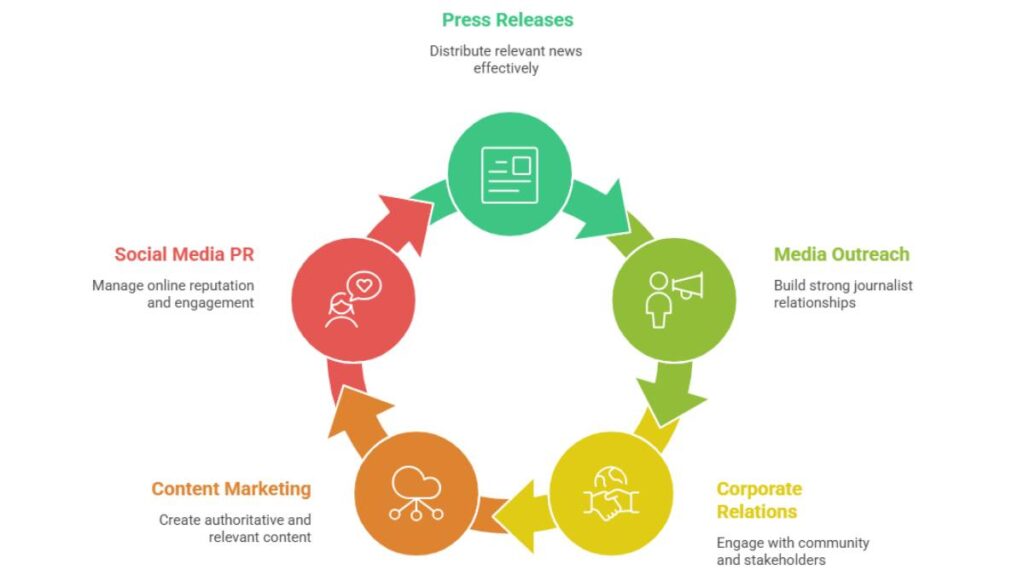
Press Releases & News Distribution
Press releases still matter, but only when there’s something worth saying.
Effective PR content:
- Leads with relevance, not hype
- Connects the news to a broader trend or insight
- Respects the reader’s time
A release should inform first. Promotion comes second.
Media Outreach and Journalist Relationships
Media outreach isn’t about mass pitching. It’s about precision.
Strong PR teams:
- Understand what each outlet actually covers
- Pitch ideas, not just announcements
- Build relationships over time, not only when something needs coverage
Journalists remember brands that make their jobs easier.
Corporate & Community Relations
PR doesn’t only live online or in headlines.
Community involvement, partnerships, sponsorships, and local initiatives build goodwill that marketing alone can’t buy. These efforts ground the brand in real-world relevance and shared values.
They also humanize the brand; something audiences notice more than logos.
Content Marketing with a PR Focus
PR-driven content looks beyond traffic goals.
It focuses on:
- Authority
- Perspective
- Long-term relevance
Thought leadership pieces, opinion-led blogs, and editorial collaborations help position brands as contributors, not just promoters.
Social Media PR Tactics
Social platforms act as public stages.
PR on social media means:
- Listening as much as posting
- Responding thoughtfully, not defensively
- Protecting tone and voice across conversations
Reputation is shaped one reply at a time.

Apply Now: AI-Powered Performance Marketing Course
Examples of Public Relations in Marketing
PR becomes easier to understand when it’s seen in action.
PR in Product Launch Campaigns
The strongest launches don’t start with ads. They start with context.
PR helps frame:
- Why the product exists
- Who it’s for
- Why now
Marketing amplifies the message. PR makes it make sense.
Case Studies of Effective PR-Driven Marketing
Successful PR-led marketing often shows up as:
- Consistent media presence before a big campaign
- Strong brand recall without heavy ad spend
- Positive sentiment during rapid growth
The results aren’t always instant, but they’re durable.
Best Practices Across Industries
Across industries, a few patterns hold true:
- Relevance beats reach
- Clarity beats cleverness
- Trust beats attention
Public relations works best when it’s treated as a strategic function, not a support task. When PR and marketing move together, brands don’t just get noticed; they get remembered.
Integrating PR and Marketing for Maximum ROI
When PR and Marketing Stop Working in Silos
PR and marketing drift apart more often than people admit. Different timelines. Different priorities. Different ideas of what “success” even looks like. The result is a brand that sounds slightly off, depending on where someone encounters it. Not broken; just inconsistent.
Integration fixes that. Not by forcing teams together, but by making sure they’re solving the same problems. PR gives the brand weight. Marketing gives it reach. When those two move together, the message feels steady instead of scattered.
A launch backed by PR feels calmer. More confident. A campaign supported by earned credibility doesn’t need to shout as much. People lean in on their own.
Planning Together Changes Everything
Most problems show up early. Messaging conflicts. Awkward timing. Missed context. All avoidable if PR is part of planning, not just rollout.
When PR helps shape the story before marketing locks visuals or copy, the work holds up better under scrutiny. Headlines align with landing pages. Talking points don’t contradict ads. Even internal teams know what to say when questions come up.
Budgets stretch further, too. Less duplication. Fewer “last-minute fixes.” The work feels intentional instead of reactive.
Looking at Results Through the Same Lens
PR performance shouldn’t live in a separate slide deck no one revisits. Brand sentiment, media presence, and reputation shifts affect marketing outcomes whether teams acknowledge it or not.
When both sides review results together, patterns emerge. Campaigns land faster. Objections drop. Audiences respond with more confidence. Not because of one tactic, but because the groundwork was already there.
The strongest brands don’t treat PR as backup. They treat it as leverage.
Measuring the Impact of PR in Marketing
Why PR Doesn’t Fit Neatly Into Dashboards
PR has always been harder to measure, and that’s uncomfortable for teams used to clean numbers. But difficulty doesn’t mean inefficiency. It just means the signals are layered.
Some things show up quickly: mentions, visibility, conversation spikes. Others take longer. Trust builds slowly. Reputation settles over time. Expecting PR to behave like a conversion campaign misses the point.
Numbers Matter, But Context Matters More
Reach and impressions tell part of the story. They don’t explain tone. Or trust. Or why journalists come back for another comment without being pitched.
The real signals are often subtle:
- Conversations sound more informed
- Prospects reference coverage unprompted
- Resistance drops during sales discussions
PR works upstream. It shapes the environment in which marketing operates.
Playing the Long Game Without Losing Focus
The biggest mistake is judging PR too early, or only by short-term outcomes. Good PR compounds. It lowers friction. It shortens decision cycles. It makes brands feel familiar before they’re fully known.
Measurement works best when it looks for momentum, not perfection.
Challenges & Solutions in Public Relations Marketing
Handling Negative Attention Without Making It Worse
PR isn’t fragile, but it’s sensitive. Especially when attention turns negative. One poorly chosen response can keep a story alive longer than necessary.
Silence creates speculation. Over-explaining invites more questions. The middle ground; clear, timely, human communication; usually holds best. Say enough to acknowledge reality. Not so much that it fuels it.
The Ongoing Tension Between Earned and Paid Visibility
Paid media is fast. Earned media is earned. Brands struggle when they rely too heavily on one and ignore the other.
Paid promotion without credibility feels hollow. Earned visibility without support can stall momentum. Balance matters. Timing matters more. Knowing when to push and when to let stories travel naturally is part judgment, part experience.
The Pitfalls That Quietly Undermine PR
PR often fails when expectations are off. When it’s treated as a quick fix. When attention is chased at the cost of trust. When consistency slips because something “new” feels more exciting.
The brands that get PR right tend to do fewer things, better. They stay steady. They communicate clearly. And they understand that credibility, once built, is easier to protect than to rebuild.
Future Trends in PR and Marketing
PR doesn’t reinvent itself every year. It evolves in small, noticeable shifts. And those shifts usually come from how people behave, not from new buzzwords.
One clear change is how digital-first PR has become the default. News breaks online first. Opinions form fast. Brands don’t get the luxury of waiting days to respond anymore. That doesn’t mean reacting to everything, but it does mean being clear about what the brand stands for before pressure hits. When positioning is fuzzy, the response gets messy.
Another shift is the way influence works. Influence today isn’t about borrowing someone else’s audience. It’s about shared credibility. Partnerships work best when the fit feels obvious. When it doesn’t, audiences sense it immediately and tune out. Attention is easier to buy than trust, and trust is what actually moves people.
There’s also more emphasis on reading signals, not just counting them. Patterns in sentiment. Changes in tone. Who keeps showing up in conversations? Numbers help, but judgment still matters. Timing still matters. Saying the right thing too late doesn’t help much.
The brands that adapt best are usually the ones that listen longer than they speak. That hasn’t changed.
Conclusion
Public relations doesn’t chase results in straight lines. It works around the edges, shaping perception, setting expectations, and smoothing the ground marketing walks on.
When PR is doing its job, marketing feels lighter. Messages don’t have to over-explain. Campaigns don’t have to fight skepticism from scratch. There’s already a sense of familiarity, even trust.
The mistake is treating PR as optional or reactive. Or worse, only pulling it in when something goes wrong. Strong brands treat PR as part of the foundation. Slow to build. Hard to replace.
When PR and marketing move together, the brand sounds like one voice. Clear. Consistent. Confident. That’s what people remember.
FAQs: Public Relations in Marketing
1. What is public relations in marketing?
Public relations in marketing focuses on how a brand is perceived, not just how it promotes itself. It supports marketing by building trust, credibility, and context through media, communication, and storytelling.
2. How does public relations differ from marketing and advertising?
Marketing drives demand. Advertising pays for attention. Public relations earns attention by shaping reputation and getting third parties to talk about the brand. Each plays a different role.
3. Why is public relations important in digital marketing?
Online audiences don’t rely on brand messages alone. They look for confirmation, mentions, opinions, and coverage. PR helps create those signals and shapes how brands are judged online.
4. How does public relations help build brand credibility?
Credibility comes from outside validation. PR places brands in trusted environments where messages feel less promotional and more believable.
5. What are the main types of public relations used in marketing?
Media relations, corporate communication, crisis management, community engagement, influencer relations, and digital PR all support marketing in different ways, depending on the goal.
6. How does public relations support organic visibility?
PR increases visibility through mentions, references, and coverage that stay discoverable over time. These signals help brands show up where audiences are already paying attention.
7. What role does public relations play in reputation management?
PR guides how a brand responds to attention, good or bad. Clear communication, consistency, and timing matter more than trying to control every narrative.
8. How can PR and marketing teams work together effectively?
Alignment starts early. Shared goals, shared messaging, and regular collaboration prevent gaps. When teams plan together, execution gets smoother.
9. How is the success of public relations in marketing measured?
Success shows up through visibility, sentiment, trust, and influence on business outcomes. Not everything is immediate, but the direction becomes clear over time.
10. What are the future trends in public relations and marketing?
Faster communication cycles, digital-first visibility, and credibility-driven partnerships are shaping PR’s role. The basics still win: clarity, relevance, and trust.