

This blog looks at sentiment analysis tools the way they’re actually used, not the way they’re pitched. It starts with the basics; why mentions alone don’t mean much; and slowly works into the harder stuff: emotion, context, and why tone is often misunderstood. Along the way, it covers how sentiment shows up across social posts, reviews, news, and internal feedback, plus where tools help and where they clearly don’t. There’s a practical breakdown of features, real-world use cases, common mistakes, and the trade-offs teams run into when choosing a platform. Nothing here treats sentiment as magic. It’s positioned as a signal; useful, imperfect, and only valuable when someone knows how to read it.
Table of Contents
Introduction
Looking at online chatter, it’s tempting to count mentions and feel good about the numbers. But numbers don’t tell the whole story. Someone might mention a brand dozens of times in a day, but are those mentions positive, negative, or somewhere in between? That’s the tricky part.
Sentiment analysis tools exist to make sense of that mess. They don’t just tell you “this is good” or “this is bad.” They dig into what people actually feel. And believe it or not, that’s harder than it sounds. Sarcasm, subtle complaints, vague praise; it all slips past if you’re only skimming.
These tools are useful across the board. Social media, customer reviews, forums, even news coverage; everywhere your brand shows up, sentiment tools can help you see the emotional side. The payoff? A clearer picture of how people really feel, and the ability to respond before small issues become bigger headaches.
Understanding Sentiment Analysis
Sentiment analysis, in simple terms, is reading between the lines. It’s not just about what people write; it’s about how they feel when they write it. And yes, that can get complicated fast. One person’s “thanks a lot” is another’s “absolutely love this.” Context is everything.
A few key ideas help make sense of it:
- Polarity: Basically, is the sentiment positive, negative, or neutral? Easy on paper, tricky in practice.
- Emotional intent: This digs deeper; what’s the underlying feeling? Frustration, joy, disappointment, relief. Even anger sometimes shows up in ways you wouldn’t expect.
Why does this matter? Because understanding how customers feel changes everything. A frustrated customer might need a quick fix. A happy one could be your best advocate. Marketing campaigns can be tweaked to hit the right emotional notes. Brand trust grows when reactions are understood instead of ignored.
The way it works is basically pattern recognition, but with a human touch baked in. Tools break down text, pick up on phrases, and connect them to feelings. They notice recurring themes, keywords, and the little cues that show emotion. It’s not perfect; nothing is, but it gives context that raw numbers never could.
Core Functionalities of Sentiment Analysis Tools
Most sentiment tools do some combination of the following; these are the parts that actually matter in day-to-day use.
Emotion and tone detection
Good tools notice more than just words. A comment that says “well, that was something” might seem neutral at first glance, but a tool can flag subtle frustration or confusion. It’s the difference between reacting blindly and reacting smart.
Polarity scoring and trend tracking
Seeing sentiment over time is critical. One day’s spike in negativity could be nothing. A pattern? That’s worth looking at. Tracking trends helps spot problems early or ride the wave of positive feedback before it dies down.
Text classification and topic segmentation
Sorting thousands of messages by hand? Forget it. These tools group comments by topic, urgency, or emotional tone. That way, you’re not chasing shadows; you know what deserves attention first.
Entity and keyword analysis
It’s one thing to know sentiment exists. It’s another to know what it’s about. Products, services, campaigns, competitors; good tools tie sentiment to specific entities, so you know exactly where the praise or frustration is coming from.
Multilingual support
If your brand operates internationally, you know the challenge: slang, idioms, and cultural differences can completely change the meaning. The right tools can pick up on emotional context across languages; though it’s never perfect, it’s way better than ignoring it.
Advanced features
Some tools even handle images, videos, or live social feeds. Real-time alerts can be a lifesaver when negative sentiment spikes suddenly. Acting fast can prevent a small issue from turning into a PR headache.
At the end of the day, sentiment analysis tools are not magic. They’re more like a flashlight in a dark room. They show where the bumps are, but someone still has to walk carefully and interpret what’s really happening. Treat the insights as guidance, not gospel.
How Sentiment Analysis Tools Drive Smarter Marketing
Numbers alone don’t tell the full story. Sure, a campaign might get hundreds of mentions, thousands of comments, but that doesn’t mean people are actually happy. Sometimes they’re frustrated. Sometimes they’re somewhere in between. And, honestly, people don’t always say what they mean.
Sentiment tools help make sense of all that noise. They don’t fix things for you, but they point out patterns you might otherwise miss. A post could be getting tons of attention, but if most of the reactions are negative, you’ll want to know sooner rather than later. Catching that early means you can adjust before it becomes a bigger issue.
Then there’s the other side of it. Positive spikes, those moments when people are genuinely excited, can be powerful. Spot them, amplify them, even shape your next moves around them. Timing is everything. Miss it, and the moment slips away.
It’s not just products. Messaging, content, and even events benefit. When responses feel timely and thoughtful, audiences notice. They know someone’s paying attention. That builds trust, sometimes more than a perfectly crafted post ever could.
Some teams watch reactions in real time. Sports organizations are a good example; they see how fans respond to announcements or posts. If the mood dips, they step in. If people are hyped, they celebrate with them. That kind of responsiveness doesn’t feel robotic; it feels human. And that’s what really matters.
Applications of Sentiment Analysis Tools
A lot of people assume sentiment analysis is just a social media thing. It isn’t. Anywhere people express opinions, reviews, surveys, forums, even news, you can find useful insights. The challenge is figuring out what actually matters.
Here’s how it’s put to work in real life:
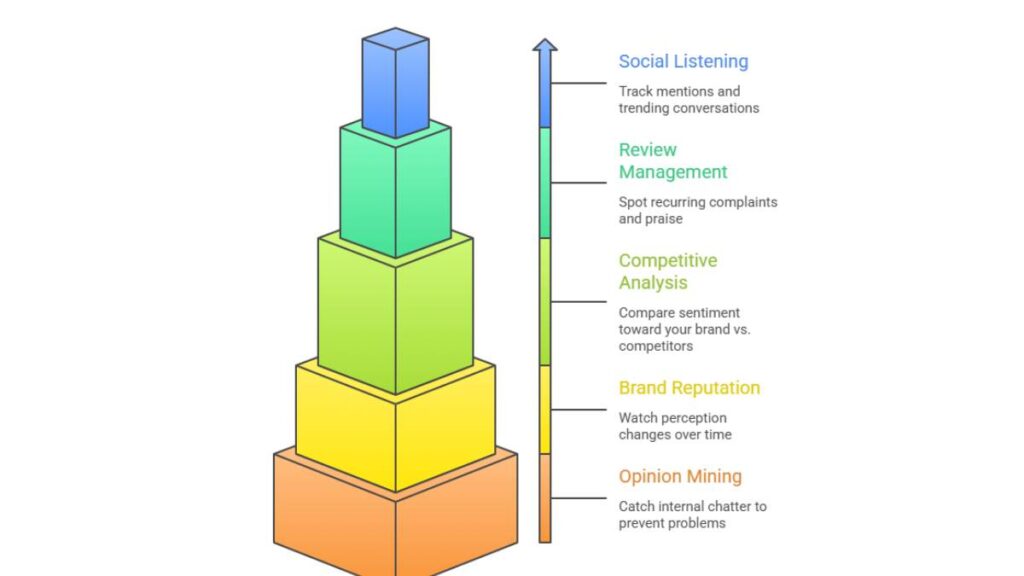
Social listening and media monitoring
- Track mentions, hashtags, or trending conversations across different platforms.
- Notice shifts in mood early, before things escalate.
Review and feedback management
- Spot recurring complaints or praise in reviews.
- Pick up on pain points that might otherwise go unnoticed.
Competitive analysis
- Compare sentiment toward your brand versus competitors.
- Figure out where you’re winning, where you’re behind, and why.
Brand reputation and insights
- Watch how perception changes over time, not just day to day.
- Spot small shifts in trust, satisfaction, or frustration before they pile up.
Opinion mining and internal feedback
- Don’t forget employees; their sentiment matters too.
- Internal chatter can affect customer experience, service quality, or morale. Catching signals early helps prevent bigger problems later.
The tricky part? Prioritization. You can’t and shouldn’t react to every single comment. The right tools highlight what actually matters: trending complaints, spikes in praise, or sudden concerns. That way, teams can focus energy where it counts.
Sentiment analysis isn’t perfect. Not at all. It won’t solve problems on its own. But it’s a lens; a way to see what’s really happening, react faster, and make smarter choices. And in marketing, that makes a huge difference.
Top Sentiment Analysis Tools
Choosing a sentiment analysis tool usually sounds easier than it is. On paper, they all promise clarity. In practice, it comes down to fit. What kind of data shows up every day? How fast do teams need to react? And how much context actually matters? Some tools are built to zoom out and connect dots across channels. Others stay narrow and sharp. Both approaches have their place.
Full-Stack Sentiment Analysis Tools
Full-stack tools are for teams dealing with feedback from everywhere at once. Social posts, surveys, reviews, support tickets. It adds up fast. These platforms try to bring all of that into one view so patterns don’t get lost.
Sprout Social
Sprout is often seen as a publishing tool first, but its listening side does more than expected. Sentiment trends show up over time, not just as snapshots. Emojis, tone shifts, and even sarcastic phrasing get flagged more thoughtfully than most tools manage. The real win is convenience. Everything sits in one place, so teams aren’t bouncing between dashboards trying to piece together what changed and when.
InMoment (Lexalytics)
InMoment goes deeper into feedback than simple sentiment labels. Surveys, reviews, and emails are broken down into themes, which makes prioritization easier. When the same complaint keeps surfacing around one feature or experience, it becomes obvious. That clarity helps teams focus energy where it actually matters, instead of reacting to the loudest comment.
Medallia
Medallia stands out for handling different formats without much friction. Text, voice, video. All of it feeds into the same analysis. That matters for brands collecting feedback in less traditional ways, like events or demos. Real-time alerts also make a difference. When sentiment dips mid-campaign, teams don’t find out weeks later. They see it while there’s still time to respond.
Qualtrics (Clarabridge)
Qualtrics works well when feedback isn’t neatly structured. Social comments, tickets, survey responses; everything gets grouped into themes automatically. Instead of reading hundreds of individual messages, teams see patterns take shape. It becomes clearer which messages land and which ones quietly miss, even if engagement numbers look fine on the surface.
Chattermill
Chattermill pulls feedback from multiple channels and looks for repetition. Not just what people are saying, but how often certain frustrations or praises come up. Shipping delays, confusing onboarding, strong product love; it all gets flagged early. That early visibility helps prevent small issues from turning into persistent ones.
Social Media Sentiment Analysis Tools
Social platforms move fast. Opinions shift quickly, and context can disappear just as fast. These tools focus on keeping a pulse on public conversations as they happen.
Brandwatch
Brandwatch tracks mentions and sentiment across platforms and makes changes over time easy to spot. Spikes, good or bad, stand out clearly. Dashboards are straightforward, which helps when insights need to be shared beyond the marketing team. It’s especially useful for sanity-checking campaigns. Excitement feels different from frustration, even when engagement numbers look similar.
Buffer
Buffer’s sentiment tagging is simple, and that’s the point. When volume gets high, simplicity helps. Tagging comments by emotion or urgency makes response queues more manageable. Nothing flashy here. Just practical tools that keep teams from missing important conversations.
Agorapulse
Agorapulse focuses on inbox organization. Messages can be labeled automatically or manually, which saves time when mentions pile up. Labels like “question” or “negative” help teams decide what needs attention now versus later. It brings some order to an otherwise noisy environment.
Awario
Awario is built for speed. Mentions, hashtags, and brand references are scanned continuously. When sentiment shifts suddenly, alerts kick in. That’s useful during launches, viral moments, or situations where silence can make things worse. Early signals matter here.

Apply Now: AI-Powered Performance Marketing Course
News Sentiment Analysis Tools
News coverage shapes perception in quieter but lasting ways. These tools help track how brands show up in media, not just whether they’re mentioned.
Aylien (Quantexa)
Aylien looks at sentiment at the entity level. Instead of labeling an entire article as positive or negative, it identifies which product, person, or event the sentiment applies to. That nuance helps teams decide when a response is needed and when it’s better to let a story pass.
Cision Communication Cloud
Cision casts a wide net. Coverage across print, online, and broadcast, in dozens of languages. For global brands, that reach matters. Sentiment trends give a sense of whether coverage is supportive, critical, or mixed, and how that balance shifts over time.
Meltwater
Meltwater tracks sentiment across regions and languages and highlights broader trends. It’s less about individual headlines and more about movement. Changes in tone tend to show up here before they spill into social conversations, which gives teams a bit of breathing room.
Text Sentiment Analysis Tools
Not every brand needs live social tracking. Sometimes the most valuable insight sits in emails, tickets, or internal feedback. These tools focus on that quieter data.
Altair RapidMiner
RapidMiner gives teams control. Models can be adjusted based on industry language or specific data types. It’s flexible, which appeals to teams that don’t want one-size-fits-all sentiment rules shaping their insights.
Google NLP API
This option works well across different text sources. Documents, chats, emails. It detects sentiment and key entities in multiple languages, which makes it useful for organizations dealing with mixed data streams.
Amazon Comprehend
Comprehend handles sentiment while also spotting topics and sensitive information. Support tickets, for example, can be flagged for frustration while personal details stay protected. That balance is important in regulated or privacy-conscious environments.
Microsoft Azure AI Language
Azure supports multilingual analysis and goes beyond sentiment alone. Key terms, classification, and context all come through. For teams managing communication at scale, especially across regions, that breadth helps keep feedback usable.
No sentiment analysis tool gets everything right. Some are built for scale, others for speed, others for depth. The real value comes from choosing the one that makes feedback clearer, not louder. The goal isn’t more data. It’s better to understand and act before it’s too late.
How to Choose the Best Sentiment Analysis Tool
Finding the right sentiment tool isn’t just about ticking boxes on a feature list. It’s more like… figuring out which lens actually shows what’s happening with your audience. And sometimes the fanciest-looking tool just ends up being overkill.
First off, clarity on goals is key. Ask yourself: is the main goal to track brand reputation, understand customer service feedback, measure product sentiment, or a mix of all three? Being vague here usually leads to buying a tool that doesn’t quite fit.
Then there’s accuracy and nuance. Not every tool can pick up sarcasm, irony, or subtle frustration. Some stumble on multiple languages or cultural expressions. If your audience is global, or if you get a lot of clever, tongue-in-cheek feedback, this matters more than you think.
Data sources and integrations; another big one. A tool that can’t pull from the places your audience actually talks, social platforms, review sites, surveys, and email, quickly becomes a headache. And integrations matter too. If it doesn’t play nice with your CRM or dashboards, someone’s going to be doing tedious manual work.
Next, think about speed and scale. Some tools are batch-based, only giving insights after processing a chunk of data. Others work in real time, which is critical if you’re running campaigns or have a social media crisis brewing.
Visuals and reporting; it’s not just a nice-to-have. Dashboards, trend lines, and alerts make a difference. Otherwise, your team spends more time digging through data than acting on it.
And yeah, budget and support are important too. Don’t assume that the most expensive tool is automatically better. Consider training, vendor reliability, and how much ongoing support you’ll actually get.
At the end of the day, it’s about picking the tool that makes sense for your workflow, your team, and your audience. Not the one that looks good on paper.
Case Studies: Sentiment Analysis in Action
Talking about sentiment analysis in theory is fine, but seeing it in action tells the real story.
Atlanta Hawks
For sports teams, fans are everything. The Hawks watch reactions to announcements or posts almost live. If excitement spikes, they feed it, posting more, running special promos. If sentiment dips, they dig in before frustration spreads. It’s a very human approach, not just numbers on a dashboard.
Chicago Bulls
Similar approach. They monitor emotional context during games and campaigns. Social reactions tell them where fans are frustrated, where they’re hyped. Timing is everything. A delayed response can turn a small complaint into a bigger problem, and a missed opportunity to celebrate excitement is just… wasted energy.
Casio
For a product-focused brand, sentiment analysis helped uncover recurring complaints around usability and support. But it also highlighted what people genuinely loved, like durability. Focusing on both negatives and positives, let them prioritize improvements and marketing messaging, instead of guessing.
The takeaway? Sentiment analysis isn’t just counting positive vs negative. It’s noticing patterns, acting quickly, and using context to make decisions that actually matter.
Challenges in Sentiment Analysis
Even with the best tools, sentiment analysis isn’t foolproof. There are pitfalls.
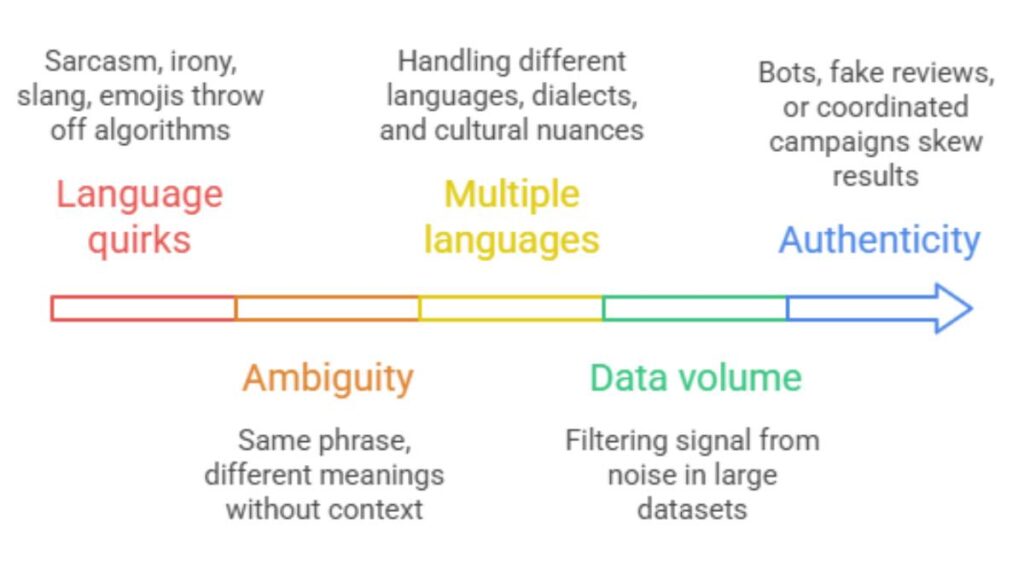
Language quirks
Sarcasm, irony, slang, emojis; they all throw off algorithms. A comment that looks negative might actually be praise, depending on tone or context.
Ambiguity
Same phrase, different meanings. “This is crazy” could be excitement or frustration. Without context, even advanced tools get it wrong.
Multiple languages
For global brands, tools have to handle different languages, dialects, and cultural nuances. A neutral word in one country might carry heavy emotion in another.
Data volume
More data is great, until it’s not. Thousands of mentions, reviews, tickets… it can get messy. Not everything is meaningful, and filtering signal from noise is a constant battle.
Authenticity
Not all feedback is real. Bots, fake reviews, or coordinated campaigns can skew results. Tools may flag trends, but human judgment is often needed to interpret what actually matters.
The trick is treating sentiment analysis as a lens, not a crystal ball. It highlights patterns, surfaces trends, and flags issues, but it doesn’t replace human thinking.
Future of Sentiment Analysis Tools
Sentiment analysis is moving past simple reaction tracking. The next phase is less about what people said and more about what it signals next. That shift matters.
One clear direction is tighter integration across marketing systems. Sentiment won’t live in its own dashboard for long. It’s already creeping into campaign planning, customer support workflows, and product feedback loops. When sentiment changes, actions follow faster; sometimes automatically, sometimes just with better timing.
Predictive sentiment is another quiet change. Instead of reacting to mood shifts after they happen, teams are starting to watch for early signals. Small drops in tone. Repeated frustration around a single feature. Patterns that suggest something bigger is coming. This doesn’t replace judgment, but it gives teams a head start.
Visual and video content is catching up, too. Text was always easier to analyze. But reactions now show up in comments on videos, in facial cues, even in how people engage with content rather than what they write. As sentiment expands beyond text, context becomes richer and more complicated.
The bigger picture is convergence. Social, reviews, internal feedback, news, and community forums. All of it feeds into a shared understanding of audience mood. Not perfectly. Not instantly. But closer than before.
What won’t change is the need for interpretation. Sentiment tools will get sharper, faster, broader. They still won’t replace human judgment. They’ll just make that judgment better informed.
FAQs: About Sentiment Analysis Tools
1. What features actually matter in a sentiment analysis tool?
The basics matter more than most advanced features. Reliable sentiment classification, clear reporting, and access to the right data sources usually deliver more value than experimental add-ons. Nuance detection and trend tracking tend to separate useful tools from noisy ones.
How accurate are sentiment analysis tools in real-time?
Accuracy varies by context. Straightforward feedback is easier to classify. Casual language, humor, or emotionally mixed responses are harder. Real-time insights are best treated as directional signals, not final conclusions.
Can sentiment analysis really detect sarcasm and irony?
Sometimes. But not consistently. Sarcasm depends heavily on context, timing, and cultural cues. Tools can catch obvious cases, but subtle irony still trips them up. That’s where human review adds value.
How do multilingual sentiment tools work in practice?
They go beyond translation, at least the better ones do. Language-specific models account for tone, structure, and expression differences. Even so, regional slang and cultural references remain challenging.
Which sentiment analysis approach works best for social media?
The one that balances speed with filtering. Social data is fast and noisy. Without good filtering, volume overwhelms insight. Real value comes from spotting shifts and patterns, not reacting to every post.
How does sentiment analysis fit with CRM and marketing platforms?
When integrated well, sentiment becomes context. Support teams see emotional history, marketers see audience mood, pand roduct teams see friction points. When it’s disconnected, it stays theoretical.
What mistakes do businesses make with sentiment analysis?
Treating it as truth instead of a signal. Overreacting to short-term spikes. Ignoring neutral sentiment, which often holds the most insight. And assuming automation replaces thinking.
Can sentiment analysis help with competitive benchmarking?
Yes, but carefully. Comparing sentiment trends can highlight positioning gaps and perception shifts. It works best when combined with a qualitative review, not as a standalone scorecard.