

Affiliate marketing has evolved into a serious performance channel, and this guide breaks down what that shift really means in practice. It walks through how affiliate tracking works, why accuracy matters more than ever, and which features separate reliable platforms from fragile ones. The blog then digs into how to choose the right setup, compares leading tools, and explains advanced tracking strategies that protect revenue as programs scale. Along the way, it highlights common mistakes teams still make and how to avoid them. If affiliate marketing is expected to drive consistent growth, this overview shows why affiliate tracking tools are no longer optional; they’re the foundation that keeps partnerships fair, measurable, and scalable.
Table of Contents
Introduction
Affiliate marketing has grown up. What once felt like a side channel is now a serious revenue driver for brands, SaaS companies, and ecommerce businesses. But as affiliate programs scale, one thing becomes non-negotiable: accurate tracking.
That’s where affiliate tracking tools come in.
Affiliate tracking tools are platforms designed to track what affiliates actually deliver: clicks, leads, sales, and revenue; and connect those actions back to the right partner, at the right time, with the right commission.
In modern digital marketing, affiliate partnerships are no longer simple “link and pray” setups. They’re performance-driven relationships involving influencers, content sites, comparison platforms, paid media partners, and even offline channels. Without a reliable tracking system in place, things fall apart quickly.
Affiliate tracking tools sit at the center of this ecosystem. They help brands:
- Understand which affiliates are driving real value
- Attribute conversions accurately across devices and channels
- Automate commission calculations and payouts
- Maintain trust with partners through transparent reporting
From an ROI perspective, tracking tools are the difference between guessing and knowing. They make sure revenue isn’t misattributed, commissions aren’t disputed, and performance decisions are based on data, not assumptions.
When affiliate programs grow, manual tracking simply doesn’t scale. That’s why serious affiliate marketers treat tracking software as infrastructure, not a nice-to-have.
What Is Affiliate Tracking?
Affiliate tracking is the process of identifying where a conversion came from and assigning credit to the correct affiliate.
At a basic level, it answers a few critical questions:
- Which affiliate sent this user?
- What action did the user take?
- When did it happen?
- How much commission should be paid?
The process usually starts when an affiliate shares a unique tracking link. When a user clicks that link, tracking data is captured and stored. If the user later converts, by making a purchase, signing up, or completing a defined action, the tracking system connects that conversion back to the original affiliate.
Behind the scenes, this is handled using a mix of tracking technologies, including:
- Tracking links that carry unique IDs for each affiliate
- Cookies that store referral data in the user’s browser
- Server-to-server (S2S) postbacks that pass conversion data directly between platforms
- Pixel tracking that fires when a conversion event occurs
- Device fingerprinting to help identify users across sessions
Attribution plays a big role here. Not every affiliate interaction is equal, and different programs reward conversions differently. Common attribution models include:
- First-click attribution – credit goes to the affiliate who introduced the user
- Last-click attribution – credit goes to the affiliate closest to conversion
- Multi-touch attribution – credit is shared across multiple touchpoints
Modern affiliate tracking tools support flexible attribution rules, which are essential when multiple affiliates influence the same customer journey.
Why You Need Affiliate Tracking Tools in 2026
Affiliate marketing today looks very different from a few years ago. Traffic is fragmented. Users switch devices. Privacy rules are tighter. And partners expect clean data.
In 2026, relying on basic tracking setups or manual reports is a risk, not just an inconvenience.
Affiliate tracking tools are now essential because they bring accuracy and clarity to an otherwise messy channel. They reduce attribution errors, surface real performance data, and eliminate blind spots that quietly drain revenue.
Key reasons businesses rely on affiliate tracking tools include:
- Improved accuracy and transparency
Affiliates want proof. Brands need confidence. Tracking tools provide both, with clear records of clicks, conversions, and commissions. - Automation of payouts and reporting
Manual commission calculations don’t scale. Automated systems reduce errors, save time, and prevent payout disputes. - Stronger fraud detection and prevention
Click fraud, fake leads, and incentivized traffic still exist. Good tracking platforms flag suspicious patterns before they become expensive problems. - Real-time analytics for growth decisions
When data updates in real time, teams can optimize offers, pause underperforming partners, and double down on what’s working, without waiting for end-of-month reports.
Affiliate programs are no longer experimental. They’re performance channels with real budgets and real expectations. Tracking tools make them manageable, measurable, and scalable, which is exactly what modern marketing demands.
Core Features of Great Affiliate Tracking Tools
Not all affiliate tracking tools are built the same. Some look impressive on the surface but fall apart once traffic scales or multiple partners are involved. The best platforms focus on clarity, reliability, and flexibility, because real affiliate programs are rarely simple.
Here are the core features that actually matter.
Real-Time Affiliate Traffic & Conversion Tracking
At the foundation, a tracking tool needs to show what’s happening now, not days later.
This includes:
- Accurate click and conversion tracking
- Visibility into impressions and engagement
- Support for view-through and post-view attribution where relevant
Good tools surface this data in clean dashboards that make patterns obvious. You shouldn’t have to dig through five reports to understand which affiliate is driving revenue and which one is just driving traffic.
Multi-Channel & Cross-Device Tracking
Affiliate traffic doesn’t live in one place anymore. Users click on mobile, research on desktop, and convert somewhere else entirely.
Strong tracking platforms support:
- Web, mobile, and app tracking
- Cross-device attribution
- Integrations with mobile measurement partners for app installs and in-app events
The goal is continuity. When sessions break, attribution breaks. The best tools minimize that gap.
Affiliate Link & Code Generation
Managing affiliates at scale means managing links at scale.
Modern tools make this easier by offering:
- Custom tracking links with sub-IDs
- Parameter-based tracking for campaigns, creatives, and placements
- Automatic UTM tagging for cleaner analytics
This level of detail allows teams to understand not just who converted, but how and why.
Commission Management & Payout Automation
Manual commission tracking is where programs start to lose trust.
Reliable platforms support:
- Tiered and performance-based commission structures
- Automated commission calculations
- Scheduled and accurate payouts
When affiliates know payouts are consistent and fair, relationships improve. Fewer disputes. Fewer emails. Less friction overall.
Analytics & Reporting for Affiliate Program Performance
Data is only useful if it’s readable.
The best affiliate tracking tools offer:
- Detailed reports covering clicks, conversions, and revenue
- Visual dashboards with clear KPIs
- Exportable data for finance and leadership teams
This isn’t about vanity metrics. It’s about understanding which partners deserve more investment and which need to be optimized or phased out.
Fraud Detection & Security Features
Affiliate fraud hasn’t disappeared; it’s just gotten quieter.
Good platforms actively monitor:
- Click-level anomalies
- Suspicious IP patterns
- Bot traffic and proxy usage
Built-in alerts, blacklists, and whitelists help teams act early, before fake traffic eats into budgets or skews performance data.
Integrations & API Support
Affiliate tracking tools don’t work in isolation.
Strong platforms integrate with:
- Ecommerce systems
- CRMs and payment tools
- Analytics platforms
For advanced setups, APIs allow custom workflows and deeper control. This flexibility becomes critical as affiliate programs grow beyond simple link-based tracking.
Benefits of Using Affiliate Tracking Tools
When affiliate tracking is done right, the impact shows up across the business, not just in marketing reports.
Some of the most noticeable benefits include:
- Higher accuracy and transparency
Clean tracking reduces disputes and builds trust with affiliates. Everyone sees the same numbers. - Faster decision-making
Automated dashboards remove guesswork and speed up optimization. - Reduced operational workload
Fewer manual calculations, fewer spreadsheets, fewer errors. - Better affiliate relationship management
Clear performance data makes it easier to reward top partners and fix underperforming campaigns. - Compliance-ready reporting
Modern tools support privacy regulations and make audits far less painful.
Over time, these benefits compound. Programs become easier to manage, easier to scale, and easier to defend internally when budgets are reviewed.
How to Choose the Best Affiliate Tracking Tool
Choosing an affiliate tracking tool isn’t about picking the most popular platform. It’s about finding the one that fits how your program actually operates.
Here’s how to evaluate options without overthinking it.
Evaluate Tracking Accuracy & Attribution Capabilities
Start with the fundamentals:
- Does the tool support both pixel and server-to-server tracking?
- How reliable is cross-device attribution?
- Can attribution rules be customized?
If attribution breaks, everything else becomes noise.
Scalability & Customization
What works for ten affiliates often fails at a hundred.
Look for:
- Support for high traffic volumes
- Custom commission logic
- Flexible reporting structures
Scalability isn’t just technical. It’s operational.
Integration With Your Tech Stack
Affiliate tracking should connect smoothly with existing systems.
Check for:
- Ecommerce integrations
- CRM compatibility
- Analytics connectors
The fewer manual workarounds required, the better.
Reporting & Dashboard Usability
A powerful tool with confusing reports creates friction.
Ask:
- Are key metrics easy to access?
- Can reports be customized and scheduled?
- Is the interface usable for non-technical teams?
Clarity here saves hours every month.
Pricing Models & Value for Money
Pricing varies widely across platforms.
Some offer:
- Free trials or entry-level plans
- Tiered pricing based on usage or affiliates
- Add-ons for advanced features
The real question isn’t cost. It’s whether the automation and accuracy justify the investment compared to manual setup and tracking errors.
Choosing the right affiliate tracking tool is less about features on a sales page and more about how well it supports real-world growth.
15 Best Affiliate Tracking Tools
Affiliate tracking tools all promise accuracy, automation, and growth. In practice, they feel very different once you’re actually running traffic, managing partners, and dealing with payouts. Some are built for speed. Others for control. A few are clearly designed by people who’ve managed affiliate programs themselves, and it shows.
Below is a grounded look at 15 affiliate tracking tools, what they’re actually good at, and where each one fits best.
Referral Factory

Referral Factory is built for teams that want momentum quickly. It works especially well when affiliate and referral programs overlap, which is common now. Setup is fast, customization is decent, and it doesn’t overwhelm users with unnecessary settings. This tool makes sense when the goal is getting partners live and tracking results without weeks of configuration. It’s less about deep attribution science and more about clean execution and ease.
Everflow – Partner Marketing Platform
Everflow is for teams that care deeply about performance data. It’s structured, detailed, and very intentional about how partners, offers, and conversions are managed. Reporting goes beyond surface-level numbers and allows teams to see what’s actually driving revenue. This platform fits businesses that treat affiliate marketing as a serious growth channel, not a side experiment. There’s a learning curve, but it rewards teams that invest the time.
Tracknow
Tracknow leans heavily into performance integrity. Unlimited tracking sounds simple on paper, but it matters once volume picks up. The platform focuses on real-time visibility and fraud control, which makes it useful for programs where traffic quality fluctuates. It’s a practical choice for teams that want fewer surprises and more confidence in what they’re paying for.
Fintel Connect

Fintel Connect sits at the intersection of performance and accountability. It’s often used in environments where reporting needs to stand up to scrutiny, not just internal review. The platform emphasizes transparency, clean metrics, and structured reporting. It’s less flashy, more dependable. That balance appeals to brands operating in regulated or high-trust spaces.
Scaleo
Scaleo is built for scale; real scale. Multi-language support, multi-currency handling, and advanced reporting make it suitable for global programs. It gives teams control over how data is displayed and how affiliates are managed across regions. This isn’t a lightweight tool, but for large programs with complex needs, it holds up well under pressure.
Trackdesk
Trackdesk strikes a balance between depth and usability. It offers real-time analytics, automated payouts, and solid reporting without drowning users in options. Unlimited affiliates and tracking remove growth anxiety, which matters when programs start gaining traction. It’s a strong fit for businesses that are scaling and need reliable data without enterprise-level complexity.
Post Affiliate Pro
Post Affiliate Pro has been around long enough to understand how messy affiliate programs can get. Its strength lies in flexibility; commission rules, tracking methods, and partner structures can all be customized. It’s not the most modern-looking platform, but it’s dependable and adaptable. Teams that value control over aesthetics often gravitate toward it.
Tapfiliate

Tapfiliate works well for teams that want things running without friction. Integrations are straightforward, especially for ecommerce and subscription-based businesses. Reporting is clean, commission logic is flexible enough, and partner management is intuitive. It’s not trying to be everything. That’s part of the appeal.
Refersion
Refersion is tightly aligned with ecommerce workflows. It focuses on tracking sales, managing affiliates, and keeping things simple. The platform doesn’t push advanced attribution models, but for product-based brands running creator or influencer programs, that’s often enough. It does the basics well and stays out of the way.
Trackier
Trackier is designed for teams that want core functionality without enterprise pricing. Real-time reporting, fraud controls, and customizable dashboards cover most needs. It’s often used by smaller programs or brands testing affiliate marketing seriously for the first time. The value lies in accessibility, not excess.
Affise

Affise is built for volume. High traffic, multiple partners, complex campaigns; this is where it performs best. Automation is a big focus, from campaign setup to optimization workflows. The platform is structured and data-heavy, which suits teams that already understand affiliate mechanics and want to operate at scale without manual intervention.
iDevAffiliate
iDevAffiliate appeals to teams that prefer control over their setup. It’s flexible, plugin-based, and relatively straightforward. The feature set covers most standard needs: tracking links, coupons, tiers, and reporting. It’s often chosen by smaller businesses that want reliability without committing to large platforms.
OSI Affiliate Software
OSI blends affiliate tracking with referral-style features, which works well for ecommerce brands leveraging customers as promoters. Promo code tracking, social sharing, and reward customization are central here. It’s not built for complex attribution, but it works nicely for straightforward, incentive-driven programs.
Anytrack
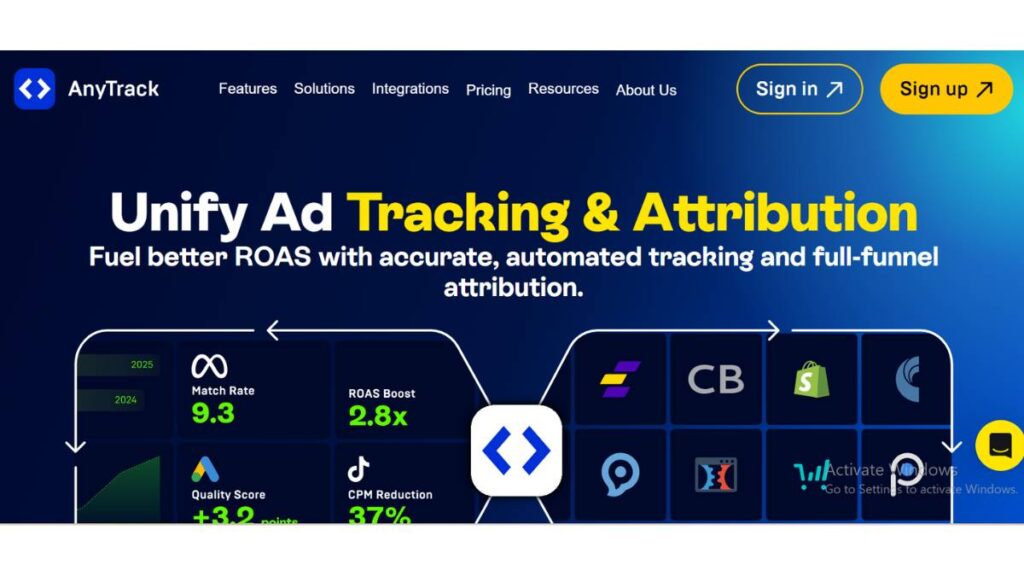
Anytrack plays a different role. It’s less about managing affiliates directly and more about keeping tracking data consistent across platforms. For teams juggling multiple traffic sources and analytics tools, this layer helps reduce discrepancies and confusion. It’s often used alongside other systems rather than replacing them.
ShareASale
ShareASale combines tracking infrastructure with access to an established affiliate network. That dual role is its biggest strength. Brands can recruit partners and track performance in one place. It’s especially popular with ecommerce businesses looking for reach as well as reliable reporting. While customization is limited, the network effect often outweighs that.
Each of these tools solves a slightly different problem. Some prioritize scale, others simplicity. The best choice usually becomes obvious once the real constraints are clear: traffic volume, partner expectations, internal resources, and how much precision actually matters day to day.
Affiliate Tracking Tools Comparison Table
Once the shortlist gets longer than a few tools, things start to blur. The features sound similar. Dashboards all look “powerful.” This is where a comparison table actually helps, not to crown a winner, but to make trade-offs clear.
Below is how most teams end up comparing affiliate tracking platforms in practice.
Key comparison factors to look at:
- Tracking type: Cookie-based, server-to-server (S2S), hybrid
- Best use case: SaaS, ecommerce, media buying, influencer programs
- Analytics depth: Basic reporting vs granular, click-level data
- Fraud protection: Light monitoring vs active prevention
- Integrations: Ecommerce platforms, CRMs, analytics tools
- Scalability: Handles 50 affiliates vs 5,000+
High-level comparison insights:
- Tools like Affise, Everflow, and Scaleo are built for scale and high-volume traffic. Strong data. More setup.
- Platforms such as Trackdesk, Tapfiliate, and Refersion prioritize ease and speed. Less complexity, faster launch.
- Anytrack works best as a data bridge, not a full affiliate manager.
- Network-based tools like ShareASale trade flexibility for reach.
A table won’t make the decision for you. But it will quickly show whether a tool is overkill, underpowered, or just right for where the program actually is today.
Advanced Affiliate Tracking Strategies
Most affiliate programs don’t fail because of bad partners. They fail because tracking breaks quietly in the background. The clicks still come in. The numbers look fine. But the truth leaks out slowly.
These strategies help avoid that.
Use server-to-server tracking wherever possible
Browser-based tracking still works, but it’s fragile. Cookies expire. Browsers block scripts. S2S tracking removes many of those weak points by sending conversion data directly between systems. It’s not perfect, but it’s far more reliable once volume grows.
Move beyond last-click attribution
Last click is easy to understand, but it rarely reflects reality. Many conversions involve multiple touchpoints: content, retargeting, email, and affiliates. Even a basic multi-touch model gives a clearer picture and prevents overpaying one channel while undervaluing others.
Combine UTM data with affiliate parameters
Affiliate links alone don’t tell the full story. Layering UTMs helps connect affiliate traffic to broader campaign data. Patterns start to emerge. Certain affiliates perform better on specific pages, offers, or devices. That insight is hard to get any other way.
Test landing pages by affiliate source
Not all traffic behaves the same. Some affiliates send warm audiences. Others send comparison shoppers. Running A/B tests by affiliate segment often uncovers surprising gaps and quick wins.
Advanced tracking isn’t about complexity for its own sake. It’s about removing blind spots before they get expensive.
Common Affiliate Tracking Mistakes to Avoid
Even solid programs make these mistakes. Usually unintentionally.
Assuming tracking is “set and forget.”
Tracking setups decay over time. Site updates, checkout changes, and domain shifts; all of these can break attribution quietly. Regular audits matter more than most teams expect.
Ignoring cross-device behavior
A click on mobile that converts on desktop is still one journey. If the tool can’t handle that, performance data gets distorted. Decisions based on that data tend to go sideways.
Underestimating fraud signals
Not all fraud looks dramatic. Sometimes it’s subtle: abnormal click-to-conversion timing, odd geographic patterns, repeated device fingerprints. Ignoring small anomalies often leads to big payout issues later.
Failing to segment affiliates properly
Treating all affiliates the same hides the performance truth. High-quality partners deserve different rules, commissions, and visibility than low-volume or experimental ones.
Overloading the program with rules too early
Too many commission structures, restrictions, and exceptions slow things down. Early-stage programs benefit from clarity more than control. Complexity can come later, once the foundation is solid.
Avoiding these mistakes doesn’t require perfect systems. Just attention. And a willingness to question numbers that look a little too clean.
Conclusion
Affiliate tracking tools don’t sit in the background anymore. They quietly decide which partners get rewarded, which channels grow, and which campaigns get cut. When tracking is tight, everything downstream works better. When it’s shaky, even a strong performance starts looking questionable.
Good tracking brings calm to the chaos. Numbers line up. Affiliates trust the system. Finance stops chasing discrepancies. Marketing can actually focus on growth instead of fixing reports. Small things, but they add up fast.
There’s also no perfect tool waiting to be “picked.” Different teams run programs differently. Some need control and depth. Others just want clean data and fewer headaches. The only way to know is to put a few platforms under real pressure and see how they behave when traffic spikes or edge cases show up.
Affiliate marketing still delivers. But only when the tracking underneath it is built to handle reality, not just ideal scenarios.
FAQs: About Affiliate Tracking Tools
1. What are affiliate tracking tools, and how do they work?
At the simplest level, these tools track what happens after someone clicks an affiliate link or uses a referral code. Clicks get logged, conversions get matched, and commissions get calculated. Behind the scenes, this can involve cookies, pixels, or direct server connections, depending on the setup.
2. Why are affiliate tracking tools important for affiliate marketing?
Because memory and spreadsheets don’t scale. Tracking tools remove guesswork. They show which partners are driving real value and which ones just look busy. They also make sure payouts are fair, which matters more than most people admit.
3. What is the difference between pixel tracking and server-to-server tracking?
Pixel tracking depends on the browser behaving nicely. Sometimes it does. Often it doesn’t. Server-to-server tracking skips the browser entirely and passes conversion data directly between systems. Fewer gaps. Fewer surprises. Usually more reliable.
4. Are affiliate tracking tools GDPR and privacy compliant?
Most modern platforms are built with privacy rules in mind. But compliance isn’t automatic. It depends on consent flows, data retention settings, and how tracking is implemented. The tool helps, but the responsibility still sits with the business.
5. How do affiliate tracking tools prevent affiliate fraud?
They look for patterns that don’t feel right. Too many clicks from one place. Conversions happen suspiciously fast. Traffic that behaves more like scripts than people. Good tools flag these early, before budgets disappear quietly.
6. Can affiliate tracking tools track mobile apps and cross-device conversions?
Yes, though it’s rarely plug-and-play. App tracking usually relies on SDKs and server-side events. Cross-device attribution works best when browser-based methods are backed up with server-level data. Otherwise, gaps are inevitable.
7. What features should be prioritized in a good affiliate tracking tool?
Fancy dashboards are nice, but reliability comes first. Clean attribution. Flexible commission rules. Clear reporting that doesn’t need explaining. Fraud controls that don’t overreact. Everything else is secondary.
8. Are affiliate tracking tools suitable for small businesses or startups?
They’re often more useful early on. Small teams feel manual work more sharply. A simple tool that handles tracking and payouts cleanly can save hours every month. Overcomplicating things too early usually backfires.
9. How much do affiliate tracking tools typically cost?
Pricing ranges a lot. Some charge based on traffic, others on conversions or affiliates. The real cost isn’t the subscription; it’s bad data. One wrong attribution model can cost more than a year of software fees.
10. What is the best affiliate tracking tool?
There isn’t a single winner. Tools like Affise, Everflow, Scaleo, and Trackier all do certain things very well. The best choice depends on how the program actually runs day to day. If a tool fits the workflow and doesn’t fight it, that’s usually the right one.