
Brand management isn’t just logos or taglines. That’s the easy part. The real work? It’s quiet, messy, and happens day after day. What does the brand really stand for? Not the catchy stuff. Then, it shows up everywhere. Online, stores, and support calls. Everywhere, people notice. It’s the little things that add up: predictable experiences, a reputation that spreads, messaging that doesn’t wobble. Scaling makes it harder. Markets shift, trends flare and fade. The trick is keeping the essence while adjusting. Done right, a brand stops being just “marketing.” It starts doing work; real work; that lasts.
Table of Contents
Introduction
What Is Strategic Brand Management?
Strategic brand management gets described in neat textbook language, but in practice, it’s a bit messier and more interesting. It’s the ongoing effort to shape how a brand is understood in the real world, where opinions form fast and change slowly.
At its heart, it’s about building and protecting brand equity. That’s the extra value a brand carries simply because people recognize it, trust it, or feel familiar with it. It shows up in small but powerful ways: a customer choosing the known brand without comparing ten others, forgiving a minor mistake, recommending it without being asked.
Three related ideas sit at the center of this:
Brand identity is how the company defines itself. Its personality, tone, visual style, values, and the internal blueprint.
Brand image is what customers actually think and feel. That’s shaped by experience, word of mouth, reviews, headlines, and service interactions. Things the brand influences, but never fully controls.
Brand equity is the commercial strength that grows when the image is positive and consistent over time.
Strategic brand management is the discipline of keeping identity and image aligned. Not perfectly; that’s unrealistic, but closely enough that the brand stands for something clear and credible.
It also reaches far beyond the marketing department. Pricing decisions signal positioning. Product design signals quality. Customer support signals values. Even hiring choices can ripple outward. Over time, all these signals pile up. They either reinforce a coherent brand story or create quiet contradictions.
When the work is done well, marketing efforts feel connected. There’s a sense of direction behind campaigns, launches, and content. Customers may never articulate it, but they sense the consistency. And consistency builds trust, often more than clever messaging ever could.
Why Strategic Brand Management Matters
The competitive landscape now moves quickly and rarely slows down. New brands enter markets with lower barriers than before. Trends spread fast, burn bright, and fade just as quickly. Customers compare options in seconds and switch with little friction.
In that environment, features alone don’t carry a business very far. There’s always someone cheaper, faster, or newer.
Strong strategic brand management helps organizations hold their ground and grow in a few important ways.
Clear differentiation in crowded spaces
When positioning is sharp, the brand occupies a distinct place in the customer’s mind. That mental shortcut reduces decision fatigue. People understand what the brand is about without needing a deep dive every time.
Loyalty that goes beyond convenience
Transactional loyalty is fragile. Emotional familiarity is stickier. Brands that feel consistent and dependable become default choices, even when alternatives are one click away.
Greater pricing resilience
Customers are more comfortable paying a bit more when they trust what they’re getting. A strong brand lowers perceived risk. That matters, especially in categories where quality isn’t easy to judge upfront.
The ability to evolve without losing recognition
Markets shift. Technology changes. Cultural expectations move. Brands with a well-defined core identity can adjust their messaging, visuals, or channels without feeling like a different company every year. That continuity builds long-term strength.
Digital touchpoints make this even more important. A single customer might encounter a brand through search results, short videos, reviews, ads, and a website, all before ever speaking to a person. If those moments feel disconnected, confidence drops. If they feel like parts of the same story, trust grows quietly.
That kind of coherence rarely happens by accident. It’s usually the result of steady, deliberate brand management over time.
The Strategic Brand Management Process
Brand strategy isn’t a one-and-done exercise. No neat finish line. It behaves more like a loop that keeps running in the background while the business grows, launches, stumbles, and adapts. Plans go out into the market, customers react in ways nobody fully predicted, performance data rolls in, and adjustments follow. Then the cycle starts again.
A practical way to look at the strategic brand management process is through four connected stages: defining what the brand stands for, expressing that clearly in the market, measuring how it’s actually being perceived, and strengthening it over time. Sounds tidy. Real life is messier.
Overview of the Strategic Brand Management Process
Most serious brand efforts circle around four core areas:
Clarifying brand positioning and identity
Designing and implementing brand marketing programs
Measuring brand performance and brand equity
Growing and sustaining brand equity over the long term
These stages overlap constantly. Measurement often reveals positioning problems. Market shifts force changes in how the brand shows up. Still, having this structure keeps brand decisions from becoming reactive or purely trend-driven.
Step 1 – Brand Positioning and Identity Creation
This is the foundation. When it’s weak, everything built on top feels shaky.
Positioning is about choosing the space a brand wants to occupy in people’s minds. That means making some uncomfortable calls. Not just who the brand wants, but who it’s okay not to appeal to. Trying to stretch too wide usually leads to safe, forgettable messaging.
The key questions tend to be simple, but not easy:
Who is this really for?
What problem does it solve better than most alternatives?
What makes it meaningfully different, not just cosmetically different?
Why should customers believe the claim?
From there, identity takes a clearer shape. Purpose and mission define why the brand exists beyond short-term sales. Values guide decisions when trade-offs appear, and they always do. Audience insight digs into motivations and frustrations, not just demographics. The value proposition and USP bring it all into a promise people can quickly grasp.
Strong positioning often feels a bit uncomfortable internally. It forces trade-offs. But that focus is what gives a brand sharper edges. And sharper brands are easier to remember.
The real test? Whether teams actually use this thinking to make decisions, or whether it just sits in a document nobody opens again.
Step 2 – Design and Implementation of Brand Marketing Programs
Once the strategy is clear, the brand has to show up consistently where people experience it. That’s where many gaps appear.
Brand elements come first. Name, logo, colors, type, imagery, tone of voice. These aren’t just design choices. They’re signals. They help people recognize the brand quickly and start forming associations before reading a full message.
Then there’s how communication works across channels. Advertising, social, content, email, partnerships, events. Different formats, same underlying idea. When each channel tells a slightly different story, the brand feels fragmented. When they reinforce each other, familiarity builds without extra effort.
Internal guidelines play a bigger role than most expect. Clear standards for visuals and voice reduce guesswork across teams and partners. Without them, inconsistencies creep in slowly. A slightly off tone here, a different visual style there. Over time, those small misalignments blur the brand’s identity.
Visibility alone doesn’t build a brand. Consistent meaning does.
Step 3 – Measuring Brand Performance & Brand Equity Metrics
Brand work needs feedback loops. Otherwise, teams end up relying on opinions and assumptions.
Performance is usually tracked across awareness, associations, preference, and loyalty. Do people know the brand? What do they link it to? Do they choose it over others? Do they come back and recommend it?
Quantitative research shows patterns over time. Qualitative feedback adds depth. Reviews, customer conversations, social comments; messy but revealing. Together, they show whether the intended positioning is landing or missing the mark.
Brand audits are another useful reality check. Looking across campaigns, website, product experience, packaging, and customer service often exposes inconsistencies that insiders stopped noticing. Those everyday touchpoints shape perception quietly but powerfully.
Step 4 – Growing and Sustaining Brand Equity Over Time
Brand equity needs maintenance. Left alone, it can fade or become outdated.
Long-term brand management usually balances reinforcement and evolution. Reinforcement keeps the core meaning steady through consistent messaging and reliable experiences. Over time, those repeated signals build strong mental shortcuts.
At the same time, brands can’t stay frozen. Revitalization becomes necessary when the brand starts feeling out of sync with culture or category expectations. The challenge is updating how the brand shows up without discarding what made it recognizable. Big, sudden reinventions often confuse loyal customers. Gradual, well-signaled change tends to land better.
Brand architecture also becomes more complex as businesses expand. Decisions about whether new offerings sit under the main brand or as sub-brands affect how clear the overall system feels. A cluttered structure can dilute even a strong core.
Markets will keep shifting. Customer expectations will keep moving. The goal isn’t to chase every trend. It’s to adapt carefully while protecting the core promise that gives the brand its long-term value.
That ongoing, behind-the-scenes discipline is what turns a brand into a durable business asset instead of just a marketing layer. Quiet work. Big impact over time.

Enroll Now: Advanced Digital Marketing Course
Strategic Brand Management in Competitive Markets
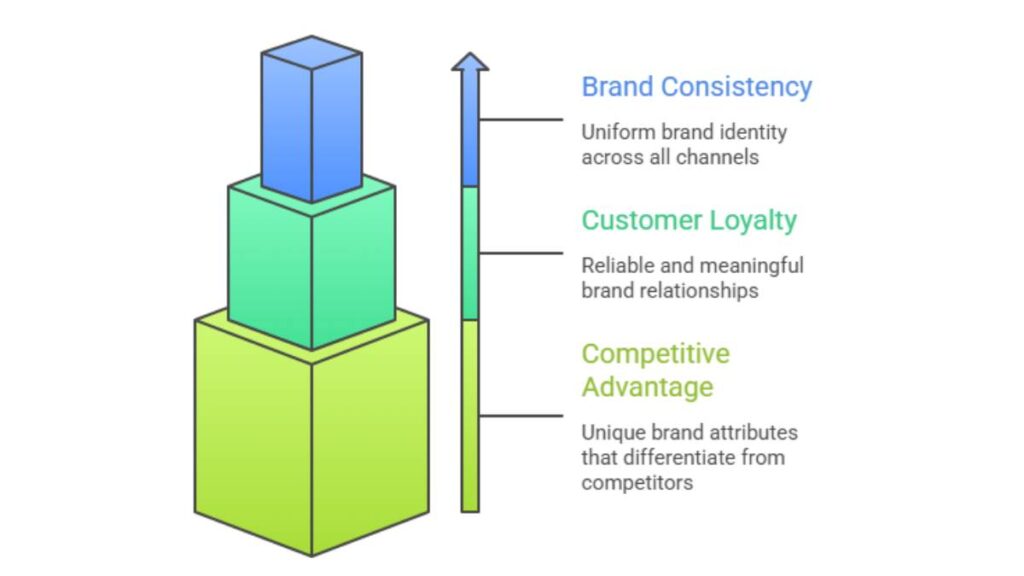
The Role of Strategic Brand Management in Competitive Advantage
Competition today isn’t just intense; it’s constant. New offers pop up overnight. Features get copied. Discounts become routine. So the real advantage rarely sits in the product alone. It sits in what people believe about the brand behind it.
That belief doesn’t happen by accident. Strategic brand management shapes it over time, layer by layer. It influences how customers interpret every experience: good, bad, or just average. A well-managed brand gets more patience when something goes wrong and more credit when something goes right. That’s not luck. That’s equity doing its job quietly in the background.
Strong brands create competitive advantage in ways that don’t always look dramatic on a dashboard:
- They stay top-of-mind in crowded categories
- They reduce the mental effort customers need to choose
- They make the price feel more justified, sometimes even secondary
- They build a preference that sticks, even when alternatives look similar
Over time, this becomes a kind of protective layer around the business. Competitors can match features, but they can’t easily copy years of accumulated meaning and trust.
Brand Consistency and Identity Across Channels
Here’s where many brands struggle a bit. Strategy sounds clear in meetings. Then it spreads across social posts, ad campaigns, landing pages, sales decks, customer support replies… and suddenly the brand feels slightly different in every place.
Customers notice. Maybe not consciously, but they feel it.
Brand consistency doesn’t mean everything must look identical. It means everything should feel like it comes from the same source. Same personality. Same standards. Same general tone, even when the context shifts.
This consistency usually shows up in a few practical ways:
- Visual coherence – familiar colors, typography, design style that makes the brand recognizable at a glance
- Verbal alignment – a tone of voice that doesn’t swing wildly from formal to slang without reason
- Behavioral consistency – similar service standards, response styles, and problem-solving approaches
Behind the scenes, this requires more coordination than most expect. Clear guidelines help, yes, but so does regular internal communication. Teams need to understand not just what the brand looks and sounds like, but why.
When consistency holds, familiarity grows. And familiarity tends to breed trust. In competitive markets, trust often tips the scale.
Customer Loyalty & Strategic Brand Relationships
Loyalty isn’t built through points programs alone. Those help, sure. But real loyalty sits deeper. It’s the sense that a brand “fits” into someone’s life in a reliable, meaningful way.
Strategic brand management shapes that fit. It defines the emotional territory the brand occupies; reassuring, bold, practical, premium, playful… whatever the positioning calls for. Then it reinforces that position again and again, across touchpoints.
Brands that build lasting relationships tend to:
- Stand for something clear instead of trying to appeal to everyone
- Communicate in a way that feels consistent and recognizable over time
- Deliver experiences that match the promise often enough to build confidence
Storytelling plays a role, though not always in obvious campaign moments. The “story” also lives in small interactions: a helpful support response, thoughtful packaging, an honest apology when something goes wrong. These moments shape how customers talk about the brand when it’s not in the room.
When emotional connection grows, loyalty becomes less transactional. Customers stay not just because it’s convenient, but because switching feels like losing something familiar. That’s a powerful position to hold.
Strategic Brand Management Trends for the Future
AI, Data Analytics & Personalization in Brand Strategy
Brand strategy used to lean heavily on broad segments and educated guesses. Now there’s far more behavioral data available, which changes how brands plan and deliver experiences.
Personalization is becoming a core part of brand management, not just performance marketing. Messages, offers, and content are increasingly shaped by real usage patterns and preferences. Done well, this makes the brand feel attentive rather than generic.
A few principles matter here:
- Personalization should still sound and feel like the same brand
- Relevance should never come at the cost of comfort or trust
- Insights should inform decisions, not replace brand judgment
When personalization aligns with brand identity, experiences feel smoother and more intuitive. When it doesn’t, things start to feel disjointed; or worse, intrusive.
Sustainability & Purpose-Driven Brand Management
Sustainability and purpose have shifted from optional messaging themes to strategic considerations. Customers, employees, and partners increasingly expect brands to take positions and act responsibly.
Strategic brand management now involves clarifying what the brand stands for beyond products and profits. That includes environmental impact, social responsibility, and ethical practices.
What makes purpose credible?
- Actions that back up the words
- Long-term commitments rather than one-off campaigns
- Honest communication about progress, not just polished success stories
When purpose aligns naturally with the brand’s history and capabilities, it strengthens trust. When it feels forced or trendy, it can do the opposite.
Data Privacy, Transparency & Ethical Branding
As brands collect more data to improve experiences, expectations around responsibility grow. Privacy and transparency now influence brand perception in very real ways.
Customers want to know what’s being collected and why. They also want control.
From a brand perspective, this means:
- Clear, simple explanations instead of dense legal language
- Permission-based communication that respects boundaries
- Avoiding tactics that feel manipulative, even if they boost short-term metrics
Ethical data practices quietly reinforce the idea that the brand respects its audience. That respect, over time, becomes part of the brand’s identity.
Omnichannel and Immersive Brand Experiences
Customer journeys now move fluidly between platforms and environments. A person might discover a brand on social, research on a laptop, purchase on mobile, and visit a physical location later. The experience needs to feel connected the whole way through.
Strategic brand management focuses on making these transitions feel natural rather than fragmented.
This often includes:
- Consistent visual and verbal cues across digital and physical spaces
- Interactive elements that encourage participation, not just passive viewing
- Thoughtful design of in-store or event experiences that reflect the same brand personality seen online
Immersive experiences work best when they deepen what the brand already stands for. Flashy tech without a clear brand meaning tends to fade quickly.
Community-Led & Social Engagement Brand Management
Brands no longer fully control their image. Communities, creators, and customers shape perception in public, in real time.
Strategic brand management increasingly involves creating space for participation. Instead of only pushing messages out, brands invite people in to share experiences, ideas, and content.
This shows up through:
- Encouraging authentic user-generated content
- Collaborating with creators who genuinely align with brand values
- Supporting communities where customers connect with each other, not just the brand
When communities grow around a brand, something shifts. The brand becomes part of a shared identity, not just a purchase decision. That kind of connection is hard to manufacture, but with steady, thoughtful management, it can grow into one of the brand’s strongest long-term assets.
Common Strategic Brand Management Challenges & Solutions
Even well-built brands run into trouble. Growth does that. New markets, new teams, new pressures. Things get complicated fast, and brand clarity is usually one of the first casualties. Strategic brand management isn’t only about building equity in the good times; it’s about protecting it when the business starts stretching in different directions.
Maintaining Consistency in Growth Stages
Scaling sounds exciting. It is. But it also introduces layers. More products to talk about. More people are creating content. More channels where the brand shows up, sometimes all at once.
That’s where dilution creeps in. Not because anyone plans it; more because everyone is busy, moving quickly, making local decisions that feel small in the moment.
Typical signs start to appear:
- Messaging that shifts depending on who wrote it
- Visual elements that slowly drift from the original system
- Teams interpret the brand differently based on their own goals
Individually, these don’t seem dramatic. Together, over time, they blur the brand. Recognition weakens. Trust softens a bit.
Brands that manage growth well usually put a few guardrails in place:
- A clear brand positioning that’s written in plain language, not theory-heavy jargon
- Ongoing internal brand sessions so new and existing teams stay aligned
- Simple review processes to sense-check major campaigns and touchpoints
- Visible leadership backing, so brand standards aren’t brushed off as “just marketing stuff”.
Consistency here isn’t about freezing the brand in time. It’s more like controlled flexibility. The brand can stretch, but it doesn’t lose its shape.
Adapting to Rapid Market Shifts
Markets don’t sit still. Customer expectations evolve. Cultural references change. New competitors show up with different models, different tones, different energy. A brand that refuses to move at all can start to feel out of touch, even if the product itself still delivers.
The real tension is deciding what should change and what absolutely shouldn’t.
This is where strategic brand management brings some discipline. It helps separate:
- Core elements – purpose, long-term positioning, fundamental values
- Flexible elements – campaign styles, visual trends, partnerships, content formats
Brands that handle change well tend to experiment at the edges. They test new ways of expressing the brand, new channels, new creative directions… while keeping the central meaning intact. Customers still recognize who the brand is, even if the tone or look evolves slightly.
Big, sudden reinventions? Risky. They can work, but often confuse loyal audiences. Gradual evolution, clearly signaled, tends to land better. Less shock, more continuity.
Internal Alignment and Cross-Department Brand Adoption
Brand perception isn’t shaped by ads alone. It’s shaped in sales calls, onboarding emails, support chats, and product interfaces. Every team leaves fingerprints on the brand, whether they think about it that way or not.
One of the more stubborn challenges in strategic brand management is internal adoption. Getting people outside marketing to see that their daily decisions affect how the brand is experienced.
That usually takes more than a style guide.
It helps to:
- Translate brand strategy into practical, role-specific guidance
- Connect brand consistency to business outcomes, not just visuals or tone
- Create feedback loops where frontline teams share what customers are actually saying
When teams feel included and understand the “why,” brand alignment becomes easier. When the brand feels distant or theoretical, gaps open up. Fast.
Tools & Frameworks for Effective Brand Management
Good intentions aren’t enough at scale. Strategic brand management runs more smoothly when supported by systems that keep everything connected and visible. Not glamorous, maybe, but incredibly useful.
Brand Asset Management Systems
As brands grow, assets multiply. Logos in different formats. Campaign visuals. Templates. Packaging files. Videos. Presentations. It adds up quickly, and without structure, outdated or off-brand materials start floating around.
Brand asset management systems solve a very practical problem:
- One central place for approved, up-to-date assets
- Clear guidance on how and where each asset should be used
- Easier access for teams and partners who need materials quickly
This isn’t about policing creativity. It’s about reducing confusion and protecting the brand from accidental inconsistencies that chip away at recognition.
Analytics, CRM, DAM, and Collaboration Tools
Brand management also runs on insight. Without feedback, decisions lean too heavily on opinion. Data from campaigns, customer journeys, and engagement patterns adds a useful perspective on how the brand is actually landing.
Different systems support different parts of that picture:
- Analytics tools show reach, engagement, and behavioral trends
- CRM platforms reveal how relationships evolve over time
- DAM systems keep brand files organized and accessible
- Collaboration tools help teams stay aligned on messaging and timing
When these systems connect back to brand strategy, they turn scattered information into direction. Patterns become clearer. Adjustments become more intentional.
Templates and Scorecards for Brand Performance Tracking
Brand equity can feel abstract if it’s never measured. That’s where frameworks help. Scorecards, audit templates, and tracking dashboards give teams a way to check brand health regularly, not just when something feels off.
Common areas to monitor include:
- Brand awareness and recall
- Perception traits linked to positioning
- Loyalty and advocacy indicators
- Consistency across major customer touchpoints
Used well, these tools shift brand management from reactive to proactive. Small issues get spotted earlier. Opportunities stand out more clearly. Over time, brand decisions start to feel less like guesswork and more like steady, informed stewardship.
Conclusion:
Strategic brand management isn’t about chasing trends or launching louder campaigns every quarter. It’s about maintaining a clear direction while everything else, platforms, consumer habits, and competition, keeps shifting. That steady presence gives customers something familiar to hold onto, and familiarity builds comfort faster than most tactics.
When brand thinking is consistent, alignment starts showing up across the business. Marketing promises match customer experience. Internal teams make decisions that feel connected instead of scattered. Things just make more sense, which sounds simple, but takes real discipline to maintain as companies grow.
Over time, that consistency compounds. New offers gain trust more quickly. Customers stick around longer. The business can evolve without confusing the market. That’s where brand management proves its worth; not as decoration, but as a stabilizing force that makes growth smoother and more durable.
FAQs:
1. What’s the difference between branding and strategic brand management?
Branding is the surface layer people interact with: visuals, tone, messaging, and the personality a business puts forward. Strategic brand management sits underneath that. It’s the long-term discipline that keeps the brand aligned with business goals, market shifts, and customer expectations, so it doesn’t just look good, but continues to mean something over time.
2. How long before strategic brand strategies show results?
Brand results don’t follow campaign timelines. Early signals like awareness or engagement can move within months, sure. But deeper outcomes, trust, loyalty, preference, build gradually through repeated, consistent experiences. Usually measured in quarters, sometimes years. Brands that stay steady, even when progress feels slow, tend to see the strongest long-term payoff.
3. Is brand management relevant for small businesses?
For smaller businesses, brand clarity can actually be a growth shortcut. Limited budgets mean fewer chances to make an impression, so consistency really matters. When positioning is sharp and communication is cohesive, every touchpoint works harder. Without that focus, marketing starts to feel random, and potential customers struggle to understand what makes the business different.
4. What defines successful brand equity growth?
Strong brand equity shows up in behavior before it shows up in reports. Customers return without constant incentives. They recommend the brand casually, not just after being prompted. Competitive noise has less impact. Over time, the business earns flexibility; in pricing, in expansion, even in recovering from mistakes. The brand becomes a preference, not just an option.