

AI copywriting tools have settled into everyday marketing work, not as miracle solutions, but as practical support when content demands pile up. This blog takes a grounded look at how teams actually use them across ads, emails, landing pages, blogs, and product pages. It explains where the tools genuinely save time, where they fall short, and why thoughtful editing still shapes the final message. There’s a clear breakdown of use cases, selection tips for different needs and budgets, and ways to improve output quality without sounding generic. The guide also looks ahead at how workflows are changing, while answering common questions marketers have before relying on AI copywriting tools more seriously.
Table of Contents
Introduction
AI copywriting tools are no longer experimental add-ons. They’ve quietly become part of the everyday marketing stack. Teams use them to move faster, fill content gaps, and keep campaigns running without constant creative bottlenecks. Not because they’re magical, but because deadlines are real and attention spans are short.
Marketers, founders, and creators are leaning into these tools for one main reason: volume. Every channel demands content. Ads need constant refreshing. Emails need testing. Landing pages need variations. Blog content can’t go stale. The workload stacks up fast, and traditional production cycles just don’t keep pace anymore.
That’s where AI copy tools step in; not as master copywriters, but as accelerators. They help get from blank page to workable draft quickly. They offer angles that might not have come to mind right away. Sometimes they even surface phrasing that clicks. Other times… not so much.
Do AI copywriting tools actually work?
Yes, with guardrails. They’re strong at generating structured drafts and multiple variations in minutes. They’re weak at originality, emotional nuance, and brand-specific persuasion unless a human shapes the output. The real value shows up when AI handles the heavy lifting and a marketer refines the message.
What Are AI Copywriting Tools?
AI copywriting tools are platforms built to generate marketing and sales content using advanced language models. In plain terms, they predict and assemble text based on patterns learned from enormous amounts of written material. Users provide direction; product details, target audience, goals, and the system produces copy that fits the request.
They aren’t thinking, researching, or forming opinions. They’re predicting language patterns. Useful, but important to remember.
How AI Copywriting Tools Work
Under the hood, most of these tools rely on:
- Natural language processing (NLP) to interpret prompts and context
- Large language models (LLMs) trained on broad text data
- Marketing-style formatting patterns that resemble ads, blogs, and web copy
- Prompt inputs that guide tone, structure, and topic
The quality of output depends heavily on the quality of input. Vague instructions lead to vague copy. Specific prompts tend to produce sharper results. Not perfect; just better.
There’s also a pattern many marketers notice after a while: the tools are good at sounding right, even when the substance is thin. That’s why editing matters so much later.
What Can AI Copywriting Tools Write?
The range is wide. Most platforms now handle:
- Social media captions for brand posts and campaigns
- Ad copy for paid channels like search and social
- Blog articles built around target topics
- Website and landing page copy, including headlines and sections
- Ecommerce product descriptions generated at scale
- Email marketing copy from subject lines to full sequences
Where they really help is with first drafts and variations. Need twenty headline options? That’s easy. Need one deeply persuasive, insight-driven headline that nails positioning? That usually takes human refinement.
Do AI Copywriting Tools Actually Work?
Short answer: yes, but not independently. Expectations make or break results here.
Advantages of AI Copywriting Tools
There’s a reason adoption has grown quickly.
- Speed
Drafts appear in minutes. That alone changes production timelines. - Idea generation
Useful for hooks, angles, and starting points when creative energy dips. - Cost efficiency
Smaller teams can produce more content without immediately expanding headcount. - Scalability for testing
Paid ads, email subject lines, and landing page variations can be created in batches for performance testing.
Used this way, AI becomes a force multiplier. Not a strategist, but a productivity tool.
Limitations of AI Copywriting Tools
The gaps show up fast when expectations drift too high.
- Generic tone
Outputs often sound polished but interchangeable with any brand. - Occasional inaccuracies
Confident statements, wrong details. Needs checking. - Weak brand personality
Without editing, the copy rarely reflects a distinct voice. - No real strategic thinking
AI can assemble words, but it doesn’t define positioning or audience insight.
A common pattern: the copy looks finished at a glance, but feels flat on a second read. That’s the signal that more human input is needed.
AI Copywriting vs Human Copywriting
The comparison is clearer when framed around strengths.
Where AI performs well
- Generating first drafts
- Producing multiple variations quickly
- Handling repetitive, structured formats
Where humans outperform
- Defining the core message and positioning
- Adding emotional depth and cultural context
- Crafting persuasive narratives
- Making judgment calls about what not to say
The strongest workflows combine both. AI speeds up production. Humans shape meaning, tone, and strategy.
How to Use AI Copywriting Tools the Right Way (Step-by-Step)
Results improve when there’s a clear process instead of random prompting.
Step 1 – Choose the Right AI Copywriting Tool
Not every tool excels at every format. Some are built around short-form marketing copy. Others lean toward long-form articles or ecommerce catalogs. Start with the primary need:
- Ad and performance marketing copy
- Blog and content marketing
- Product descriptions
- General website and landing page content
Trying to force one tool into every role usually leads to average outcomes.
Step 2 – Add Product, Audience, and Offer Details
This is where many outputs go wrong. Thin inputs lead to thin copy.
Helpful details include:
- Target audience and their main pain points
- The core benefit of the product or service
- What makes the offer different
- Any proof points, guarantees, or bonuses
- The intended tone (direct, friendly, premium, bold)
More context gives the tool more direction. Still needs editing, but the starting point improves.
Step 3 – Generate AI Copy Variations
One output is rarely the best output. Generate several versions and compare.
This works especially well for:
- Ad headlines and descriptions
- Email subject lines
- Landing page hero sections
Patterns start to appear across variations. Some phrases stand out. Others fall flat. That contrast helps in choosing stronger angles.
Step 4 – Edit, Fact-Check, and Add Human Insight
This step makes the difference between average and effective copy.
- Check facts and remove questionable claims
- Tighten sentences and remove filler
- Adjust tone to match the brand voice
- Add real examples, data, or specific benefits
- Strengthen calls to action so they feel clear and purposeful
AI can provide structure and momentum. Human editing adds credibility, clarity, and persuasion. Skip this step, and the copy often sounds fine… but doesn’t move people to act.
13 Best AI Copywriting Tools: Features, Use Cases
There’s no single “best” platform for everyone. Each tool leans toward certain strengths: ads, long-form content, ecommerce, or workflow integration. The right choice usually depends on what type of copy gets produced most often and how much control is needed over tone and structure.
Below is a breakdown of the leading AI copywriting tools marketers are using right now, along with where each one tends to perform best.
1. Jasper – Best AI Copywriting Tool for Marketing Teams
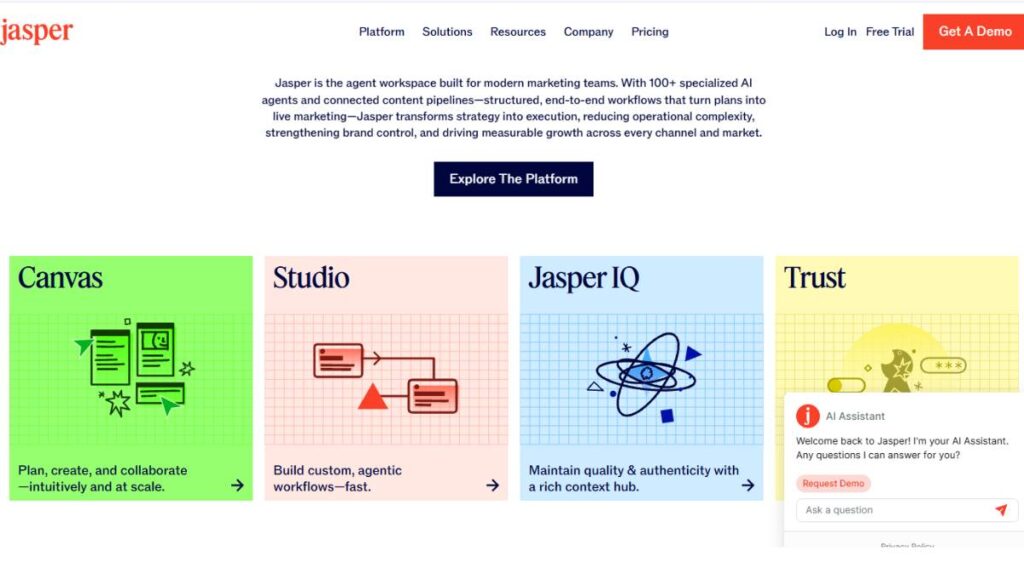
Jasper is widely used by content and growth teams that need structured marketing assets at scale.
Where it stands out
- Templates for ads, blog posts, emails, and landing pages
- Brand voice and style controls for consistency
- Integrations that support content planning and optimization
It’s often chosen by teams managing multiple campaigns at once, where consistency matters just as much as speed.
2. Copy.ai – Best AI Tool for Social Media and Sales Copy
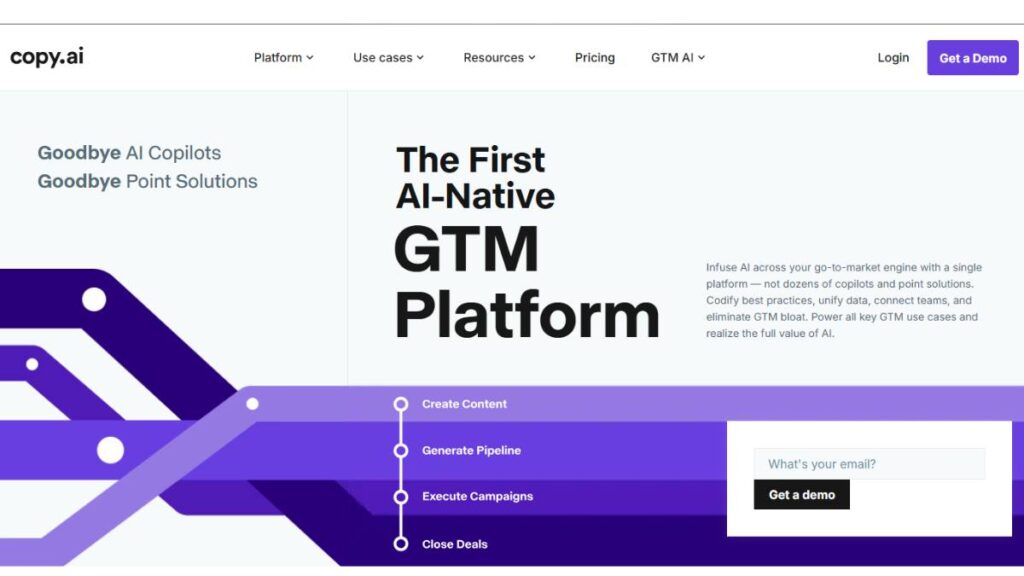
Copy.ai leans heavily into short-form, conversion-focused content.
Strong use cases
- Social media captions and post ideas
- Sales outreach emails and follow-ups
- Quick marketing hooks and value propositions
The interface encourages fast iteration, which makes it useful for teams testing different messaging angles quickly.
3. Writesonic – Best AI Copywriting Tool for SEO Content
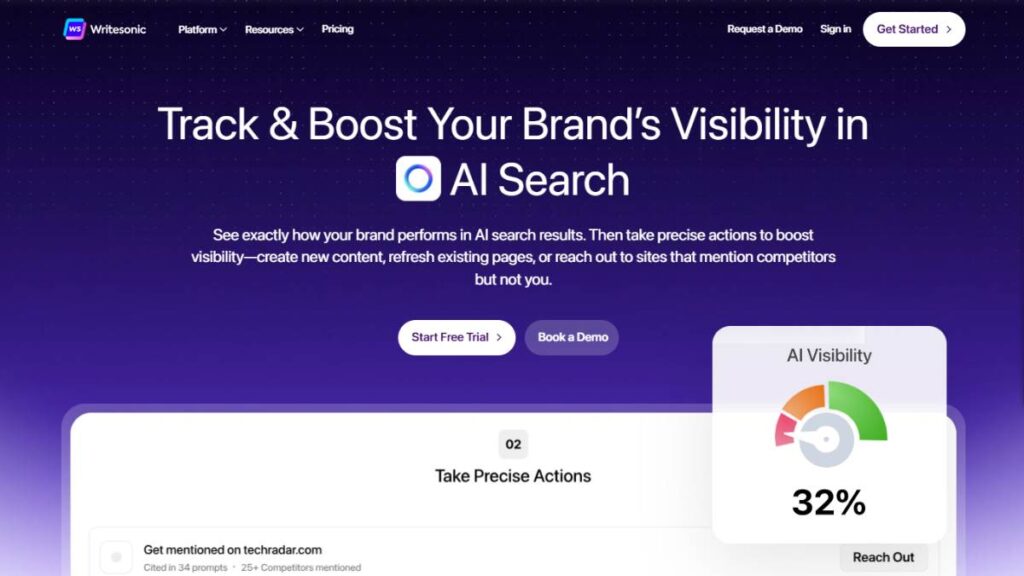
Writesonic is frequently used for longer-form marketing content and structured articles.
Best for
- Blog post drafts
- Website content sections
- Topic-focused article generation
It’s particularly helpful when content needs a clear structure from the start rather than just scattered ideas.
4. Anyword – Best for Performance Marketing Copy
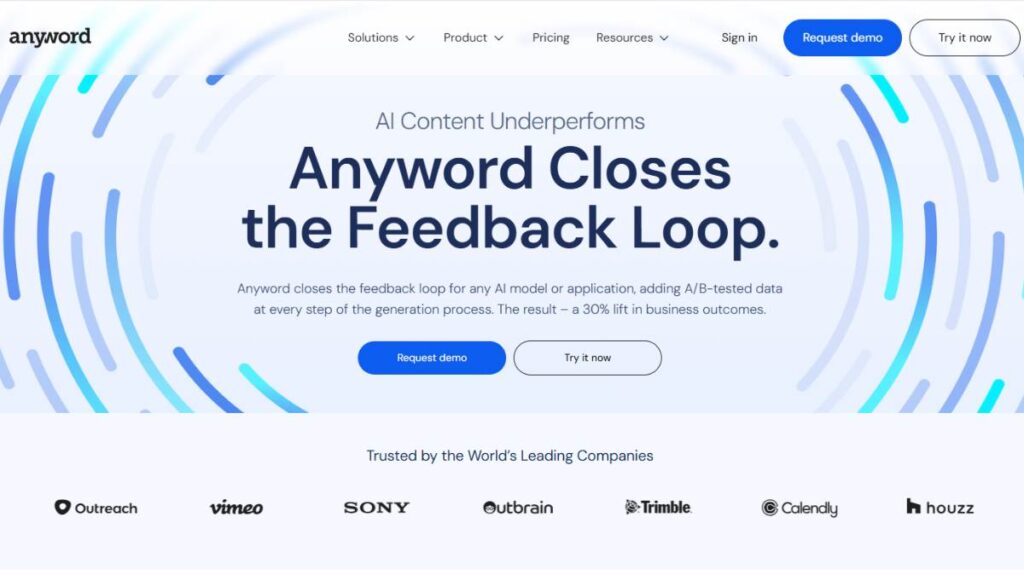
Anyword focuses heavily on data-driven messaging for paid campaigns.
Key strengths
- Predictive performance scoring for ad variations
- Optimization features for paid social and search ads
- Short-form copy built for testing
This makes it a strong fit for performance marketers who live inside ad dashboards and constantly refine messaging.
5. Rytr – Best Budget AI Copywriting Tool
Rytr is known for being affordable and straightforward.
Good for
- Short marketing snippets
- Simple email drafts
- Basic website copy blocks
It’s often used by freelancers, early-stage founders, and small businesses that need support without a large subscription cost.
6. Notion AI – Best AI Writing Assistant for Teams
Notion AI works inside a broader workspace, which changes how it’s used.
Where it helps most
- Brainstorming content ideas
- Drafting inside planning documents
- Supporting content workflows and collaboration
It’s less about standalone copy generation and more about assisting teams already managing projects in Notion.
7. Gemini – Best for Research-Backed Copy
Gemini is often used during the idea and structuring phase of content creation.
Common uses
- Outlining articles and landing pages
- Expanding rough content directions
- Organizing complex topics into readable sections
It’s especially useful when the goal is to clarify thinking before polishing the final message.
8. Claude – Best for Long-Form Natural Writing
Claude is known for producing more conversational long-form drafts.
Best suited for
- Article drafts
- Thought-leadership style content
- Detailed explanations and guides
It’s often chosen when tone and readability matter more than rigid marketing formulas.
9. QuillBot – Best for Rewriting and Paraphrasing Copy
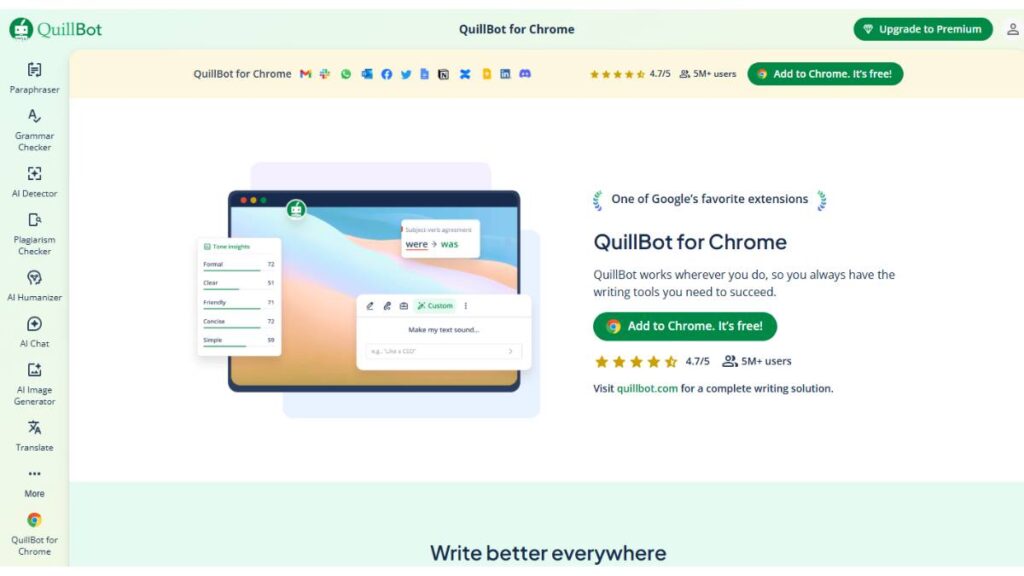
QuillBot isn’t a full copy generator in the traditional sense; it shines at refining existing text.
Useful for
- Rewriting sentences for clarity
- Adjusting tone
- Paraphrasing sections without changing meaning
It’s often part of the editing stage rather than the drafting stage.
10. Copysmith / Describely – Best for Ecommerce Copy
These platforms are built with online stores in mind.
Ideal use cases
- Bulk product descriptions
- Category page copy
- Large inventory content generation
They help ecommerce teams maintain consistency across hundreds or thousands of products without writing each description manually.
11. WordAI / Wordsmith – Best for Content Rewriting
These tools focus on transforming existing content into new variations.
Common applications
- Refreshing older articles
- Creating alternate versions of similar content
- Reworking product or service descriptions
They’re typically used when there’s already a base draft that needs to be rephrased or expanded.
12. LocaliQ AI Copy Tool – Best for Google Ads Copy
LocaliQ’s tool is tailored for paid search campaigns.
Where it fits
- Google Ads headline and description ideas
- Local service advertising
- PPC-focused messaging
It’s designed with advertisers in mind rather than long-form content teams.
13. ContentShake / Surfy / Merlin – Emerging AI Copywriting Tools to Watch
A newer wave of tools is focusing on speed and accessibility, often through browser-based workflows.
Typical strengths
- Quick content generation while browsing
- Workflow-friendly drafting tools
- Lightweight solutions for marketers who need ideas fast
These platforms are evolving quickly and are often adopted by solo marketers and small teams looking for flexible, on-the-go support.
No tool replaces sharp positioning, audience insight, or strong editing. The real advantage comes from choosing a platform that matches the main content need: ads, blogs, ecommerce, or workflow support, and then shaping the output with clear direction and human judgment.
How to Choose the Best AI Copywriting Tool for Your Needs
The “best” tool usually comes down to what kind of copy gets produced every week. A platform that’s great for blog articles might feel clumsy for ad headlines. One built for ecommerce may not help much with thought-leadership content. Matching the tool to the job makes everything smoother.
Best AI Tool for Blog Writing and SEO
Long-form content needs structure, flow, and the ability to stay on topic for more than a few paragraphs.
Look for tools that:
- Handle article-length drafts without drifting off-topic
- Support outlines and section-based writing
- Make it easy to refine tone across longer pieces
These platforms are most useful during the drafting phase, especially when turning outlines into full posts or expanding rough notes into readable content.
Best AI Tool for Social Media Captions
Social copy lives and dies on clarity and speed. Posts need to be short, engaging, and tailored to each platform.
The right tools here usually:
- Generate multiple caption variations quickly
- Adapt tone (professional, playful, bold, etc.)
- Help with hooks and opening lines
This is less about long explanations and more about punchy messaging that fits tight character limits.
Best AI Tool for Google & Facebook Ads
Ad copy tools need to work within strict formats while still delivering strong hooks and benefits.
Strong options for paid ads typically:
- Focus on short-form, high-impact lines
- Generate headline and description combinations
- Support testing different angles (pain point vs benefit vs urgency)
Speed matters here, but so does precision. Small wording changes can shift performance noticeably.
Best AI Tool for Ecommerce Product Descriptions
Ecommerce teams often deal with volume; dozens, hundreds, sometimes thousands of products.
Tools built for this space usually:
- Create consistent descriptions across large catalogs
- Highlight key features and benefits clearly
- Adapt tone for different product categories
They’re especially helpful when the goal is to maintain a baseline level of quality and consistency at scale.
Best Free AI Copywriting Tools
Free plans can work well for lighter needs or early-stage projects.
They’re typically useful for:
- Brainstorming ideas
- Drafting short-form copy
- Testing whether AI-assisted writing fits the workflow
Limits usually show up in word counts, features, or export options, but they’re enough to get a feel for how these tools can support content production.

Enroll Now: AI Marketing Course
AI Copywriting Use Cases
AI copywriting tools are most effective when tied to specific marketing tasks rather than used randomly. Certain use cases stand out because they benefit directly from speed and variation.
AI for Social Media Post Generation
Social media never really “stops.” Brands need a steady stream of posts to stay visible.
AI helps with:
- Caption drafts for regular posting
- Rewording the same message for different platforms
- Generating multiple hook ideas for engagement
It’s particularly useful for avoiding repetitive phrasing when talking about similar offers or updates.
AI for Landing Page Copywriting
Landing pages often follow proven structures: headline, subhead, benefits, proof, and a call to action.
AI tools can support:
- Drafting headline and subheadline options
- Expanding bullet-point benefits into short paragraphs
- Suggesting different ways to frame the same offer
The drafts usually need tightening, but they provide a starting framework that’s faster than building each section from scratch.
AI for Email Marketing Campaigns
Email campaigns require consistent messaging across multiple touchpoints.
Common uses include:
- Subject line variations for testing
- Drafting nurture sequences
- Rewriting the same core message for different segments
It’s helpful when a campaign needs multiple emails that stay on theme but don’t sound identical.
AI for Lead Generation Funnels
Lead magnets, follow-up emails, and landing pages all need to work together.
AI can assist with:
- Drafting opt-in page copy
- Creating follow-up email sequences
- Generating different angles for the same lead magnet
This speeds up funnel creation, especially when testing different positioning.
AI for Performance Marketing Ads
Paid campaigns rely on constant iteration.
AI tools are useful for:
- Producing large sets of headline variations
- Rephrasing benefit statements in different ways
- Adapting the same core message for multiple audiences
They don’t replace performance analysis, but they make it easier to generate the raw material needed for testing.
How to Get High-Quality Copy from AI Writing Tools
The difference between average and effective AI-assisted copy usually comes down to what happens after generation.
Use AI as a Starting Point, Not the Final Draft
First outputs are rarely final-ready. They’re raw material.
Treat them as:
- Idea boards
- Structural drafts
- Collections of phrasing to refine
This mindset keeps expectations realistic and leaves room for improvement.
Add Brand Voice and Personality
AI-generated copy often sounds neutral. Brands rarely should.
Improvement comes from:
- Adjusting tone to match how the brand actually speaks
- Replacing generic phrases with more specific language
- Making sure the copy reflects the brand’s values and positioning
Without this step, the content may read smoothly but feel forgettable.
Insert Real Examples and Case Studies
Specificity builds credibility.
Strong additions include:
- Real use cases
- Concrete outcomes
- Clear before-and-after scenarios
These details turn general claims into persuasive points.
Optimize AI Copy for SEO Keywords
AI drafts don’t always emphasize the right terms naturally.
Refinement usually involves:
- Making sure key topics are clearly addressed
- Adjusting headings and subheadings for clarity
- Expanding thin sections with more useful detail
This ensures the content is both readable and aligned with how people search.
Edit for Conversions and Clarity
Finally, every piece of copy should guide the reader toward action.
That means:
- Shortening long, vague sentences
- Making benefits clearer than features
- Strengthening calls to action so they feel direct and purposeful
AI can produce a solid base. Careful editing is what turns that base into copy that actually performs.
The Future of AI in Copywriting
The conversation has shifted lately. Less hype, more practicality. Teams aren’t asking whether AI belongs in the workflow anymore; that question has mostly passed. The real discussion is about how it fits without flattening creativity or turning everything into the same bland voice.
One clear trend is tighter collaboration between human thinking and machine speed. Drafts come together faster, variations multiply, and early-stage ideation feels less stuck. But the raw output rarely goes out untouched. It gets shaped, trimmed, redirected. Sometimes heavily. That editing layer is where the real persuasion still happens.
Personalization is also moving beyond surface-level tweaks. Not just swapping names or cities, but adjusting angles, objections, and benefit framing for different audience segments. That used to take ages to produce at scale. Now it’s possible to build multiple versions of the same message without burning out the creative team. Oversight becomes more important, though. More volume means more room for things to go slightly off track.
There’s growing interest in predictive performance, too. Some platforms attempt to estimate how well a piece of copy might perform before it’s even published. These scores aren’t gospel; far from it, but they can point teams in useful directions. Think of it as a second opinion, not a final verdict.
Still, markets don’t move on patterns alone. Cultural shifts, emotional tone, timing… those pieces are messy and human. Experience plays a role here. Instinct, even. The future doesn’t look like automation replacing creativity. It looks more like assisted momentum, with humans steering the message where it actually needs to go.
Conclusion:
These tools shine when speed and volume matter. First drafts appear faster. Variations for testing come together without draining all creative energy. For lean teams or fast-moving campaigns, that kind of support makes a noticeable difference.
Where disappointment usually creeps in is at the strategy level. Strong copy depends on positioning, clarity of offer, and a sharp understanding of audience pain points. That thinking has to exist before great messaging shows up. No tool fills that gap automatically.
The most effective setup tends to look like this:
- Use AI to get momentum and explore multiple directions
- Step in with human judgment to refine tone, sharpen benefits, and remove fluff
- Treat outputs as raw material, not finished work
When used this way, quality goes up because time is spent where it matters most: insight and refinement, instead of staring at a blank page. When used carelessly, the result is just more average content floating around. Same tool, very different outcomes.
FAQ: AI Copywriting Tools
1. Which AI tool is best for copywriting?
There’s no single winner for every situation. Some tools handle long-form content better, others are stronger with short, punchy formats like ads or social posts. The best choice usually depends on what gets produced most often and how much control is needed over tone and structure.
2. Is AI replacing copywriters?
Not really. The role is evolving, though. A lot of the heavy drafting work can be accelerated, which shifts more time toward strategy, concept development, and refinement. Copywriters become editors, thinkers, and message architects; less typing, more shaping.
3. Are there free AI writing tools?
Many platforms offer free plans or trial access. These are useful for testing workflows, generating short pieces, or experimenting with ideas. Limitations show up quickly: word caps, feature restrictions, but they’re enough to understand the basics before committing to a paid option.
4. Can AI write SEO-optimized blog posts?
AI can create structured drafts around a topic, sometimes surprisingly detailed. But those drafts often need deeper examples, clearer explanations, and careful fact-checking. Human editing helps turn a decent draft into something genuinely helpful and trustworthy.
5. Is AI-generated copy good for ads?
It can be very effective for producing multiple headlines and description options in a short time. That makes testing easier and faster. Final selections usually benefit from a human pass to tighten the message, align with brand tone, and make sure the emotional angle actually lands.