

Finding the right name for a product sounds easy at first. Then the doubts creep in. This guide looks at how a product name generator can take some of that pressure off and turn a blank page into a working list of ideas. It covers how naming tools actually help, what separates decent suggestions from usable brand names, and why the right name makes marketing smoother down the line. There’s also a breakdown of popular tools and practical advice on narrowing options, checking availability, and testing names in real situations. The focus stays on clear, workable names that can grow with the brand, not just sound clever for a moment.
Table of Contents
Introduction
Coming up with a strong product name sounds simple… until you actually have to do it. Then it becomes a mix of creativity, strategy, and second-guessing every option. A product name generator helps speed up that messy middle stage by turning your keywords, product features, and brand direction into structured name ideas you can actually work with.
Instead of staring at a blank page, you start with a list. And from there, you refine.
A good name does more than just “sound nice.” It affects how easily people remember your product, how clearly they understand what it does, and how confidently they click when they see it online. The right name can make marketing easier. The wrong one can make everything feel like an uphill climb.
In this guide, we’ll break down:
- What a product name generator really does
- Why naming has a direct impact on brand growth and visibility
- The features that separate average naming tools from genuinely useful ones
If you’re launching something new or renaming something that never quite clicked, this will help you make smarter, more strategic choices.
Understanding Product Name Generators
What Is a Product Name Generator?
A product name generator is a tool that creates name ideas based on the words and themes you provide. You might enter things like:
- What your product does
- The audience you’re targeting
- The tone you want (premium, fun, technical, minimal, etc.)
From there, the tool mixes language patterns, keywords, and branding logic to produce lists of possible names.
It doesn’t replace human judgment. It supports it. Think of it as a structured brainstorming partner that doesn’t run out of ideas.
The biggest difference between traditional brainstorming and a product name generator is speed and range. Humans tend to circle around the same few patterns. A generator pushes you into combinations you might not have considered; some bad, some surprisingly good.
How AI Is Changing Product Naming in 2026
Naming tools have become more advanced in how they understand context. Instead of just stitching random words together, modern generators can:
- Recognize industry language and trends
- Adjust suggestions based on tone and positioning
- Produce names that feel brandable instead of purely descriptive
This means you’re not just getting “keyword mashups.” You’re getting names that are shorter, cleaner, and more aligned with how real brands sound today.
There’s also more focus on usability. Many tools now pair name suggestions with domain ideas or branding styles, which makes the process feel more practical and less abstract.
Why a Good Product Name Matters for Branding and Visibility
A product name does a lot of heavy lifting. It shapes first impressions before someone reads a single line of copy.
Here’s what a strong name helps with:
- Clarity – People should have a rough idea of what the product is about
- Memorability – Easy to say, easy to recall later
- Search discoverability – Relevant words can make your product easier to find
- Click appeal – A clear, confident name earns more attention in crowded lists
On the flip side, a confusing or overly generic name can make marketing harder than it needs to be. You end up spending more time explaining instead of building momentum.
That’s why using a product name generator isn’t just about creativity. It’s about reducing guesswork and starting with options that already align with how people search, browse, and buy.
Key Features to Look For in a Product Name Generator
Not all product name generators are built the same. Some throw out random combinations. Others actually help you move closer to a usable brand name. The difference usually comes down to features.
Contextual Keyword Processing
A strong product name generator should understand the meaning behind your keywords, not just repeat them.
Look for tools that:
- Let you describe your product in a few words or a short phrase
- Use those inputs to create variations, synonyms, and related concepts
- Produce names that feel connected to your product’s purpose
This is especially important if you want names that are both brandable and relevant, rather than vague or disconnected.
Emotional and Brand Tone Customization
Tone changes everything.
A fitness app, a luxury skincare product, and a developer tool shouldn’t sound like they came from the same naming template. Better tools allow you to guide the style of names by choosing a tone, such as:
- Professional
- Playful
- Modern
- Premium
- Tech-focused
This helps you avoid names that feel off-brand right from the start.
Domain Availability and Social Handle Checks
A name might sound perfect, until you realize the domain is taken and every social handle is gone.
Some product name generators reduce this friction by:
- Showing available domain variations alongside name ideas
- Suggesting slight modifications that still keep the brand feel
- Helping you spot names that are easier to claim online
This saves time and keeps you from getting attached to names you can’t realistically use.
Bulk Name Generation for Multiple Products
If you’re building a product line, not just a single offer, scalability matters.
Bulk generation features are useful when you need:
- Multiple related product names under one brand
- Variations for different versions or tiers
- Consistent naming patterns across a catalog
Instead of starting from scratch every time, you can build a naming system that feels connected.
SEO-Friendly and Discoverability-Focused Suggestions
Some tools lean heavily into creativity but ignore practical visibility. Others balance both.
The most useful generators help you land on names that:
- Include meaningful words related to your category
- Avoid being so abstract that no one understands you
- Feel natural in product listings, marketplaces, and search results
You still want a brandable name. But one that aligns with how people actually look for solutions gives you a strong head start.
Choosing the right product name generator isn’t about finding the one with the flashiest interface. It’s about finding one that helps you move from random ideas to realistic, usable product names with less friction and better direction.
10 Best Product Name Generator Tools
There’s no shortage of product name generator tools out there. The difference is in how usable the suggestions are. Some give you endless lists that feel random. Others actually produce names you could imagine on a landing page, a package, or an app icon.
Here are ten tools that consistently stand out for idea quality, flexibility, and practical features.
1. Numerous: Product Name Generator for Scale
Numerous is built for volume. If you need a lot of name ideas quickly, especially across categories or variations, this one handles bulk generation better than most.
Best for:
- Teams working on multiple product ideas at once
- Structured naming projects where you want lots of variations
What stands out:
- Fast generation of large name lists
- Works well when you have clear keyword inputs
- Useful for comparing naming directions side by side
2. Namelix: Creative, Brandable Name Generator
Namelix leans toward short, brand-style names rather than long descriptive phrases. The suggestions often feel modern and startup-friendly.
Best for:
- Apps, SaaS tools, and digital products
- Founders looking for short, catchy brand names
What stands out:
- Filters for name length and style
- Focus on brandable, made-up but clean-sounding words
- Visual previews that help you imagine branding potential
3. QuillBot Product Name Generator
This one is simple and quick, which is sometimes exactly what you need in the early brainstorming stage.
Best for:
- Early ideation, when you just need options to react to
- Solo founders or marketers exploring rough directions
What stands out:
- Straightforward interface
- Fast output without complicated setup
- Good for sparking angles you hadn’t considered
4. Shopify Product Name Generator
Shopify’s tool is especially useful for physical products and e-commerce brands. The names often lean toward clear, market-friendly phrasing.
Best for:
- Online stores and product-based businesses
- Consumer goods, fashion, accessories, and home items
What stands out:
- Practical, sellable-sounding names
- Domain suggestions alongside ideas
- Strong fit for product pages and collections
5. Ahrefs Product Name Generator
Ahrefs approaches naming with a focus on real-world discoverability and clarity. The suggestions often feel grounded and category-aware.
Best for:
- Products that rely on search visibility
- Tools, services, and software with clear functions
What stands out:
- Names that connect closely to the product’s purpose
- Less fluff, more clarity
- Useful when you want your name to signal what you actually do
6. BizNameWiz: Startup-Friendly Name Tool
BizNameWiz is straightforward and practical. It’s not flashy, but it gets the job done, especially for early-stage businesses.
Best for:
- Startups still shaping their positioning
- Founders exploring multiple brand directions
What stands out:
- Wide range of name styles
- Easy to adjust keywords and rerun searches
- Balanced mix of brandable and descriptive ideas
7. Wix Name Generator: Language and Brand Variety
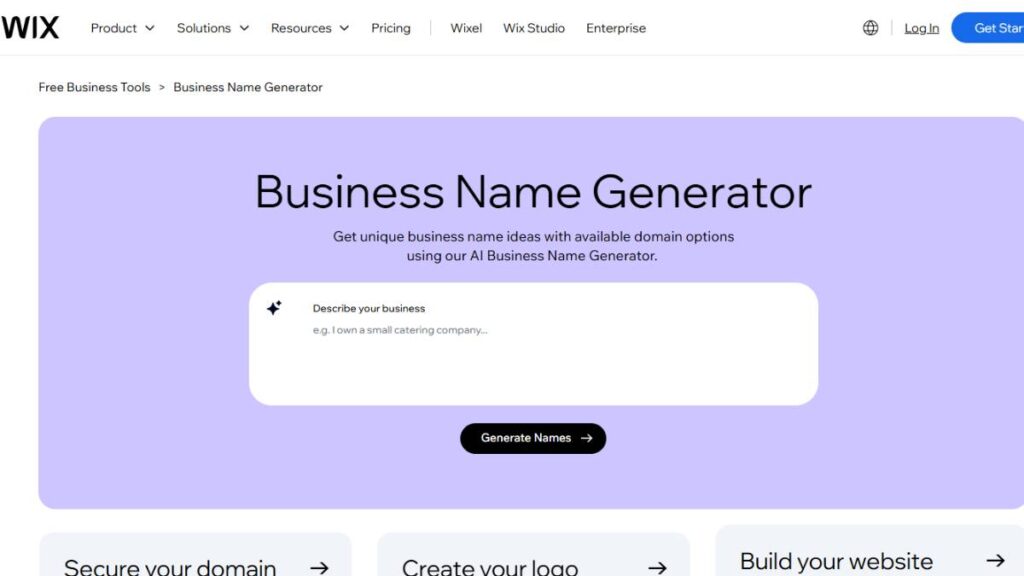
Wix offers a flexible naming tool that works well if you’re also thinking about building a site right after choosing a name.
Best for:
- Small businesses and creators
- Brands that want naming + website setup in one flow
What stands out:
- Style-based suggestions (modern, playful, professional)
- Options that translate well into domain names
- Strong fit for service businesses and personal brands
8. Convas Product Name Generator
Convas is built for speed. You enter a few words and get a list almost instantly, which makes it useful when you’re in rapid brainstorming mode.
Best for:
- Quick idea sprints
- Marketers are testing multiple product angles
What stands out:
- No complicated setup
- Fast results, you can skim and shortlist
- Helpful when you want volume first, refinement later
9. NameHassle: Instant Domain + Brand Name Ideas
NameHassle combines naming with domain discovery, which makes it practical when you’re serious about launching.
Best for:
- New product brands that need an available web address
- Founders who don’t want to fall in love with taken names
What stands out:
- Domain-focused suggestions
- Variations that keep the brand intact
- Useful bridge between idea and execution
10. TinyCheque Product Name Generator
TinyCheque offers more control over industry and style, which helps when you want names that feel tailored rather than generic.
Best for:
- Niche industries
- Brands with a clear tone or personality in mind
What stands out:
- Industry-specific input options
- Style control that shapes how names sound
- Good balance between creative and practical suggestions
No tool will hand you the perfect product name on the first try. The real value comes from using these generators to explore directions, spot patterns, and narrow down names that feel aligned with your product, audience, and long-term brand vision.

Enroll Now: Product Marketing Course Online
How to Choose the Right Product Name Generator
Not every product name generator is right for every business. Some are better for punchy brand names. Others lean toward practical, descriptive options. The trick is knowing what kind of name the product actually needs before falling in love with a tool.
Start with the type of business.
- SaaS and tech products often need short, flexible names that can grow with new features
- E-commerce brands usually benefit from clearer names that feel natural on product pages
- Service-based offers tend to work better with names that sound trustworthy and professional
A mismatch here causes friction later. The name might sound cool, but feel out of place in real marketing.
Keywords to Test in Product Name Generators
A product name generator is only as good as the words going in. Generic inputs lead to generic outputs. More thoughtful prompts usually produce better directions.
Try combining:
- The main function of the product
- A key benefit or outcome
- The type of user
- A tone indicator like “premium,” “simple,” or “fast.”
Sometimes adding one emotional word to a functional phrase changes the entire feel of the results. Worth experimenting a bit.
What to Check Before Finalizing a Name
After building a shortlist, slow the process down. This is where practical thinking matters more than creativity.
Look at:
- Domain availability: small variations are fine, but avoid messy spellings
- Existing brands with similar names; confusion is expensive
- Long-term fit; will the name still make sense in two or three years?
A name doesn’t need to be perfect on every front. It does need to avoid obvious problems.
A Simple Naming Workflow That Actually Works
Overcomplicating naming usually leads to endless loops. A straightforward process keeps things moving.
- Generate a large list of potential names
- Remove anything hard to pronounce, spell, or explain
- Narrow it down to a small shortlist
- Check domains and basic trademark conflicts
- See how the names look in headlines, logos, and product descriptions
- Get outside opinions from people who resemble the target audience
- Make the call and move forward
At some point, momentum matters more than perfection.
Best Practices for Naming Your Product
Good product names rarely come from a single flash of inspiration. They’re usually shaped through filtering, refining, and a bit of practical restraint.
Clear Beats Clever
Clever names can be fun. But if people can’t connect the name to what the product does, extra marketing effort is required just to explain the basics.
Names that hint at the category, benefit, or outcome tend to carry their own weight. Less explaining. More understanding.
Blend Meaning With Brand Personality
Purely descriptive names can feel flat. Completely abstract names can feel confusing. The sweet spot often sits somewhere in the middle.
A useful pattern:
- One word that signals the space or benefit
- One twist that gives it personality and distinctiveness
This keeps the name grounded while still feeling like a brand, not a label.
Check the Competitive Landscape
Before settling on anything, look around.
- Are similar names already in use?
- Could customers mix the product up with a competitor?
- Does the name accidentally resemble something unrelated or negative?
These small checks prevent big headaches later.
Leave Room to Grow
Products evolve. Features expand. Audiences shift. A name that’s too narrow can start to feel limiting.
Better to choose something that:
- Covers the broader idea behind the product
- Still works if new features or versions are added
- Doesn’t lock the brand into one tiny niche
Rebranding later is possible, but rarely painless.
Test Names in Real Situations
Names behave differently in real use than they do in a list.
Try:
- Writing the name in a headline
- Placing it next to a logo-style design
- Using it in a sentence like a customer would
- Saying it out loud in conversation
Awkward names reveal themselves quickly when used in context. That’s useful information, not a setback.
Conclusion:
A product name might seem like a small decision early on. Then it starts showing up everywhere: on landing pages, in ads, in conversations, in customer reviews. Suddenly, it carries a lot of weight.
Using a product name generator helps widen the field of ideas and break out of the usual mental loops. Instead of forcing creativity on demand, there’s a pool of options to react to, shape, and refine. That shift alone makes the process more manageable.
What matters most is not chasing the most unique or clever name in the room. It’s choosing one that fits the product, makes sense to the audience, and feels strong enough to build on.
Once that foundation is in place, the rest of the brand has something solid to stand on.
FAQ: Product Name Generator Tools & Naming Strategy
1. What makes a product name generator better than manual brainstorming?
Brainstorming sessions tend to run in circles after a while. Same words, same patterns, just rearranged. A name generator throws in unexpected combinations that people in the room might never say out loud. Not all of them will be good; far from it; but that mix of odd and interesting ideas often leads to directions worth refining.
2. Can a product name generator help with search visibility?
It can help indirectly. When a name clearly reflects what the product does, people understand it faster. That clarity sticks. Over time, names that feel obvious in a good way are easier to remember and search for. It’s not about forcing keywords in, but more about choosing words that naturally connect to the product’s purpose.
3. How many keywords should be used in a product name generator prompt?
Usually, two or three is plenty. One core term for the product, one for the outcome or benefit, and maybe a tone cue. More than that tends to muddy the results. Short inputs often produce cleaner, more flexible name ideas that don’t feel overloaded or awkward to say.
4. Should a product name be made-up or descriptive?
Descriptive names make early adoption easier because people instantly get the idea. Invented names can stand out more, but they need stronger branding support to mean anything. Many effective names blend both; something familiar with a slight twist. That balance keeps things clear without sounding generic.
5. Are product name generator tools free to use?
Many offer free versions that are perfectly fine for early exploration. Those are great for generating rough lists and spotting patterns. Paid plans usually add deeper customization or branding extras, which can help later when narrowing choices. At the beginning, though, free access is often enough to get solid momentum.
6. How can you check if a product name is already taken?
Start simple. Search the name online and see who’s already using something similar. Then check domain availability and social media handles. If the name moves closer to the launch stage, a trademark search becomes important. It feels like extra work, but changing names later is far more painful.
7. Can a product name generator create industry-specific names?
Yes, but only if the prompt is specific. Without context, suggestions come back broad and sometimes irrelevant. Adding details about the audience, industry, or use case makes a big difference. A little clarity at the start saves time later when sorting through options that don’t quite fit.
8. What keywords should be entered into a product name generator?
Focus on what the product actually does and the main result it delivers. Then consider a word that hints at brand personality; maybe bold, simple, premium, or friendly. That combination usually leads to names that feel meaningful yet still brandable, instead of sounding either too technical or too vague.
9. Do AI-generated product names perform well in branding and marketing?
They can, once filtered carefully. Most outputs will feel average; a handful will stand out. The real test is practical: how the name sounds in conversation, how it looks in a logo, and whether customers feel comfortable saying it. Strong names work because they fit naturally, not just because they’re clever.