

Performance reviews, customer feedback, and peer evaluations all matter. But writing them? That’s where things slow down. This guide breaks down how an AI Review Generator actually works, where it helps, and where it still needs human oversight. It covers real use cases across HR teams, ecommerce businesses, managers, and employees handling self-evaluations. You’ll also find a detailed comparison of the top AI review generator tools, plus practical advice on choosing the right one. If reviews feel time-consuming or inconsistent, this blog explains how AI can simplify the process without losing the human judgment that makes feedback meaningful.
Table of Contents
Introduction:
Why AI Review Generators Are Becoming Essential for Businesses and Professionals
Writing reviews can be…ugh, exhausting. Whether it’s for employees, customers, or products, someone has to sit down and craft something coherent, structured, and actually useful. And let’s be honest, it rarely comes out right on the first try. There’s always editing, deleting, rephrasing, re-reading…you get the picture.
That’s why review generators are getting attention. Not because they’re some magic shortcut, but because they help you get the structure right fast. The content can still sound human; you don’t end up with awkward, robotic sentences.
The demand is rising in a few places that really matter:
- Employee performance reviews: Trying to give fair, actionable feedback for a whole team can be a nightmare if you do it manually.
- Customer reviews: Authentic testimonials matter, but writing a bunch manually? Painful and often repetitive.
- Product reviews: Especially on e-commerce platforms, you need clear, readable evaluations without sounding generic.
- Peer and self-evaluations: Teams need structured ways to give feedback without awkward phrasing or missing points.
Here’s the thing: reviews aren’t just about ticking a box. Done right, they help people improve, feel recognized, and make smarter decisions. Done poorly, they create confusion; or worse, resentment. Review generators aim to hit the sweet spot: faster, more organized, but still meaningful.
By the end of this guide, you’ll have a solid understanding of what review generators do, how they actually work, the different types, and which options are worth looking at this year.
What Is an AI Review Generator?
Put simply, it’s a tool that takes information, achievements, feedback notes, metrics, and turns them into a readable, structured review. Think of it as someone helping you organize your thoughts so it makes sense on paper. That’s really all it is.
Types of Review Generators
Different generators do slightly different things, depending on what you need:
- Performance review generators – for HR teams evaluating employees.
- Product review generators – structured feedback for items on sale.
- Customer review generators – authentic testimonials for Google, Amazon, Yelp, etc.
- Peer review generators – structured feedback between colleagues.
- Self-evaluation generators – summarizing your own contributions in a coherent format.
Real-Life Use Cases
- HR departments are using them to get through annual performance reviews without losing their minds.
- Managers are putting together feedback reports in a way that actually highlights achievements and areas for growth.
- Businesses generating consistent customer testimonials that don’t sound bland or repetitive.
- Employees creating self-evaluations that are readable and actually reflective.
At the end of the day, a review generator’s value isn’t just about speed. It’s about producing reviews that make sense, that can be acted upon, and that don’t make anyone roll their eyes.
How a Review Generator Works
It might sound fancy, but the mechanics are pretty simple when you look closely.
Step 1: Collect Your Inputs
You need the basics first:
- Name of the employee or product
- Role, category, or type
- Key achievements or highlights
- Goals, feedback points, or customer comments
If the inputs are messy, the output won’t be useful. It’s like trying to make a decent meal from random scraps; you need the right ingredients first.
Step 2: Analyze and Organize
The generator sorts through the data, figures out patterns, separates strengths from weaknesses, and highlights what actually matters. The result is something readable and structured.
Step 3: Generate the Draft
This is when the review starts to look like a review:
- Strengths: What’s going well.
- Weaknesses: Areas that need attention.
- Achievements: Wins, milestones, contributions.
- Recommendations: Practical next steps or suggestions.
Step 4: Personalize and Tweak
Not all reviews need the same tone. A senior employee might warrant something formal, while peer feedback can be more conversational. Most generators let you tweak style, length, and emphasis. This keeps the review from feeling generic.
Step 5: Final Check
Even a good draft benefits from a quick read-through. A small tweak here, a sentence adjusted there, makes it sound more human, more intentional.
Key Benefits of Using a Review Generator
They’re more than just “time savers.” Here’s why teams actually find them useful:
- Saves time: Drafting manually can take hours; generators do it in minutes.
- Consistent quality: Everyone gets a review in the same readable format.
- Reduces bias: Keeps evaluations focused on actual performance, not gut feelings.
- Scales well: Helpful for big teams or businesses with many products/customers.
- Boosts productivity: Less time drafting, more time acting on feedback or coaching.
At the end of the day, it frees up energy for the parts that actually require human judgment. Drafting the words is one thing; having meaningful conversations about growth is another.
Best AI Review Generator Tools
Picking a review generator can be tricky. There are plenty of options out there, and honestly, a lot of them promise the moon but deliver something…well, underwhelming. Some are great for HR, some for customer reviews, some for product evaluations, but the key is to match the tool to the actual need. The list below isn’t just a “top ten for clicks” thing. These are solid choices that have stood out in practical use.
1. ClickUp AI Review Generator
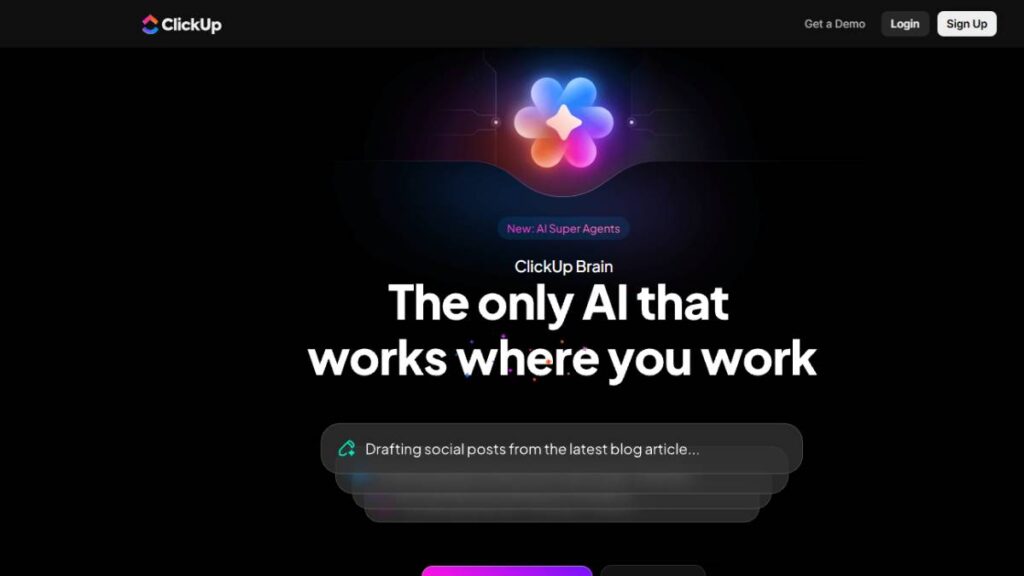
Good for HR teams or managers who need to keep feedback in one place. It’s not flashy, but it does the job. Reviews stay connected to actual tasks and projects, which helps avoid the generic “good job, keep it up” problem.
Highlights:
- Generates employee feedback automatically
- Integrates with workflows and project tracking
- Supports collaboration across multiple managers
The value here is context; feedback is tied to the work, not just floating in a vacuum. That makes it easier to act on.
2. Easy-Peasy AI Review Generator
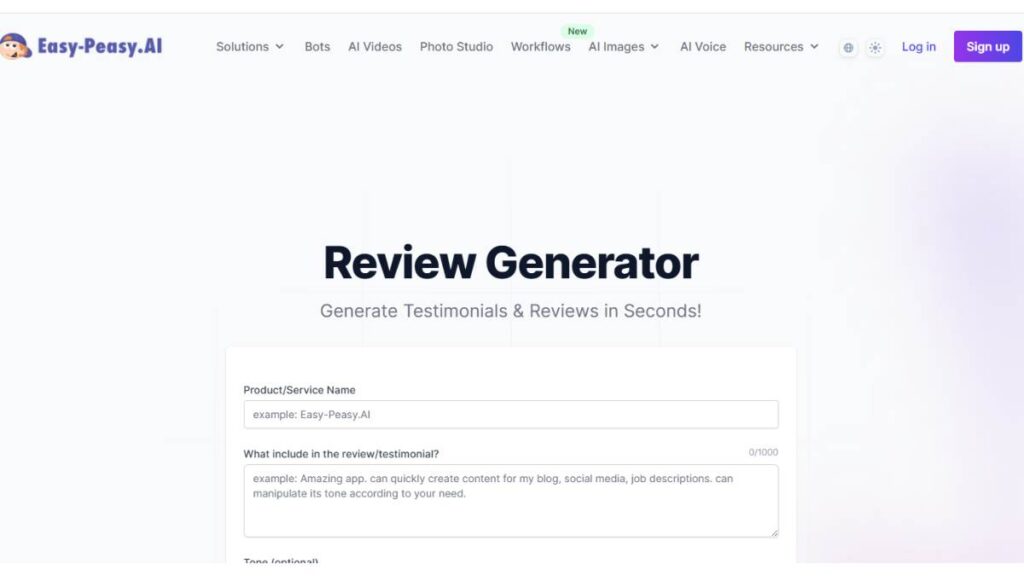
Exactly what it says; easy. Fast to set up, quick outputs, and flexible enough to tweak tone or length. For teams that just need to get reviews out without spending forever on formatting, this works.
Highlights:
- Supports over 40 languages
- Handles self-evaluations and peer reviews
- Let’s you adjust style and nuance quickly
It’s simple, reliable, and doesn’t overcomplicate things. Sometimes, simple wins.
3. PerformanceReviews.ai
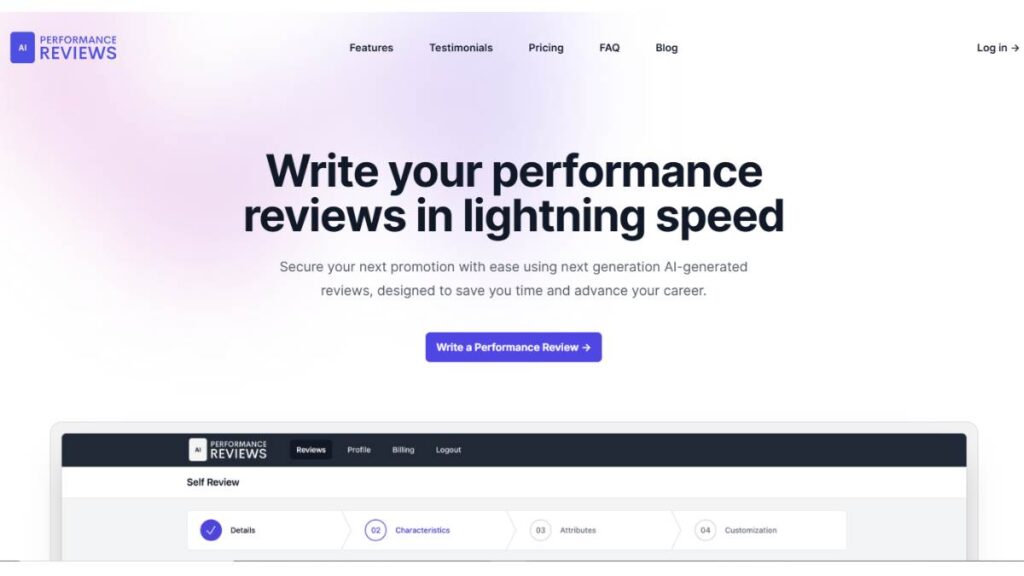
A solid pick for detailed performance and self-evaluations. Breaks down strengths, weaknesses, and areas for growth in a way that’s actually readable. Good for managers who need concise, promotion-ready summaries without rewriting everything.
Highlights:
- Generates automated summaries
- Analyzes strengths and improvement areas
- Makes feedback actionable
What’s nice is that it doesn’t just describe; it gives a starting point for meaningful conversations.
4. Venngage AI Review Generator
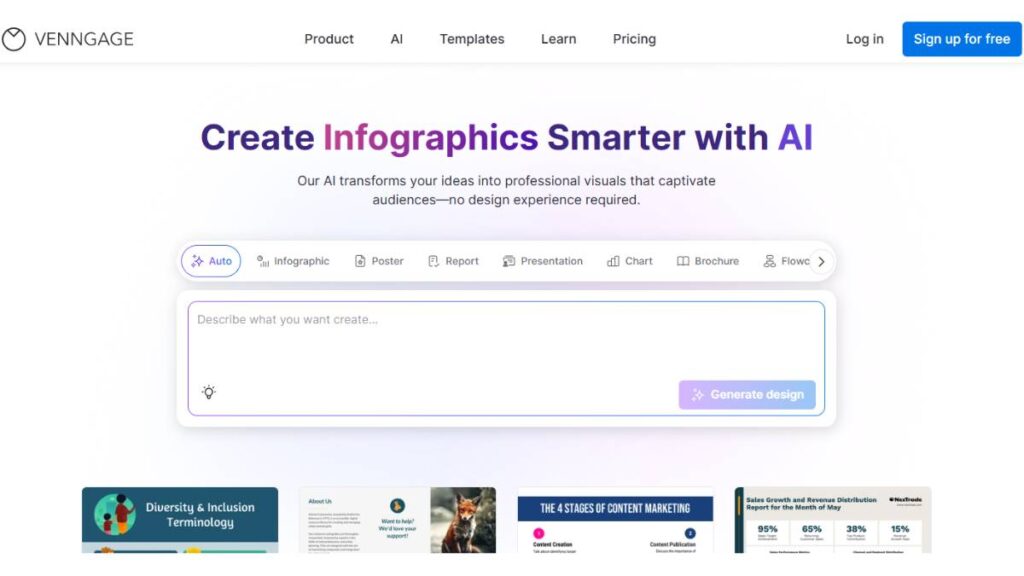
This one’s great if your audience likes visuals. Charts, tables, and templates make the reviews easier to digest, especially if the team is big and reading long paragraphs is…well, no one’s favorite thing.
Highlights:
- Role-specific review creation
- Detailed insights on performance
- Visual report integration
It turns a bunch of text into something you can actually scan in a meeting. That’s surprisingly helpful.
5. GravityWrite AI Review Generator

Good for managers who want a draft that’s already structured; strengths, weaknesses, recommendations; all laid out. Less thinking about formatting, more focus on the content.
Highlights:
- Pre-built feedback templates
- Structured output ready to tweak
- Automated performance analysis
It’s predictable, but that’s the point; sometimes you just need a base to start from.
6. Writify AI Review Generator
Perfect if you want your reviews to feel personal. Adjust tone, tweak phrasing, highlight specific contributions. It doesn’t just churn out generic text.
Highlights:
- Highly customizable
- Structured and coherent feedback
The subtlety here matters; makes each review sound intentional rather than formulaic.
7. ReviewGen AI
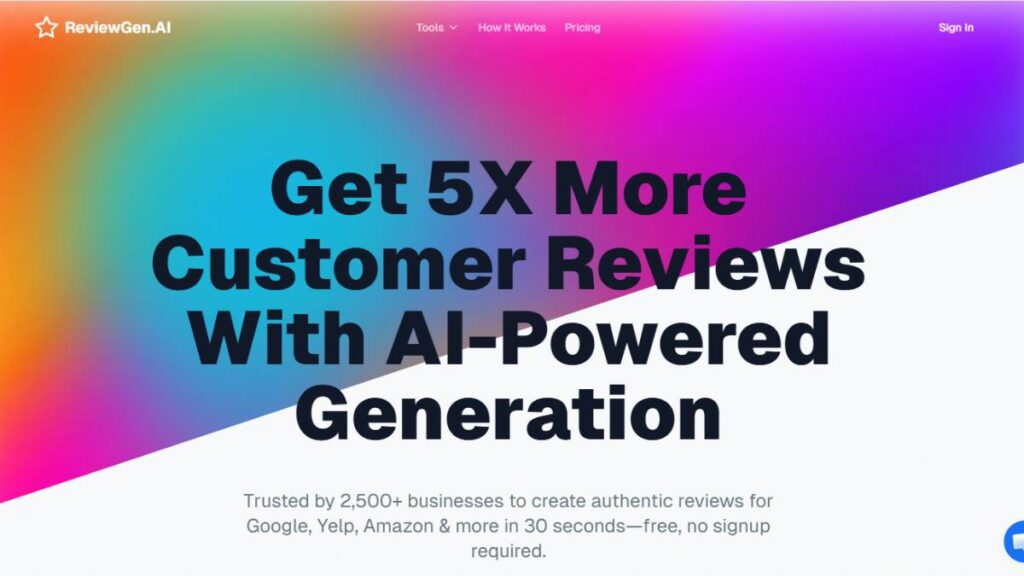
Focuses on customer reviews. Good if you’re managing online reputation or e-commerce feedback. Helps keep the tone consistent without sounding robotic.
Highlights:
- Generates reviews across multiple platforms
- Tracks engagement and response quality
The thing to note: it’s more about volume with readability, not fancy HR summaries.
8. Typli AI Review Generator
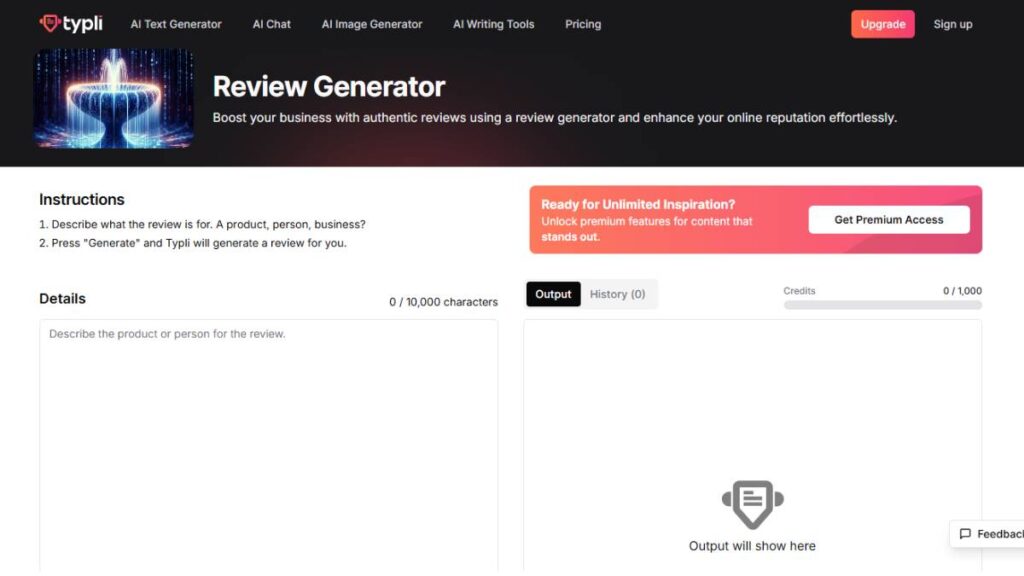
Best for error-free professional writing. Grammar and readability are spot-on. Saves time fixing mistakes, which is a nice relief when juggling dozens of reviews.
Highlights:
- Built-in proofreading
- Optimized professional tone
It’s a practical tool for anyone who hates correcting simple errors.
9. Galaxy AI Review Generator
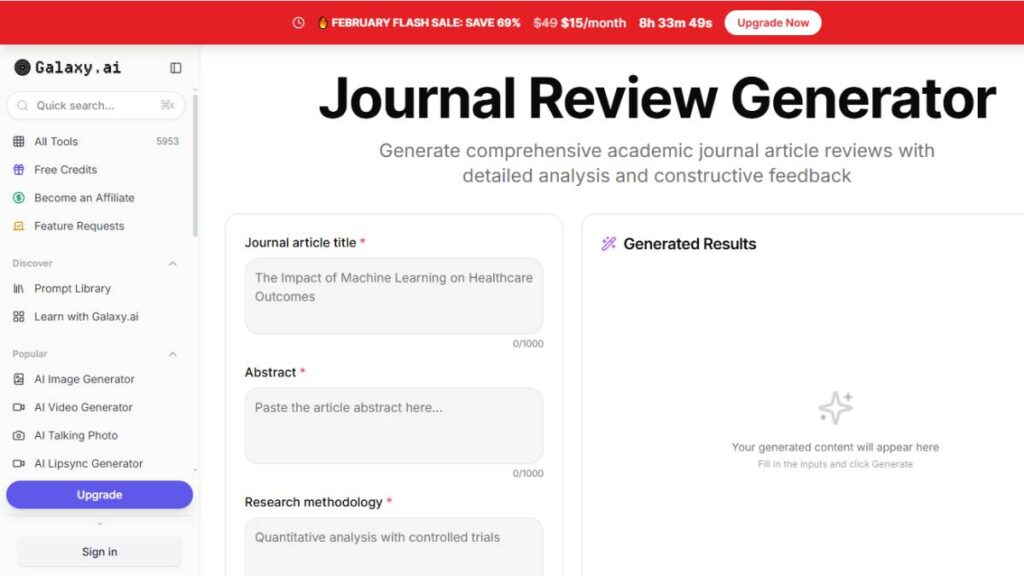
A bit different; more of a multi-tool platform. Good if you pull data from multiple sources and need reviews to be coherent. Flexible, though maybe overkill if your team just needs standard performance feedback.
Highlights:
- Integrates with multiple tools
Useful for teams handling complex data sets and feedback workflows.
10. MaxReview AI Generator
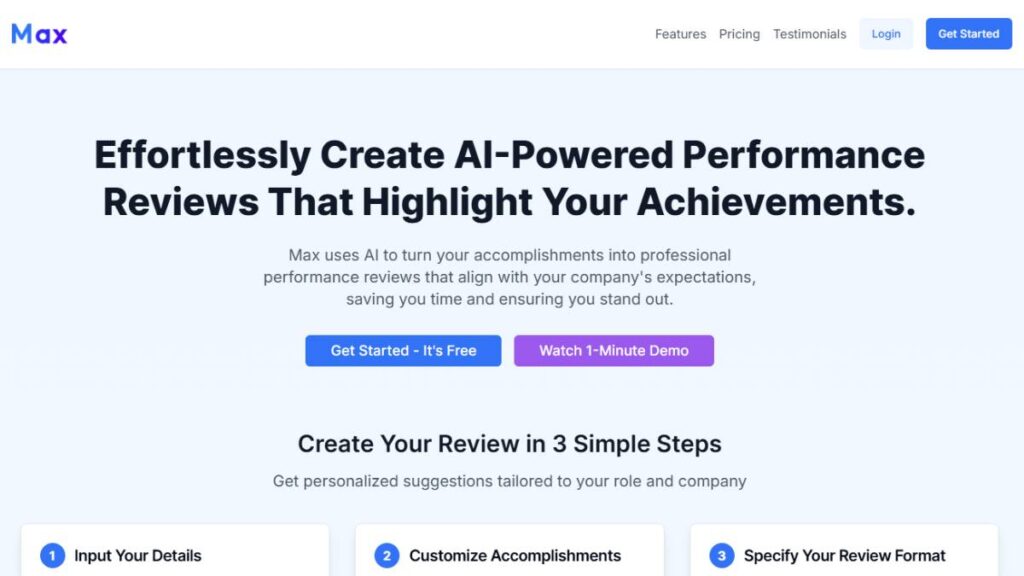
Leans into actionable suggestions. Rather than just describing performance, it helps outline the next steps. Perfect for managers who want reviews to lead directly to development planning.
Highlights:
- Tailored recommendations
- Highlights actionable insights
It’s the difference between a review that’s “nice to read” and one that actually drives improvement.
Across these ten, the takeaway is simple: no tool is perfect for every situation. Some are quick and flexible, some focus on clarity, and others on actionable guidance. The real skill is knowing what your team actually needs and picking the right fit, not chasing the latest shiny option.

Enroll Now: Advanced Digital Marketing Course
How to Choose the Best AI Review Generator (Buyer’s Guide)
Not all review generators are built for the same reality. Some are clearly designed for HR teams managing hundreds of employees. Others feel more suited for freelancers, founders, or small teams trying to save time. The difference shows up quickly once you start using them.
A few things matter more than others.
Accuracy comes first.
The review shouldn’t feel stitched together from generic phrases. It should reflect the role, the work, and the actual contribution. If every review sounds interchangeable, the tool isn’t helping; it’s just rephrasing templates.
Customization is where real usefulness shows up.
Sometimes a review needs to be encouraging. Sometimes direct. Occasionally formal, especially when it becomes part of official records. Good tools let you adjust tone, depth, and structure without fighting the interface.
Tone control sounds minor, but it’s not.
There’s a big difference between “met expectations” and “consistently delivered strong results.” The wording shapes perception. Managers already know this. The tool should support that nuance, not flatten it.
Integration matters more than expected.
If the generator connects with existing HR systems or project tools, the process becomes smoother. Otherwise, it turns into copy‑paste work, which defeats part of the purpose.
Language flexibility is critical for distributed teams.
Many companies now operate across regions. Reviews need to work across languages without losing clarity or professionalism.
Now, about free vs paid versions. Free tools can work for occasional use. But they often limit output quality, length, or control. Paid tools usually provide more reliable results, especially when reviews affect promotions, compensation, or performance tracking. That’s where precision matters more.
For individuals, simplicity tends to matter most. For organizations, scalability and consistency become the priority. Different needs. Different tools.
The right choice usually becomes obvious after generating a few real reviews. If the output feels usable with minimal editing, it’s doing its job.
AI Review Generator vs Manual Review Writing
Manual reviews have been the standard forever. And honestly, they still have a place. But they come with friction; mostly time, and sometimes inconsistency.
Time is the most obvious difference.
Writing a thoughtful review takes concentration. Not five minutes. Often much longer, especially when trying to be fair and specific. Generators reduce that initial effort significantly. They give you a structured starting point. That alone removes a lot of mental overhead.
Consistency is another factor.
When reviews are written manually across different managers, the style and depth vary wildly. Some write detailed evaluations. Others keep it vague. Tools help normalize that structure. Not perfectly, but noticeably.
Context is where humans still lead.
A generator won’t fully understand team dynamics, personal growth, or situational challenges. It can organize facts. It can suggest language. But interpretation still belongs to people. Always has.
Scalability changes everything at a larger scale.
Writing ten reviews manually is manageable. Writing two hundred becomes exhausting. Fatigue creeps in. Quality drops. Tools prevent that drop by maintaining structure even when volume increases.
Cost isn’t just about software pricing.
It’s about time. Manager time is expensive. HR time is expensive. When reviews consume days or weeks, the operational cost becomes real, even if it doesn’t show up as a direct expense.
The strongest approach isn’t choosing one over the other. It’s combining both. Let the generator handle the structure. Let humans handle judgment, context, and final tone. That balance tends to produce the best outcome.
Best Use Cases of AI Review Generators
These tools become most useful when review writing turns into a repeated operational task, not a one‑off activity.
HR performance reviews are the most obvious fit.
Managers often struggle to translate observations into structured feedback. Not because they lack insight, but because writing clearly takes effort. Generators help convert scattered notes into organized evaluations. It removes the blank‑page problem.
Employee self‑evaluations benefit a lot, too.
Many employees know what they’ve done, but explaining it professionally feels awkward. Tools help frame contributions properly: achievements, growth areas, goals. It makes the review clearer for both sides.
Customer review generation works well for businesses managing their reputation.
Especially across multiple platforms. Maintaining consistency in tone and messaging becomes easier without sounding repetitive or careless.
Product reviews in ecommerce are another strong use case.
When catalogs grow, writing individual reviews manually becomes unrealistic. Generators help create structured, readable descriptions that highlight strengths without overcomplicating things.
Peer reviews and team feedback also become easier.
People hesitate when giving written feedback. Not because they lack opinions, but because wording matters. The right phrasing can encourage improvement. The wrong phrasing creates friction. Tools help soften that barrier.
Overall, the biggest benefit isn’t automation alone. It’s clarity. Reviews stop feeling rushed or uneven. They become more structured. Easier to read. Easier to act on.
And over time, that consistency improves the entire review process, not just the writing part, but the conversations that follow.
Limitations of AI Review Generators
AI review generators can do a lot of heavy lifting, no doubt. But they aren’t perfect, and thinking they are can get you in trouble.
Depends on what you feed it
If the input data is off, incomplete, or vague, the output will be… not great. You can’t expect it to fill in gaps that aren’t there. The AI isn’t psychic.
Can miss the human stuff
It can list strengths, weaknesses, and achievements. Fine. But it won’t sense morale, team dynamics, or subtle tension between employees. A review could be technically correct, but feel cold or off.
Human review is still necessary
Even a polished AI draft should be looked over. Tone, context, fairness; these things still need a real person. Skipping this step? Risky. Reviews can end up feeling robotic or even unfair.
Bottom line: treat it as a helper, not a replacement. It saves time and structures thoughts, but humans bring judgment and subtlety.
Future of AI Review Generators
These tools are evolving fast. What’s coming next isn’t just faster drafts; it’s deeper integration into workflows.
Automation creeping in
Expect reminders, draft reviews, and even goal suggestions to become standard. Managers might spend less time typing and more time thinking strategically.
Integration with other systems
Linking with HR platforms, project trackers, or CRMs is getting easier. Everything stays in one place; no more messy copy-paste situations.
Predictive insights
Some systems can now highlight patterns over time, like employees who might need coaching or high performers ready for bigger roles. Not perfect yet, but definitely useful.
Remember, this isn’t about replacing managers. It’s about giving them tools to make informed decisions faster.
Are AI Review Generators Safe and Reliable?
Handling employee or customer info isn’t trivial. Safety and reliability need real attention.
Data privacy
Employee performance data, customer info; it’s sensitive. Tools need proper encryption and compliance with regulations like GDPR.
Bias can still creep in
AI can help reduce some bias, but it can also reflect biases in the data it learned from. Double-checking outputs is a good habit.
Practical tips
- Always review AI-generated drafts.
- Keep sensitive info access-limited.
- Blend AI suggestions with human judgment.
- Audit outputs occasionally.
Used carefully, these tools are solid allies, but hands-off reliance is risky.
Conclusion:
The quick answer: yes, but with caveats. These tools save time and organize feedback. That’s real value. But human judgment still matters; always.
Key benefits
- Cuts hours of writing.
- Improves consistency across teams.
- Helps scale reviews in bigger organizations.
- Gives a solid starting point for self, peer, or customer feedback.
Who should consider them?
- HR teams have lots of reviews to manage.
- Managers who need structured feedback fast.
- Businesses handling multiple products or customer reviews.
- Anyone wanting to streamline self or peer assessments.
Final thought
Think of AI review generators as assistants, not substitutes. They do the heavy lifting, but humans bring the nuance, insight, and empathy. Used together, they can make reviews faster, clearer, and more consistent, without losing the human touch that really counts.
FAQs: About AI Review Generator
1. What is the best AI review generator?
There’s no single “best” option for everyone, and that’s where people often get misled. The right tool depends on how reviews are used; HR teams usually need structured, role‑based feedback, while marketing teams care more about tone and readability. The better tools don’t force rigid templates. They adjust to your inputs and produce reviews that feel natural, not mass‑produced or repetitive.
2. Is there a free AI review generator?
Free options are easy to find, and they’re fine for occasional use. But they tend to come with quiet trade‑offs; limited customization, shorter outputs, or usage caps that show up quickly. For individuals, that’s manageable. For teams, it becomes restrictive. Over time, paid versions simply offer more consistency, better control, and fewer compromises where it actually matters.
3. Can AI write employee performance reviews?
Yes, and in many cases, it improves clarity. Managers often struggle to organize feedback, especially when reviewing multiple employees. These tools help structure achievements, strengths, and improvement areas logically. But they shouldn’t replace human judgment. They’re best used as a foundation. The final version still benefits from human adjustment, especially when nuance or context matters.
4. Are AI review generators accurate?
Accuracy mostly comes down to input quality. When the details are clear, specific achievements, and measurable results, the output reflects that. When inputs are vague, the review feels generic. That’s not a flaw in the system. It’s just how structured generation works. The tool organizes information well, but it doesn’t invent meaningful context on its own.
5. Can AI generate customer reviews?
Yes, especially for summarizing product strengths or shaping consistent messaging. This is helpful when businesses want to present feedback clearly across platforms. But authenticity is critical. Reviews that feel overly polished or disconnected from real customer experiences lose credibility quickly. These tools work best when refining real sentiment, not replacing it entirely.
6. How does an AI review generator work?
It starts with inputs: performance highlights, feedback notes, and product details. The system analyzes patterns and organizes the information into a structured format. Strengths, improvement areas, and conclusions appear in logical flow. What used to take significant effort now happens quickly. The speed is noticeable, but more importantly, the structure improves clarity.
7. Can AI review generators reduce bias in performance reviews?
They can help create consistency, which reduces uneven wording and emotional reactions that sometimes affect reviews. That alone improves fairness. But bias can still exist in the original inputs. The system reflects what it receives. So while it improves objectivity in presentation, thoughtful human review is still necessary to ensure balanced evaluation.
8. Which AI review generator is best for HR teams?
HR teams benefit most from tools built specifically for structured performance evaluations. These platforms allow role‑based customization and handle reviews at scale without losing consistency. That’s where the real value shows. Writing dozens of reviews manually often leads to fatigue and inconsistency. Automation helps maintain clarity, while still allowing final adjustments when needed.
9. Can AI review generators create peer‑to‑peer feedback?
Yes, and this solves a common problem. Peer feedback is often informal, scattered, or difficult to structure. These tools help turn that feedback into something clear and constructive. The meaning stays intact, but the presentation improves. Teams benefit because feedback becomes easier to understand and more useful for actual performance improvement.
10. Are AI‑generated reviews suitable for promotions?
They’re useful as supporting material, but shouldn’t be the only deciding factor. Promotions involve more than documented performance; leadership presence, consistency, and influence matter too. These tools help summarize achievements clearly. That clarity helps decision‑makers. But final decisions still rely on human evaluation, especially when long‑term potential is involved.
11. How customizable are AI review generators?
Customization is one of their strongest advantages. Tone, detail level, and structure can usually be adjusted to match different roles or situations. That flexibility matters. A leadership review shouldn’t sound like an entry‑level evaluation. Good tools allow those distinctions. Reviews feel more relevant, less templated, and better aligned with actual performance context.
12. Can AI review generators integrate with existing HR software?
Many platforms connect directly with HR systems, which simplifies the workflow significantly. Employee data can flow automatically into the review process. This reduces manual entry and helps maintain consistency. During busy review cycles, this integration makes a noticeable difference. Less time spent on formatting, more time spent reviewing meaningful content.
13. Do AI review generators support multiple languages?
Yes, and this becomes especially valuable in global organizations. Reviews can be generated in different languages while maintaining structure and clarity. That consistency improves communication across teams. Employees also receive feedback in a language they fully understand, which makes the review process more effective and less mechanical.
14. Can AI review generators handle large‑scale review management?
They’re designed for exactly that. Managing reviews for large teams manually is time‑consuming and often inconsistent. These tools help standardize the process. Managers can focus on reviewing and refining feedback instead of writing everything from scratch. The difference becomes obvious when handling reviews at scale.
15. Are AI review generators secure and GDPR‑compliant?
Most established platforms prioritize data security. Encryption, access controls, and privacy safeguards are standard now. Still, not every tool handles data equally well. It’s important to review privacy policies and ensure proper safeguards are in place. Employee and customer data should always be handled with care. Responsible platforms make that clear.
16. Can AI generate both strengths and improvement suggestions?
Yes, and that balance is where these tools are most helpful. Strong reviews don’t just highlight achievements; they also identify growth areas. These systems structure feedback in a way that feels constructive, not overly critical or overly positive. That balance makes feedback more useful and easier to act on.
17. How accurate are AI‑generated customer reviews for businesses?
They can be accurate when grounded in real product details and customer sentiment. But credibility depends on authenticity. Reviews that feel disconnected from real experiences are easy to spot. These tools work best when refining and organizing feedback, not creating unrealistic narratives. Alignment with real customer perception is essential.
18. Can AI review generators create self‑evaluation reports?
Yes, and this helps employees articulate their contributions more clearly. Many people struggle to present their work objectively. These tools help organize achievements into structured, professional summaries. Managers benefit too. Clear self‑evaluations make review discussions more productive and focused.
19. Do AI review generators require training or setup?
Most tools are relatively easy to use. Basic setup may involve selecting preferences or connecting systems, but the process isn’t complicated. Once configured, usage becomes straightforward. Teams usually adapt quickly. The simplicity makes adoption easier, even for organizations without deep technical expertise.
20. What are the limitations of AI review generators?
They don’t fully understand the human context. Subtle contributions, interpersonal dynamics, and leadership qualities aren’t always captured perfectly. The output can occasionally feel generalized, especially with limited input. That’s why human review remains important. These tools improve efficiency and structure, but thoughtful oversight ensures feedback stays meaningful and accurate.