
Picking a brand name sounds simple. It isn’t. The name ends up carrying far more weight than most founders expect ; first impressions, positioning, even pricing power down the line. Get it right, and things feel aligned. Get it wrong, and everything feels slightly… off.
An AI brand name generator can help, sure. But it’s not magic. It’s a tool. And like any tool, it works well when used with intention. Random prompts usually lead to random results. Clear direction, on the other hand ; industry, tone, audience, long-term vision ; that’s where better ideas start showing up.
This guide walks through how these generators actually produce names (not in theory, but in practical terms), where they’re genuinely useful, and where they fall short. There’s a difference between a name that simply describes what a business does and a name that can grow into a brand. That gap matters more than people think.
We’ll also look at what makes certain names stick. Why do some feel premium? Why do others sound forgettable? A few common traps show up again and again: chasing trends, overloading keywords, and falling in love with the first available domain. It happens.
And yes, there’s a place for human judgment. AI can generate options quickly. It cannot feel market nuance. It cannot sense cultural tone shifts. That part still needs experience.
Whether this is for a startup idea scribbled in a notebook, an ecommerce store about to launch, a SaaS product in beta, or a personal brand taking shape, the goal is simple. Move from scattered name ideas to something solid. Something usable. Something that still makes sense five years from now.
Table of Contents
Introduction:
What Is an AI Brand Name Generator?
An AI brand name generator is a tool that uses artificial intelligence to create unique, creative, and brandable names based on keywords, tone, industry, and audience input.
That’s the simple definition.
But in practice, it’s a lot more interesting than that.
Brand naming has always been a mix of psychology, linguistics, positioning, and instinct. The right name doesn’t just “sound good.” It signals category, builds emotion, creates memory, and leaves room for growth. Traditionally, that meant workshops, whiteboards, sticky notes, and weeks of back-and-forth.
Now? You can generate hundreds of structured, relevant brand name ideas in seconds.
An AI brand name generator analyzes:
- The keywords you provide
- Your industry or niche
- The tone you want (luxury, playful, bold, minimal, etc.)
- Your target audience
- Sometimes, even domain availability and linguistic patterns
It then blends these inputs with large language models, word databases, phonetic structures, and naming conventions to produce names that feel brandable, not just descriptive.
How AI Brand Name Generators Use NLP and Machine Learning
At the core, these tools rely on natural language processing (NLP). That means they understand how words relate to each other, semantically and emotionally.
For example:
- “Nova” feels futuristic.
- “Bloom” feels organic.
- “Forge” feels strong and industrial.
- “Nest” feels warm and home-focused.
A strong AI brand name generator doesn’t just combine random words. It recognizes tone, industry signals, and even trending suffixes like:
- -ify
- -ly
- -verse
- -labs
- -hub
Machine learning models also learn from existing successful brand names. That’s why many generated names feel startup-ready; short, punchy, vowel-balanced, and easy to pronounce.
Business Name Generator vs AI Brand Name Generator
People often use these terms interchangeably, but there’s a subtle difference.
A business name generator typically focuses on descriptive naming:
- “Bright Digital Marketing”
- “Urban Fitness Studio”
- “Green Leaf Organics”
An AI brand name generator leans toward brandability:
- Shorter
- More distinctive
- More scalable
- Emotion-driven rather than keyword-heavy
Think less “what the company does” and more “what the company feels like.”
Brand names are built to last. Business names often explain. That distinction matters, especially if you’re building something you want to scale globally.
How AI Generates Creative, Catchy, and Available Brand Names
Here’s what usually happens behind the scenes:
- You input core keywords.
- The system analyzes semantic meaning and tone.
- It applies word blending techniques (compound words, truncation, invented words).
- It filters based on linguistic flow and readability.
- It may check domain availability in real time.
- It presents structured, filtered suggestions.
Some tools even rank names based on length, memorability, and uniqueness.
But here’s the real insight: AI speeds up exploration. It doesn’t replace judgment. The best results come when you refine, filter, and think strategically about positioning.
Who Should Use an AI Brand Name Generator?
These tools aren’t just for first-time founders.
They’re useful for:
- Startups testing multiple product ideas
- Ecommerce brands launching niche stores
- Agencies brainstorming client projects
- Content creators building personal brands
- SaaS founders needing short, tech-forward names
- DTC brands experimenting with positioning
If speed, creativity, and iteration matter, an AI brand name generator becomes a serious advantage.
And speed matters more than ever.
How Does an AI Brand Name Generator Work?
On the surface, it feels simple. You enter a few words. You click generate. You get a list.
Under the hood, it’s structured thinking at scale.
Natural Language Processing (NLP) in Brand Name Creation
NLP allows the system to understand:
- Context
- Word relationships
- Emotional tone
- Industry signals
For example, if you enter:
“luxury skincare for modern women”
The system identifies:
- Industry: skincare/beauty
- Tone: luxury
- Audience: modern, possibly urban, design-aware
It won’t just generate “Luxury Skincare Co.” It may produce softer phonetic names, French-inspired constructions, minimal one-word brands, or elegant compound names.
That contextual awareness is what separates advanced generators from basic randomizers.
Keyword-Based Brand Name Generation
Keywords still matter, but not in the old-fashioned way.
Instead of stuffing keywords into a name, the system uses them as conceptual anchors.
For example:
Keyword: “growth”
Possible directions:
- Botanical (Bloom, Sprout, Thrive)
- Financial (Rise, Capital, Ascend)
- Fitness (Forge, Elevate, Pulse)
The output depends on how the tool interprets the broader category you select.
This is why input clarity matters. Vague prompts produce generic names. Specific prompts unlock sharper ideas.
AI-Powered Creativity & Word Combination Models
This is where things get interesting.
Modern AI brand name generators use:
- Word blending (e.g., Pinterest-style constructions)
- Truncation (removing syllables for punch)
- Phonetic balancing (alternating consonants and vowels)
- Invented but pronounceable structures
That’s how you get names that feel like they could sit next to major tech or lifestyle brands.
Short. Distinct. Memorable.
And importantly, scalable.
A good brand name shouldn’t box you into one product. AI tools often generate abstract names for exactly this reason.
Domain Name Availability & Trademark Checks
Many platforms integrate:
- Real-time domain availability checks
- Social media handle screening
- Basic trademark filtering
This removes one of the biggest pain points in naming: falling in love with a name you can’t legally use.
It doesn’t replace formal legal checks. But it filters obvious conflicts early, which saves time.
Tone & Industry Customization Features
Most advanced tools let you adjust:
- Tone (playful, premium, modern, classic, bold)
- Industry category
- Word length
- Creativity level
These filters matter more than most people realize.
A fintech startup should not sound like a handmade soap brand.
A luxury fashion label shouldn’t feel like a SaaS tool.
Tone alignment is often what determines whether a name feels strategic or random.
When used thoughtfully, an AI brand name generator becomes less about “finding a name fast” and more about expanding creative territory. It accelerates exploration, surfaces patterns, and pushes you beyond obvious choices.
But the real power?
It gives you options. And in branding, options create leverage.
10 Best AI Brand Name Generators
1. Shopify AI Brand Name Generator
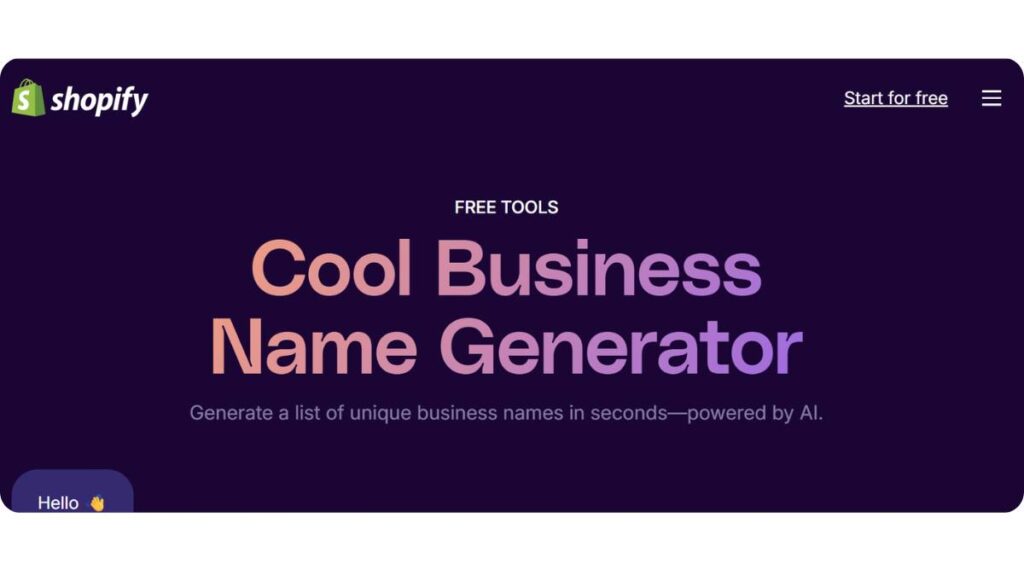
If you’re launching an ecommerce brand, this is usually the first stop, and for good reason. It’s fast, free, and tightly integrated with domain availability.
The names it generates tend to be practical and store-ready. You won’t always get ultra-abstract, venture-style brand names here. What you will get are usable, clean suggestions that feel aligned with product-based businesses.
It works especially well for:
- Dropshipping stores
- Niche product brands
- Direct-to-consumer businesses
The upside is speed and simplicity. The downside? It can lean slightly descriptive rather than deeply brandable. Still, for ecommerce founders who need momentum, it’s efficient.
2. Looka AI Brand Name Generator
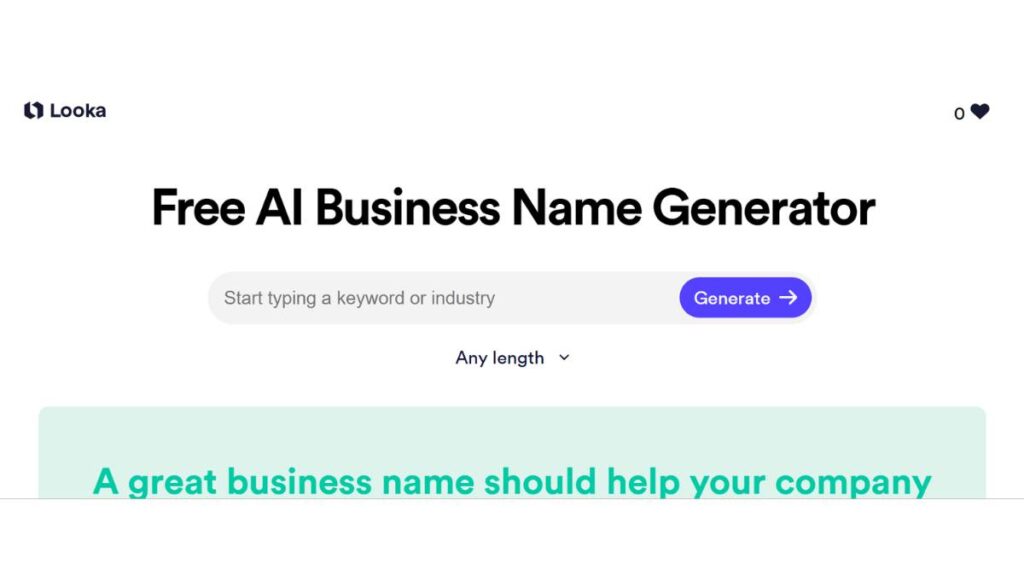
Looka approaches naming differently. It doesn’t stop at the name; it pushes into visual identity.
That’s important because brand names don’t exist in isolation. They live inside logos, color systems, packaging, and websites.
This tool connects naming with:
- Logo generation
- Brand kit creation
- Typography and color matching
The result feels more cohesive. Instead of choosing a name and figuring out visuals later, you see both together.
For founders building a serious brand from day one, that integration saves time and reduces decision fatigue. It’s particularly strong for lifestyle brands, startups, and digital-first companies that care about visual presence.
3. Namify
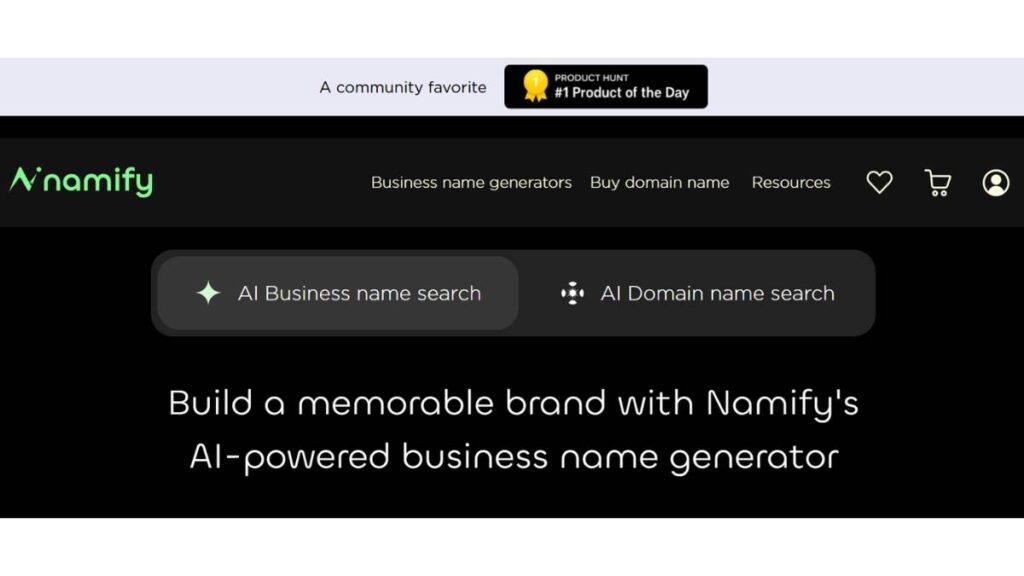
Namify focuses on short, modern, brandable names. It avoids overly descriptive suggestions and leans into startup-style constructions.
One of its stronger features is domain and social handle availability filtering. That alone makes it practical. There’s nothing worse than landing on a great name and realizing every handle is taken.
It also introduces basic trademark filtering, which helps reduce obvious conflicts early on.
This tool works well for:
- Tech startups
- App founders
- SaaS brands
- Digital products
The names tend to feel concise, contemporary, and scalable.
4. BrandBucket
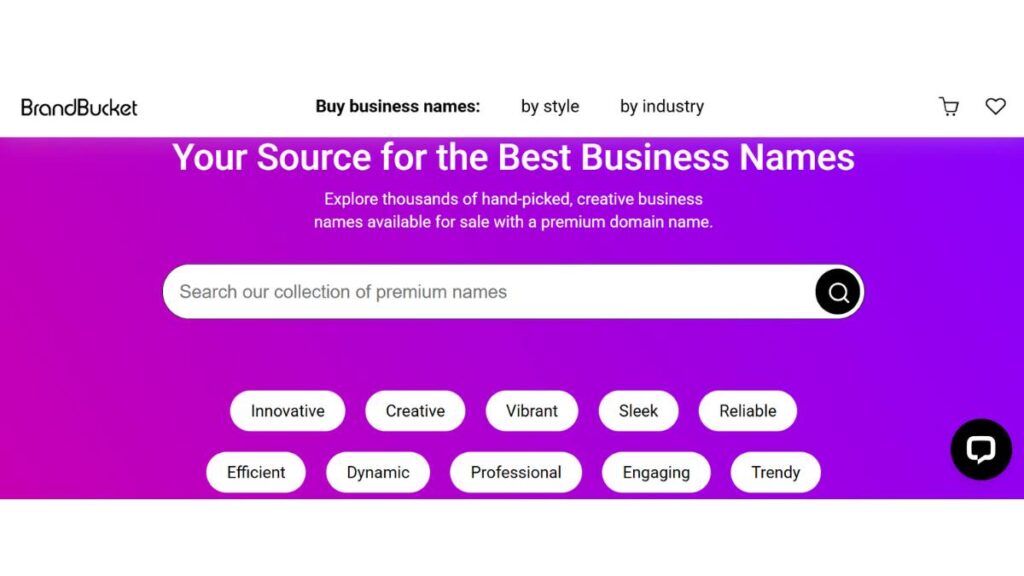
BrandBucket operates differently from the others. It’s not just a generator; it’s a curated marketplace.
Instead of generating thousands of raw ideas, it presents pre-vetted, premium brand names that often come with logo concepts and available domains.
The advantage here is uniqueness. Many of the names feel distinctive, polished, and investment-ready.
The tradeoff is cost. You’re not browsing free suggestions. You’re shopping for assets.
This makes sense for:
- Funded startups
- Founders who want a one-and-done brand purchase
- Companies entering competitive markets
If the budget allows, the quality control is noticeable.
5. Squadhelp (Atom)
Squadhelp, now operating under Atom for parts of its platform, blends AI-powered suggestions with human input. That hybrid approach gives it a different flavor.
You can:
- Run naming contests
- Access curated premium names
- Get trademark assistance
- Work with naming experts
It’s less about quick generation and more about strategic naming depth.
For early-stage founders with funding or businesses entering regulated industries, that additional support layer is valuable.
It’s not the cheapest route, but it’s structured and comprehensive.
6. Namelix
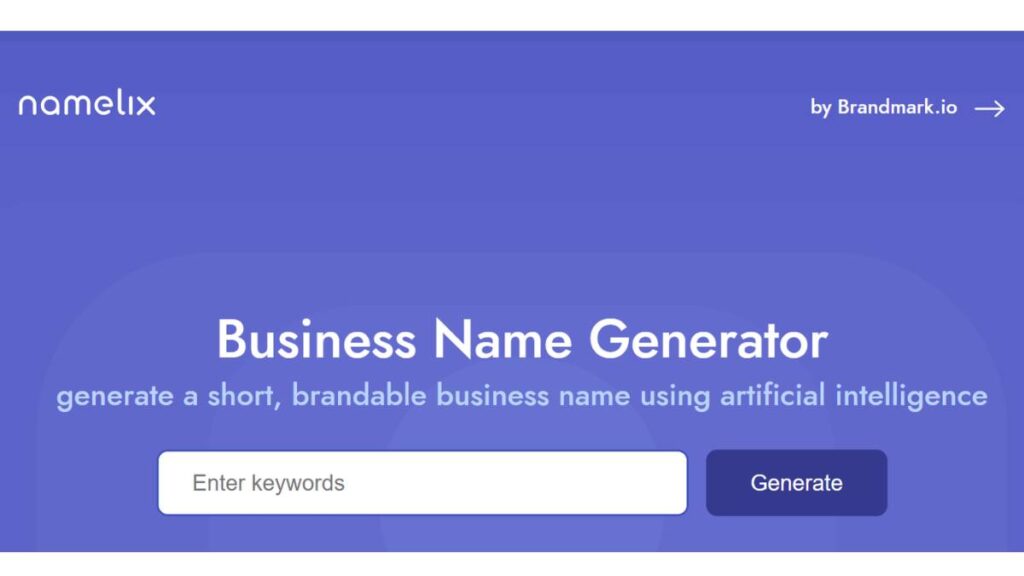
Namelix has gained popularity for one reason: it produces short, punchy names that feel modern.
The filtering options matter here. You can adjust:
- Name length
- Style (brandable, techy, traditional)
- Randomness level
The outputs often resemble venture-backed startup names: compact, slightly abstract, easy to pronounce.
It’s particularly strong for:
- SaaS products
- Tech tools
- AI startups
- Developer platforms
The free access makes it accessible, and the interface encourages exploration without overwhelming you.
7. Copy.ai Brand Name Generator
Copy.ai approaches naming from a content and marketing angle. The suggestions often align with messaging themes rather than just structural creativity.
That makes it useful for:
- Personal brands
- Digital marketers
- Online educators
- Content-driven businesses
The tone control feels slightly more nuanced compared to basic generators. However, it doesn’t always integrate domain checks as seamlessly as e-commerce-focused platforms.
Still, for brand names that need to connect strongly with positioning and messaging, it performs well.
8. Jasper Business Name Generator
Jasper’s strength lies in brand voice control. It’s less about mass-generation and more about contextual alignment.
The suggestions often reflect:
- Clear positioning
- Tone refinement
- Audience targeting
This makes it appealing to agencies and consultants who care about narrative consistency across brand assets.
It’s not necessarily the fastest name generator, but it tends to produce names that feel strategically aligned rather than purely creative.
9. Oberlo Business Name Generator
Oberlo’s tool is built with ecommerce beginners in mind. It’s simple, direct, and tied closely to product-based businesses.
The naming style leans descriptive and store-focused. You’ll find practical, usable options quickly.
This works best for:
- Dropshipping beginners
- Shopify sellers
- First-time ecommerce entrepreneurs
It’s not the place for ultra-abstract branding. But if you need a functional store name fast, it does the job.
10. GravityWrite Brand Name Generator
GravityWrite positions its brand name generator as audience-driven. Instead of just combining words, it encourages clarity around positioning and tone.
The outputs often feel aligned with:
- Content brands
- Educational platforms
- Media startups
- Marketing-focused businesses
It emphasizes tone and messaging consistency, which can be useful when the brand revolves around authority and thought leadership.
It’s not as domain-integrated as ecommerce platforms, but for content-first founders, it offers structured idea exploration.
No single AI brand name generator is universally “best.” The right choice depends on what you’re building, how fast you need to move, and whether you’re optimizing for creativity, availability, or strategic alignment.
Some tools are built for speed. Some for polish. Some for depth.
The smart move isn’t to use one and stop. It’s to explore across a few, identify patterns in what resonates, and refine from there. That’s where strong brand names usually emerge, not from the first suggestion, but from informed iteration.

Enroll Now: Brand Management course
How to Use an AI Brand Name Generator
Using an AI brand name generator sounds simple, and technically, it is. But the quality of output depends heavily on the clarity of your input. Most people rush this part. They type one vague word, hit generate, and scroll through generic results.
That’s not how you get a strong brand name.
Here’s how to approach it strategically.
Step 1: Choose Language & Target Market
Start with geography. Are you building for a local audience, a national market, or globally from day one? Language changes everything: pronunciation, cultural associations, even perceived quality.
A name that feels premium in English might feel awkward in another language. If you plan to scale internationally, choose something phonetically simple and neutral.
Be intentional here. Expansion decisions later are much harder than clarity upfront.
Step 2: Select Industry or Brand Category
Most generators ask you to choose a category: tech, fashion, ecommerce, SaaS, finance, wellness, and so on.
Don’t treat this as a formality.
Industry selection influences naming style. A fintech name often leans sharp, minimal, slightly abstract. A wellness brand might feel softer, organic, fluid. A gaming brand could feel energetic or edgy.
If your business overlaps categories, test both. Sometimes the best ideas come from adjacent industries.
Step 3: Choose Brand Tone (Luxury, Tech, Fun, Minimal, Bold)
Tone is where most naming decisions are won or lost.
Luxury names tend to be shorter, smoother, and sometimes European-inspired. Tech brands lean minimal and modern. Playful brands might use softer consonants or inventive spellings.
If your positioning is unclear, your name will be too.
Before selecting tone, ask:
- Do we want to sound premium or accessible?
- Corporate or disruptive?
- Classic or futuristic?
The clearer the tone, the better the output.
Step 4: Enter Keywords Related to Your Brand
Keywords aren’t about stuffing the name with industry terms. They’re conceptual anchors.
Instead of entering something generic like “marketing,” think deeper:
- growth
- momentum
- visibility
- conversion
- scale
Those words carry emotional weight. They guide direction.
The more intentional your keywords, the less generic your suggestions will feel.
Step 5: Define Target Audience
Some tools allow you to describe your audience. Use that feature.
A brand targeting Gen Z creators will not sound like one targeting corporate executives. Audience awareness shapes tone, rhythm, and memorability.
Age, lifestyle, purchasing power, and aspirations all influence what “feels right.”
Even if the tool doesn’t require it, define this internally before generating names.
Step 6: Generate & Shortlist Names
This is where exploration begins, not where decisions are made.
Don’t stop at the first list. Generate multiple rounds. Adjust tone. Change keywords. Increase creativity settings if available.
As you review names, filter based on:
- Pronunciation
- Memorability
- Scalability
- Emotional reaction
- Visual potential
You’ll start noticing patterns. Certain structures will resonate more than others. That’s valuable insight.
Shortlist 5–10 names. Then step away briefly. Distance creates clarity.
Step 7: Check Domain, Social Media & Trademark Availability
This step separates brainstorming from execution.
Check:
- .com domain availability (or relevant TLDs)
- Instagram, LinkedIn, TikTok handles
- Trademark databases in your region
Falling in love with a name before checking availability is a common mistake. Validate first, then commit.
Naming isn’t just creative. It’s operational.
How to Create a Unique Brand Name Using AI
Even with strong tools, uniqueness doesn’t happen automatically. It requires intention. Below are principles that consistently produce stronger brand names.
1. Use Emotion-Driven Keywords
Functional words describe. Emotional words connect.
A name tied to feeling; growth, trust, spark, edge, flow; often builds stronger recall than one tied to features. People remember how brands make them feel more than what they technically do.
2. Combine Two Words for Brandable Names
Compound names remain powerful when done well. They create familiarity while still feeling distinctive.
The key is balance. The words should flow naturally, not feel stitched together. Phonetic rhythm matters more than people realize.
3. Use Prefixes & Suffixes (-ify, -ly, -verse, -labs)
Modern naming trends often rely on flexible endings. They add movement or innovation without overcomplicating the core word.
That said, use them carefully. Overused structures can quickly feel generic. If you’re adding a suffix, make sure the base word still carries strength.
4. Create Short & Memorable Names (Under 10 Letters)
Shorter names win in recall and usability. They fit better in logos, app icons, and domain bars.
If a name feels long, test whether it can be compressed without losing meaning.
Concise doesn’t mean simplistic. It means efficient.
5. Use Phonetic & Sound-Based Branding
Certain sounds carry psychological weight. Hard consonants feel strong. Softer vowels feel warm. Repetition increases memorability.
Say the name out loud multiple times. If it feels awkward verbally, it won’t travel well through word of mouth.
6. Consider Global Pronunciation
Even if you’re local today, expansion might happen tomorrow.
Avoid overly complex spellings or culturally specific references unless your brand identity demands it. Universally pronounceable names scale more easily.
7. Avoid Generic Industry Terms
Words like “digital,” “solutions,” “global,” “enterprise,” and “services” dilute distinctiveness.
If your name sounds like ten competitors in your space, it’s not a brand; it’s a placeholder.
8. Test Brand Recall & Memorability
A simple test: tell someone the name once in conversation. Ask them to repeat it later.
If they struggle, reconsider.
Memorability often beats cleverness.
9. Check SEO & Domain Availability
While creativity comes first, practicality matters. A completely unavailable name creates friction.
Look for domain variations if necessary, but don’t force awkward extensions unless strategically justified.
10. Validate Trademark Before Finalizing
Legal validation isn’t optional.
Before investing in design, product packaging, or marketing, ensure the name doesn’t conflict with existing trademarks in your operating regions.
Naming mistakes are expensive to fix later.
AI Brand Name Generator vs Traditional Brand Naming Agencies
This comparison isn’t about which is “better.” It’s about fit.
Cost Comparison
Traditional naming agencies can range from a few thousand dollars to six figures, depending on scope. You’re paying for strategy workshops, competitive research, linguistic testing, and legal screening.
AI brand name generators operate at a fraction of that cost. Some are free. Others require modest subscriptions.
For bootstrapped startups, the financial difference is significant.
Speed & Scalability
Agencies take time. Weeks, sometimes months. That timeline includes research, refinement, and approval cycles.
AI tools generate hundreds of ideas instantly. You can iterate in minutes, test multiple directions, and pivot quickly.
If speed matters, especially in competitive digital markets, then agility becomes valuable.
Creativity & Customization
Agencies bring human nuance, deep market context, and positioning strategy. They often uncover insights beyond surface-level naming.
AI generators excel at pattern recognition and variation generation. They expand possibilities rapidly.
The strongest approach often combines both, using AI for breadth and human judgment for depth.
When to Use AI vs Human Naming Experts
AI brand name generators are ideal when:
- You’re validating an idea quickly
- The budget is limited
- You need rapid iteration
- You’re launching lean
Traditional agencies make sense when:
- You’re entering highly competitive or regulated industries
- You need trademark assurance across multiple regions
- Brand strategy is complex and layered
- Significant capital is already invested
In reality, many founders start with AI-generated exploration and later refine with strategic input.
Naming isn’t about the tool. It’s about clarity, positioning, and long-term vision.
The tool simply accelerates the path.
Benefits of Using an AI Brand Name Generator
Brand naming used to be slow by default, with brainstorming sessions, back-and-forth revisions, and shortlists that went nowhere. What AI brand name generators change isn’t just speed; it’s creative momentum.
When used properly, they offer several practical advantages.
Faster brand naming process
Instead of staring at a blank page, you start with options. Dozens. Sometimes hundreds. That momentum matters because creative work often improves when you’re reacting and refining rather than forcing ideas from scratch. Speed also reduces overthinking, which is surprisingly common in early-stage branding.
Affordable compared to agencies
Not every business has the budget for a full-scale naming project. AI brand name generators lower the barrier to entry. You can explore high-quality naming directions without committing to a significant upfront investment. For startups validating ideas, that flexibility is valuable.
Multiple variations instantly
Strong branding rarely comes from the first idea. It emerges through variation. AI tools are particularly effective at generating structural alternatives: short names, blended words, abstract constructions, and more literal options. That range helps founders see what “direction” feels right.
Integrated domain & logo generation
Many platforms now connect naming with domain checks or visual identity previews. This reduces friction between creative and practical decisions. Seeing how a name looks as a logo or how it fits in a URL often clarifies things quickly.
AI-driven creativity beyond human bias
Human brainstorming is influenced by habit and familiarity. We tend to circle around known patterns. AI brand name generators surface combinations and structures that might not appear in traditional sessions. That expanded range can unlock fresher territory.
The real benefit isn’t automation. It’s acceleration. The right tool compresses the exploration phase without sacrificing depth, as long as you approach it strategically.
Common Mistakes to Avoid When Using AI Brand Name Generators
Access to hundreds of name ideas doesn’t automatically lead to a strong brand. In fact, the abundance of options can create new problems if you’re not careful.
Here are mistakes that show up again and again.
Choosing hard-to-spell names
Creative spelling can feel clever in the moment. But if customers can’t type your name without confusion, you’re introducing friction. If you have to explain pronunciation repeatedly, that’s a signal.
Ignoring trademark conflicts
Availability goes beyond domains. Overlooking trademark checks can lead to expensive rebranding later. Just because a generator suggests a name doesn’t mean it’s legally safe to use.
Not checking social media handles
Brand consistency matters. If your brand name is available as a domain but unavailable across major social platforms, your digital identity becomes fragmented. That weakens recall.
Overcomplicated brand names
Some AI-generated names can feel impressive but slightly heavy. Long multi-syllable constructions or complex blends may look strong on screen but struggle in conversation. Simplicity usually wins.
Selecting names without brand positioning
A name isn’t isolated. It represents positioning, tone, and long-term direction. Choosing a name purely because it “sounds good” without evaluating whether it aligns with your brand story creates a disconnect later.
One more subtle mistake: deciding too quickly. Good brand names tend to grow on you. If a name feels instantly flashy but fades after a few days, it probably lacked substance.
Pause. Revisit. Test.
Naming is creative, but it’s also strategic.
Conclusion:
The short answer? In most cases, yes, but with intention.
AI brand name generators are ideal when you need speed, creative range, and cost-efficiency. They’re particularly powerful for:
- Early-stage startups validating concepts
- Ecommerce brands launching new stores
- Content creators building personal brands
- Founders are testing multiple product ideas
They reduce friction and open possibilities.
That said, there are situations where traditional branding support makes sense. If you’re entering a highly regulated industry, expanding globally at scale, or investing heavily in long-term brand equity, strategic oversight from experienced brand professionals can add nuance that automated tools alone may not capture.
The strongest approach often blends both. Use AI brand name generators to explore a wide territory. Identify patterns. Narrow down what resonates. Then apply human judgment, positioning clarity, and legal validation before finalizing.
A brand name is more than a label. It’s an anchor for perception, memory, and growth.
Tools can accelerate the process.
But clarity, about who you are and what you stand for, is what ultimately makes the name powerful.
FAQs: About AI Brand Name Generators
What is the best free AI brand name generator?
“Best” usually depends on what kind of brand is being built. Ecommerce founders often prefer tools that quickly connect names with domain options. Tech startups tend to like generators that produce short, modern-sounding words. The smartest approach is to test two or three, compare the style of outputs, and notice which direction feels commercially usable, not just creative on screen.
Can AI generate unique brand names?
Yes, it can generate combinations that wouldn’t normally come up in a typical brainstorm. Blended words, altered spellings, unexpected pairings. That part works well. But uniqueness isn’t the finish line. A name also needs clarity and repeat value. If people hesitate when saying it out loud, that’s usually a warning sign.
Are AI-generated brand names copyright-free?
Brand names are generally protected through trademark law, not copyright. That’s an important distinction. A generated name isn’t automatically cleared for commercial use. Before investing in logos, packaging, or ads, it’s essential to check trademark databases in the relevant region. Skipping that step can create problems later. Avoidable ones.
Do AI brand name generators check domain availability?
Most of them now show domain availability in real time, which helps narrow options quickly. It prevents getting attached to names that aren’t realistically usable online. That said, domain status can change fast. Once a strong option appears, securing the domain sooner rather than later is usually wise.
Is an AI brand name generator good for startups?
For early-stage startups, yes. Speed matters. Budget matters too. These tools remove the friction of starting from zero and give immediate creative direction. Still, the final decision shouldn’t be rushed. A startup name needs room to grow. What sounds trendy today should still feel credible in five years.
How do I check if my brand name is trademarked?
Start with the official trademark office in the country where the business will operate. Search for exact matches and similar variations in related industries. It’s not just about identical spelling. Phonetic similarity counts. For businesses planning serious expansion, professional legal advice can add an extra layer of security.
Are AI brand name generators free to use?
Many offer free name suggestions, which is usually enough during brainstorming. Advanced features like detailed availability checks, logo systems, or brand kits often require payment. Free versions work well for exploration. Paid plans make sense when narrowing choices and preparing for launch.
How accurate are AI brand name generators?
They’re effective at producing relevant ideas when the inputs are clear. Industry, tone, audience; those details shape the results significantly. But accuracy in branding isn’t purely technical. A name also needs emotional fit and strategic alignment. That part still requires thoughtful human evaluation.
Can an AI brand name generator check domain availability instantly?
Yes, most modern platforms integrate real-time domain lookup features. It makes the filtering process much faster. Even so, final confirmation through a domain registrar is recommended before making announcements or design investments. Small step. Important one.
Do AI brand name generators create logo ideas, too?
Some platforms pair name suggestions with simple logo previews or visual mockups. Seeing the name styled in typography can change how it feels. A word that looks average in plain text might feel premium when designed well. It’s a helpful early visualization, even if the final design evolves later.
Are AI-generated brand names SEO-friendly?
They can be, especially if relevant keywords are included in the input. However, strong brands rarely rely on keywords alone. Distinctive names often build deeper recognition over time. Being memorable tends to outperform being descriptive in the long run. Clarity matters more than stuffing terms into the name.
Can AI generate brand names for specific industries?
Yes, most generators allow industry selection, which influences vocabulary and style. That keeps suggestions relevant. Still, some standout brands borrow naming structures from outside their category. Staying too close to industry clichés can make a brand blend in rather than stand out.
How do I know if my AI-generated brand name is trademarked?
A proper search in official trademark databases is essential. Look for identical names and similar ones within related classes. If uncertainty remains, consulting a trademark professional can prevent future rebranding costs. It’s easier to confirm availability early than to correct conflicts later.
What makes a good AI-generated brand name?
Strong brand names tend to be short, easy to pronounce, and flexible enough to expand with the business. They don’t over-explain the product. They feel intentional. And they’re available across key digital platforms. If a name checks those boxes, it’s worth serious consideration.
Can AI brand name generators create global brand names?
They can generate options suitable for international markets, especially when language and tone filters are available. Still, global usability requires extra review. Pronunciation across different languages and unintended meanings should always be checked. A quick linguistic review can prevent awkward surprises.
Is it better to use AI or hire a branding agency for naming?
It depends on scale and complexity. Lean teams testing ideas often benefit from AI tools because they offer speed and flexibility. Larger companies entering competitive markets may require strategic depth and legal structure from an agency. In practice, many businesses combine both approaches for balance.