

This guide breaks down the 15 best ecommerce marketing automation software that online stores actually rely on in 2026, not just talk about. Ecommerce marketing automation software has moved far beyond basic email blasts. Today, it’s about handling abandoned carts, driving repeat purchases, and sending the right message at the right moment without manual work piling up.
The article explains what ecommerce automation tools really do, how they differ from simple email platforms, and which features matter as stores grow. It walks through how each tool was evaluated, compares strengths and trade-offs, and highlights the best use cases for different business sizes. The goal is clarity. No hype, just practical insight to help choose the right automation platform.
Table of Contents
Introduction:
Why eCommerce Marketing Automation Is No Longer Optional
Running an online store today? It’s… complicated. A couple of emails here, a Facebook ad there; sure, that might have worked a few years ago. Now, not so much. People expect something personal, something that actually makes sense to them, and doing all that manually? Forget it. Too much work, too easy to mess up.
Marketing automation isn’t some optional add-on anymore. It’s the stuff that keeps your store from bleeding money and sanity. Basically, it’s setting up systems that run by themselves. Emails, texts, notifications, even some ads; they just… go. And if it’s done right, your customers barely notice. Feels personal. Feels right.
What it actually fixes:
Abandoned carts. People leave stuff in their carts all the time. A timely nudge can pull them back without having to chase them.
Low repeat purchases. Post-purchase emails and upsells keep people coming back. It works better than constant discounting.
Bad segmentation. Not everyone wants the same thing. Automation lets you split people up in a smart way without spreadsheets.
This guide dives into the tools that actually work, pricing quirks, what kind of stores they’re good for, and what to watch out for. Nothing fancy; just what you need.
What is eCommerce Marketing Automation Software?
Okay, at its simplest: it’s a tool, or a bunch of tools, that do the marketing stuff for you. You set some rules, it watches your store, and reacts. Email, SMS, push notifications, ads; all on autopilot.
It’s different from basic email tools. Those just send campaigns. Automation platforms watch what people do: clicks, views, purchases, and act on it. So instead of blasting everyone the same thing, the software nudges the right person at the right time.
Some examples:
Email. Cart reminders, welcome messages, post-purchase upsells.
SMS. Fast alerts about sales or shipping updates. People open texts. Like, really fast.
Push notifications. Tiny nudges on phones or browsers to bring people back.
Ads. Automatically retarget visitors who didn’t buy or highlight products to past customers.
Workflows. Mix all the channels, time them, and make them follow real customer behavior.
The whole point? Reach people when it matters. Manual marketing can’t do that consistently. It’s exhausting.
How We Evaluated the Best eCommerce Marketing Automation Softwares
Choosing the right tool is messy. There’s a lot of hype, a lot of shiny buttons, and some tools that… well, just don’t deliver. The trick is looking past the marketing copy and asking the right questions.
Here’s what matters most:
Automation depth. Can you do anything besides “send email after three days,” or is it actually smart?
Integrations. Does it play nicely with Shopify, WooCommerce, Magento, and BigCommerce? If not, good luck.
Segmentation & data. Can you actually target the right people, or is it just “everyone gets the same thing”?
Deliverability. Emails and texts are useless if they don’t reach inboxes or phones.
Pricing. Some tools look cheap, then explode in cost as your list grows. Painful.
Ease vs control. Beginners want simple, advanced marketers want control. Many tools fail on one side or the other.
Look at all that together, and you get a sense of what actually fits your store. Otherwise, it’s just guessing. And that costs money.
Core Features to Look for in eCommerce Marketing Automation Tools
Not every feature is worth caring about. Some are mandatory; some are nice-to-have. Let’s be real.
Essentials:
- Abandoned cart recovery. Gentle nudges work better than aggressive spamming.
- Post-purchase follow-ups & upsells. Keeps customers engaged, encourages repeat purchases.
- Welcome sequences. First impressions matter. Say something smart early.
- Win-back flows. Bring people back before they forget you exist.
Advanced stuff (if you’re ready):
- Behavioral segmentation. People act differently; your messages should too.
- Predictive scoring. Know which customers matter most, and focus on them.
- Multi-channel automation. Email, SMS, push, ads; working together, not separately.
- Dynamic recommendations. Suggest products people actually want, not generic top sellers.
The sweet spot is tools that make your marketing feel personal without making you work yourself to the bone. Automation shouldn’t replace thought; it should free you to do the thinking that matters.
15 Best eCommerce Marketing Automation Software
Here’s the part where things get practical. Not just a list of names, but a breakdown of what actually works for stores, big, small, and somewhere in between. Each tool has its quirks. Some are simple, some are complicated, some will feel like overkill. Picking the right one isn’t about picking the most popular; it’s about what fits your store and your sanity.
1. Omnisend – Best for Omnichannel eCommerce Automation
Omnisend is like a Swiss army knife. Email, SMS, push notifications, even social campaigns; all in one place. Makes life easier if you don’t want five apps to juggle.
- Why it’s good: Easy setup, solid templates, automation that just works.
- Watch out: Reporting isn’t super deep.
- Pricing: Free for basic automation; paid tiers scale with your contact list.
- Best for: Small to mid-sized stores that need one hub for everything.
2. Klaviyo – Best for Advanced Segmentation & Data-Driven Automation
Klaviyo lives in the data. It tracks behavior, predicts what people might do next, and lets you create flows that feel almost… personal.
- Why it’s good: Predictive analytics, deep Shopify inmultiple channelstegration, precise targeting.
- Watch out: Can get expensive fast. Learning curve isn’t tiny.
- Pricing: Free for small lists; scales with contacts.
- Best for: Brands that love data and want their automation highly targeted.
3. ActiveCampaign – Best for Complex Workflow Automation
ActiveCampaign handles complicated stuff: multi-step flows, branching logic, and behavior-based triggers.
- Why it’s good: Flexible, powerful automation.
- Watch out: The interface can feel overwhelming at first.
- Pricing: Multiple tiers for growing stores.
- Best for: Stores with complex automation needs or marketers who want full control.
4. GetResponse – Best All-in-One Marketing Automation for Ecommerce
GetResponse is solid if you want a little bit of everything without getting lost. Email, workflows, templates; it covers the bases.
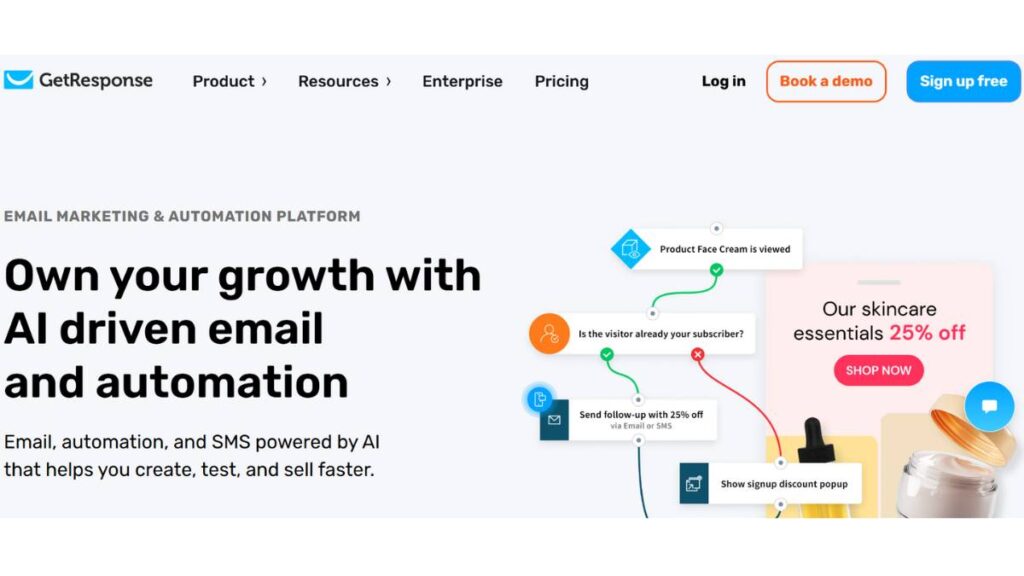
- Why it’s good: Templates make setup quick, and some CRM features are included.
- Watch out: Advanced stuff can be tricky to find or set up.
- Pricing: Tiered by contacts and features; trial available.
- Best for: Established stores wanting a balanced platform.
5. MailerLite – Best Simple eCommerce Automation Tool for Beginners
MailerLite keeps things clean and simple. No clutter, no confusing dashboards.
- Why it’s good: Beginner-friendly, basic automation flows work fine.
- Watch out: Lacks advanced features; fewer integrations.
- Pricing: Free tier; paid plans scale with subscribers.
- Best for: Small stores or startups starting out.
6. Brevo (Sendinblue) – Best Budget eCommerce Marketing Automation Software
Brevo is good if budget matters. Offers a lot for free or low cost.
- Why it’s good: Affordable, decent features for small stores.
- Watch out: Workflows aren’t as advanced as bigger tools.
- Pricing: Free basic plan; paid plans scale by email volume.
- Best for: Budget-conscious stores that still need automation.
7. Mailchimp – Best for Omnichannel Marketing Automation
Mailchimp has grown beyond email. Ads, social, email; all in one platform.
- Why it’s good: Centralizes multiple channels, solid reporting.
- Watch out: Some features need higher tiers.
- Pricing: Free tier; paid scales with contacts and features.
- Best for: Brands that want multiple channels in one place.
8. Drip – Best Ecommerce CRM + Automation Platform
Drip blends CRM and automation well. Perfect for Shopify stores and DTC brands.
- Why it’s good: Visual workflow builder, ecommerce-first logic.
- Watch out: Might be overkill for very small stores.
- Pricing: Free trial; paid plans scale with subscribers.
- Best for: DTC brands needing strong CRM + automation.
9. Shopify Automations – Best Native Automation for Shopify Stores
Built right into Shopify. Convenient if you don’t want third-party apps.
- Why it’s good: Seamless integration; easy setup.
- Watch out: Limited if you want advanced workflows without apps.
- Pricing: Included in Shopify’s higher-tier plans.
- Best for: Stores fully on Shopify.
10. HubSpot Marketing Hub – Best Enterprise-Level Ecommerce Automation
HubSpot is for big teams and big budgets. CRM + automation + analytics; heavyweight.
- Why it’s good: Enterprise-ready, robust personalization and reporting.
- Watch out: Expensive; overkill for small stores.
- Pricing: Free CRM limited; paid plans unlock full power.
- Best for: Large teams and enterprise ecommerce.
11. Moosend – Best Affordable Ecommerce Automation Alternative
Moosend is simple, cost-effective, and gets the basics done.
- Why it’s good: Easy to start, functional automation.
- Watch out: Missing some advanced features.
- Pricing: Free trial; paid scales with contacts.
- Best for: Stores wanting functional automation on a budget.
12. SendX – Best Lightweight Automation for Email-First Stores
SendX is straightforward. Focused on emails.
- Why it’s good: Simple, fast setup, unlimited emails.
- Watch out: Limited multi-channel support.
- Pricing: Low-cost plans.
- Best for: Email-first brands.
13. ConvertKit Commerce – Best for Creator-Led Ecommerce Stores
ConvertKit works well for digital products and creators.
- Why it’s good: Easy automation for memberships and digital products.
- Watch out: Not ideal for physical stores.
- Pricing: Tiered by subscriber count.
- Best for: Creators selling online.
14. Campaign Monitor – Best for Design-Focused Ecommerce Emails
If your emails need to look good, this is it.
- Why it’s good: Gorgeous templates, visual workflows.
- Watch out: Automation depth is limited compared to others.
- Pricing: Subscriber-based plans; free trial.
- Best for: Design-heavy brands.
15. Zoho Marketing Automation – Best for Zoho Ecosystem Users
Zoho works best if you’re already using their CRM and analytics tools.
- Why it’s good: Seamless integration, multi-channel campaigns.
- Watch out: Overkill if you’re not in the Zoho ecosystem.
- Pricing: Tiered by users/features.
- Best for: Businesses already using Zoho products.

Apply Now: AI-Powered Performance Marketing Course
Best eCommerce Marketing Automation Software at a Glance
People like comparison tables because they promise clarity. In practice, most readers skim them to confirm a gut feeling they already have. That’s fine. The value is in understanding why the tools differ, not just how.
Across the board, ecommerce marketing automation software separates itself in three main ways: how deep the automation goes, how pricing scales, and how closely it plugs into your store data.
Some platforms are built around simple triggers. Cart abandoned, email sent. Purchase completed, follow-up goes out. Clean, predictable, easy to manage. These work well for stores that want consistency without babysitting the system every week. You don’t get endless branching logic, but you also don’t get lost inside it.
Others are far more flexible. Multiple conditions, nested workflows, behavior-based paths that react in real time. Powerful, yes. Also easier to overcomplicate. These tools shine when a store has clear segments and enough volume to justify the complexity.
Pricing usually tells you who the tool is really for. Low starting prices often mean limited automation depth or capped data usage. As soon as a list grows or tracking becomes more advanced, costs rise. That’s not a flaw, just something to plan for. Tools designed for scaling are expected to be paid like scaling tools.
Compatibility matters more than most people expect. Native Shopify or WooCommerce integrations unlock better automation. Faster triggers. Cleaner customer profiles. When integrations feel bolted on, automations tend to lag or miss context. Over time, that friction shows up in results.
The “best” tool on paper rarely wins in real life. The right one fits how the business already operates and leaves room to grow without forcing a rebuild six months later.
How to Choose the Right eCommerce Marketing Automation Software
Choosing an automation platform isn’t about ambition. It’s about reality.
Small ecommerce stores don’t need advanced systems. They need something that works without constant attention. A solid abandoned cart flow, a welcome series, and a few post-purchase messages. That alone can lift revenue noticeably. Tools that demand heavy setup or ongoing tweaking often end up half-used.
Growing DTC brands face a different problem. Volume increases, behavior splits, and suddenly “one list” stops making sense. At this stage, segmentation becomes non-negotiable. Not fancy segmentation. Useful segmentation. Repeat buyers. High spenders. People who browse but never convert. The right tool here makes those distinctions easy to act on, not just easy to define.
For larger teams, automation becomes infrastructure. Multiple people touch campaigns. Data flows between systems. Reporting matters. Mistakes get expensive fast. Enterprise-focused platforms aren’t just about features; they’re about control, permissions, and reliability. Not exciting, but necessary.
Goals should guide the final decision. If email drives most sales, an email-first automation tool often outperforms bloated all-in-one platforms. If SMS, push, and ads are part of the mix, the tool needs to handle those channels without duct tape and workarounds. If analytics drive decisions, the data layer needs to be trustworthy, not decorative.
A good rule of thumb: if a tool feels impressive but confusing, it’s probably too much. If it feels a bit plain but easy to use, it’s often the right call.
Common Mistakes When Using eCommerce Marketing Automation Tools
The biggest mistake is assuming automation equals growth. It doesn’t. Automation only scales what already exists. If the message is weak, automation spreads weakness faster.
Over-automation is common. Too many emails. Too many triggers. Everything feels urgent. Customers notice. Unsubscribes follow. Automation should remove friction, not create noise.
Segmentation mistakes are quieter but just as damaging. Sending the same message to everyone is convenient, but it ignores intent. A first-time buyer doesn’t think like a loyal customer. Someone who hasn’t purchased in six months needs a different nudge than someone who bought yesterday. When segmentation is sloppy, even well-written emails miss.
Deliverability is often ignored until it hurts. Automation can mask problems because campaigns keep running while engagement drops. If messages stop reaching inboxes, nothing else matters. Clean lists, reasonable sending patterns, and engagement monitoring aren’t optional. They’re maintenance.
Another issue is blind reliance on templates. Templates save time, but they aren’t a strategy. Every store has different products, margins, and buying cycles. Copying flows without adapting them leads to automation that technically works but feels off. Customers can sense that.
Automation isn’t something to “set and forget.” It needs check-ins. Small adjustments. Occasional pruning. When treated like a system, it compounds results. When treated like a shortcut, it quietly does the opposite.
Conclusion:
There isn’t one “best” ecommerce marketing automation software. Anyone claiming otherwise is simplifying a decision that’s very context-dependent. What works beautifully for one store can feel heavy or underpowered for another.
For smaller stores, the strongest tools tend to be the ones that get out of the way. Simple setup, clear automations, and pricing that doesn’t punish early growth. At this stage, reliability matters more than clever features. If abandoned carts are recovering revenue and post-purchase flows are running quietly in the background, that’s a win.
Growing DTC brands usually benefit most from platforms that take data seriously. Segmentation, event tracking, and the ability to react to customer behavior in real time start to separate good automation from average automation. This is where smarter workflows can directly influence repeat purchases and lifetime value.
For larger teams, the conversation shifts again. Stability, permissions, reporting, and deep CRM integration become non-negotiable. These platforms aren’t always exciting, but they’re built to handle complexity without falling apart. That matters when multiple people touch the same system.
One thing worth emphasizing: testing tools matter. Demos and feature lists only go so far. Real insight comes from seeing how a platform behaves with actual store data, real customers, and real constraints. Free trials aren’t just a bonus. They’re part of the decision process.
The right tool isn’t the most advanced one. It’s the one that fits today and doesn’t block tomorrow.
FAQs: eCommerce Marketing Automation Software
1. What is the best ecommerce marketing automation software?
The best option depends on store size, budget, and marketing maturity. Smaller stores often do better with simpler ecommerce automation tools that handle core flows cleanly. Brands with higher volume and more data usually benefit from platforms built around segmentation and behavioral tracking. There’s no universal winner, only good fits.
2. Is ecommerce marketing automation worth it for small stores?
Yes, but only when it’s used with restraint. Even basic automation can recover abandoned carts, onboard new customers, and drive repeat purchases. The mistake is choosing tools that are too complex too early. Simplicity pays off at the beginning.
3. Can SMS and email be automated together?
Most modern ecommerce marketing automation software supports multi-channel workflows. Email and SMS can work together effectively when timing and intent are respected. The key is balance. SMS is powerful, but overuse quickly becomes intrusive.
4. Which ecommerce automation tool is best for Shopify?
Tools with native Shopify integrations usually perform best. They access real-time order data, customer behavior, and product information without friction. Native or deeply integrated platforms tend to unlock better automation than generic connectors.