

This blog breaks down growth hacking tools in a practical, no-fluff way, covering how modern teams use them to drive acquisition, improve retention, and scale sustainably. It walks through the full growth stack, from SEO and organic traffic tools to conversion optimization, automation, CRM, and social growth platforms. Each section explains not just what the tools do, but where they actually fit in real growth workflows. You’ll also find guidance on choosing the right growth hacking software based on business stage, integrating tools into a unified stack, and measuring real ROI. Whether you’re a startup, solo marketer, or scaling team, this guide helps turn tools into measurable growth.
Table of Contents
Introduction
What Are Growth Hacking Tools?
Growth hacking tools aren’t magic buttons. They’re closer to levers. Pull the right one at the right time, and momentum follows. Pull the wrong one, or pull too many at once, and nothing really moves.
In practical terms, these tools help teams understand what’s happening beneath the surface. Where users come from. What they click. Where they hesitate. Where they leave. More importantly, they help connect those dots instead of treating each metric like a separate problem.
For teams trying to grow without burning money, this matters. A lot. Growth hacking tools make it possible to:
- Test ideas quickly, without long feedback loops
- Spot friction early, before it turns into churn
- Scale what’s already working instead of chasing shiny tactics
They also force discipline. When numbers are visible, assumptions don’t last very long. Decisions become sharper. Conversations change. Less “this feels right,” more “this actually worked.”
Over time, these tools become less about growth spikes and more about consistency. Small improvements stacked together. Better onboarding. Clearer pages. Faster load times. None of it is dramatic on its own. Combined, it adds up.
Growth Hacking Tools in 2026: Trends & Evolution
A few years ago, growth stacks were messy. Separate tools for analytics, email, testing, and reporting; often stitched together with spreadsheets and hope. That approach doesn’t hold up anymore.
What’s changed isn’t just technology. It’s expectations.
Teams now expect tools to talk to each other. Data shouldn’t live in silos. Insights should show up when they’re needed, not weeks later in a report no one reads.
Three shifts stand out:
- Automation as default: Repetitive work is quietly handled in the background. Less manual setup. Fewer human errors.
- Personalization at scale: One-size-fits-all experiences don’t convert like they used to. Tools now adapt messaging and flows based on behavior, not just demographics.
- Faster feedback loops: Waiting a month to learn what worked is too slow. Signals show up quickly, sometimes immediately.
The result is a growth environment that rewards focus. Teams that know what to watch and what to ignore move faster than those drowning in dashboards.
How Growth Hacking Tools Work
Growth Hacking Tools & the Pirate Metrics (AARRR)
Most growth efforts still come back to the same journey, even if the labels change. Someone finds you. Tries you. Comes back. Tells others. Eventually pays.
Growth hacking tools plug into each part of that flow.
- Acquisition tools show which channels bring real users, not just traffic.
- Activation tools reveal whether people actually get value early on.
- Retention tools surface patterns: who sticks, who fades, and when.
- Referral tools highlight sharing behavior and word-of-mouth signals.
- Revenue tools connect usage to money, closing the loop.
The real advantage comes when these stages aren’t treated separately. When a drop in retention can be traced back to a weak activation moment. Or when revenue growth lines up clearly with a specific behavior change. That’s when tools stop being “software” and start being decision-makers.
What to Look For in Growth Hacking Tools (Selection Criteria)
Not every tool deserves a place in the stack. In fact, most stacks suffer from having too many.
A few filters usually help:
- Ease of use: If it needs constant explanation, it won’t survive long.
- Clean integrations: Growth tools should fit into existing workflows, not replace them overnight.
- Room to grow: The tool should still make sense six months from now, not just today.
- Signal over noise: Clear insights beat endless charts every time.
- Reasonable cost: Expensive tools that don’t change decisions are just clutter.
Strong teams revisit these choices regularly. What helped at an early stage can become friction later. Tools should earn their place.
Growth Hacking Tools for SEO & Organic Traffic Growth
Organic growth is slower at the start. Everyone knows that. But once it clicks, it becomes one of the most reliable engines a business can have. The tools here focus on understanding demand, meeting intent, and removing friction.
SEO Auditing & Optimization Tools
1.SEMrush
This is often where teams start when they want a clear picture of the landscape. It shows who’s winning, where gaps exist, and which keywords actually matter, not just the obvious ones.
It’s commonly used for:
- Finding technical issues that quietly block growth
- Understanding competitor positioning
- Tracking progress without guessing
Used well, it keeps efforts grounded in reality.
2. Ahrefs
Ahrefs goes deeper. Especially around backlinks and content gaps. It’s less about surface metrics and more about understanding why certain pages continue to perform.
Teams rely on it to:
- Spot missed keyword opportunities
- Evaluate link quality, not just quantity
- Reverse-engineer successful content
It rewards patience and curiosity.
3. Ubersuggest
Simpler, lighter, easier to move fast with. Ubersuggest works well when clarity matters more than depth.
It’s often used for:
- Quick keyword validation
- Content idea checks
- Early-stage research
Not everything needs enterprise-level complexity.
Content Optimization & Search Intent Tools
4. Surfer SEO / GrowthBar

These tools focus on alignment. Not stuffing more words in, but covering the right ground.
They help with:
- Structuring content based on what already performs
- Identifying missing subtopics
- Updating existing pages without rewriting from scratch
Useful when pages are close, but not quite there.
Technical SEO & Performance Tools
5. Google Analytics 4 & Search Console
These tools show what users actually do, not what’s assumed they do.
They’re essential for:
- Understanding traffic quality
- Spotting performance drops early
- Connecting visibility to behavior
Without this layer, optimization turns into guesswork.
6. Google PageSpeed / GTmetrix
Speed issues rarely announce themselves. These tools make them visible.
They’re used to:
- Identify slow-loading elements
- Prioritize fixes that affect real users
- Improve overall experience, not just scores
Even small improvements here tend to ripple outward.
Growth Hacking Tools for Conversion & UX Optimization
Traffic alone doesn’t grow a business. What matters is what people do after they land. This is where conversion and user experience tools earn their keep. They show friction. Quiet friction. The kind that looks fine in dashboards but kills momentum over time.
Landing Page & CRO Tools
7. Unbounce – AI-Optimized Landing Pages
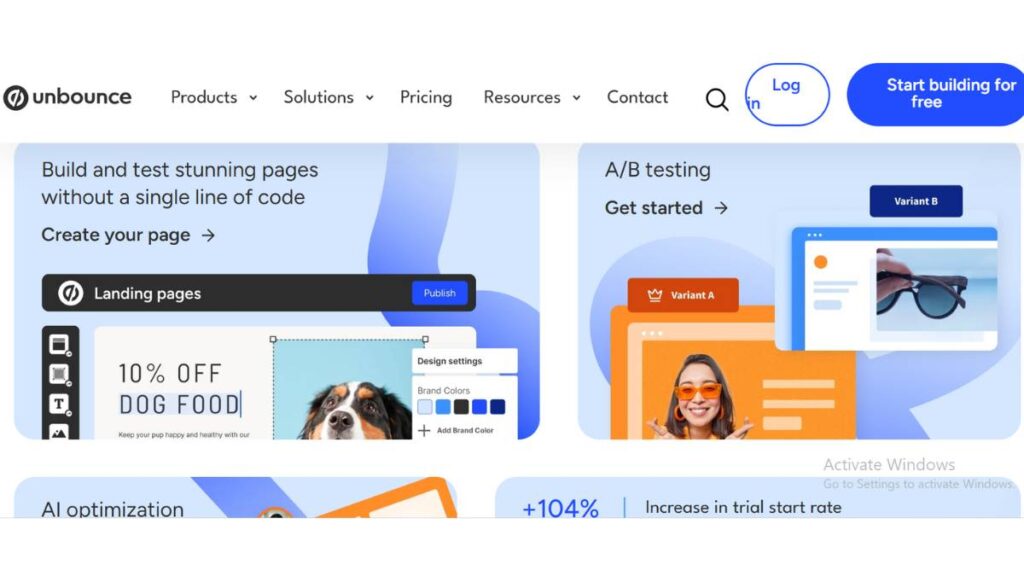
Unbounce is built for speed. Not just page speed, but decision speed. Teams use it to test ideas without waiting for long development cycles.
What it’s good at:
- Quickly launching focused landing pages for campaigns
- Routing visitors to variations that convert better
- Adjusting messaging based on intent
It works best when used with restraint. Too many variations can dilute learning.
8. Instapage – Personalized Landing Experiences
Instapage leans heavily into precision. Pages are cleaner, more controlled, and designed for teams that care deeply about consistency.
Often used for:
- High-intent campaigns
- Structured A/B testing
- Collaboration between marketing and design
It’s less about experimentation at scale, more about refining what already works.
A/B Testing & Experimentation Platforms
9. Optimizely – Growth Through Experimentation
Optimizely sits at the center of experimentation culture. It’s not just about testing buttons or headlines. It’s about asking better questions.
Common use cases include:
- Testing messaging clarity
- Experimenting with layouts and flows
- Personalizing experiences for different segments
The value shows up over time, not overnight.
10. VWO – Visual Editor, Heatmaps & Testing
VWO combines testing with behavioral insight. Instead of guessing why something failed, teams can actually see it.
It’s often used for:
- Visual A/B tests without heavy setup
- Heatmaps that reveal hesitation points
- Session recordings that explain drop-offs
When paired with clear hypotheses, it becomes a powerful learning tool.
UX & Behavioral Analytics Tools
11. Hotjar – Heatmaps, Surveys & Session Insights
Hotjar is about empathy. It helps teams understand how pages feel to real users, not how they were intended to work.
Useful for:
- Identifying ignored elements
- Understanding scroll behavior
- Gathering direct user feedback
It’s especially effective during redesigns or onboarding audits.
12. Mouseflow – Session Replay & Funnel Tracking
Mouseflow focuses on journeys. Where users go, where they pause, where they abandon.
Teams rely on it to:
- Analyze funnels visually
- Spot repeated friction points
- Validate conversion hypotheses
It turns abstract metrics into something tangible.

Apply Now: AI-Powered Performance Marketing Course
Growth Hacking Tools for Automation & Workflow Scaling
As teams grow, manual processes quietly become bottlenecks. Automation tools remove that drag. Not by replacing strategy, but by clearing space for it.
No-Code Automation Tools
13. Zapier – No-Code Growth Automation
Zapier connects tools that were never meant to talk to each other. It’s often the glue holding a growth stack together.
Used for:
- Syncing leads across platforms
- Triggering follow-ups automatically
- Reducing repetitive work
The best setups are simple. Complex chains tend to break.
14. Make (Integromat) – Advanced Automation Builder
Make offers more control. More logic. More flexibility.
It’s a better fit when:
- Workflows involve multiple conditions
- Data needs transformation, not just transfer
- Teams want visibility into each step
It rewards careful planning.
CRM & Lead Nurturing Automation
15. HubSpot Marketing Hub – All-in-One Growth CRM
HubSpot brings marketing, sales, and data into one system. For many teams, it becomes the source of truth.
It supports:
- Contact and lifecycle management
- Automated workflows based on behavior
- Clear visibility across the funnel
Its strength lies in alignment, not just features.
16. ActiveCampaign – Email Automation & Lead Scoring
ActiveCampaign shines in nuance. Segmentation, timing, scoring; it handles these details well.
Often used for:
- Behavior-based email sequences
- Lead qualification
- Retention and re-engagement flows
It’s particularly effective when personalization matters.
Social Growth & Engagement Tools
Social growth isn’t just about posting more. It’s about showing up consistently, responding at the right moments, and learning from engagement patterns.
Social Media Management Tools
17. Hootsuite / Buffer – Multi-Channel Social Scheduling
These tools simplify consistency. They help teams plan ahead without losing flexibility.
Common uses:
- Scheduling across multiple platforms
- Monitoring engagement from one dashboard
- Analyzing content performance over time
They work best when paired with a clear content strategy.
18. Later / Sprout Social – Visual Planning & Analytics

Later and Sprout focus more on presentation and insight. Visual planning matters, especially for brand-led channels.
Used for:
- Content calendars with visual context
- Campaign-level analytics
- Team collaboration
They’re helpful when social is a core growth channel, not an afterthought.
Social CRM & Messaging Automation
19. Drift / Intercom – Conversational Growth & Chatbots
These tools sit at the intersection of support and growth. Conversations become entry points, not interruptions.
They help with:
- Real-time lead qualification
- Answering common questions instantly
- Routing conversations to the right teams
When used thoughtfully, they reduce friction instead of adding noise.
Lead Generation, Email & Retention Tools
Growth tends to stall when leads stop coming in or when existing users quietly drift away. This category of tools focuses on keeping the pipeline active and relationships warm. Not flashy work, but essential.
Email Marketing & Lead Capture
20. Mailchimp / ConvertKit – Growth Email Campaigns

Email still does a lot of heavy lifting. These platforms handle the basics well, and when used thoughtfully, much more than the basics.
They’re commonly used for:
- Segmenting audiences based on behavior, not just lists
- Automating onboarding and follow-up sequences
- Staying visible without overwhelming inboxes
The difference usually comes down to intent. Broadcast emails feel easy. Purposeful sequences take more thought, but they pay off.
21. Hunter.io / Skrapp – Lead & Email Finder
Outbound growth depends on accuracy. Bad data wastes time and credibility.
These tools help with:
- Finding verified contact details
- Building prospect lists efficiently
- Reducing bounce rates and dead ends
They work best when paired with careful targeting. More leads aren’t the same as better leads.
Interactive Engagement Tools
22. Hello Bar – Exit-Intent Lead Capture
Hello Bar does one thing well: it catches attention at the right moment. When used sparingly, it can add meaningful lift without annoying users.
Common uses include:
- Capturing emails before exit
- Promoting limited-time offers
- Directing attention to key pages
Subtlety matters here. Overuse backfires quickly.
23. Proof – Social Proof & FOMO-Driven Conversions
Proof focuses on reassurance. It shows visitors that others are already engaging, signing up, or buying.
It’s often used to:
- Reduce hesitation on key pages
- Reinforce credibility in real time
- Nudge undecided visitors
It doesn’t replace trust-building. It supports it.
Advanced Growth Tools & Specialized Utilities
Once the fundamentals are in place, specialized tools help unlock new angles. These aren’t always necessary early on, but at scale, they can create meaningful leverage.
Prospecting & LinkedIn Automation
24. Phantombuster / Expandi.io
These tools are built for structured outreach. They automate repetitive actions while keeping workflows manageable.
They’re typically used for:
- LinkedIn prospecting at scale
- Enrichment and follow-ups
- Testing outreach sequences
The biggest gains come from restraint. Automation amplifies strategy, good or bad.
Analytics & Product Usage Tracking
25. Mixpanel / Amplitude
These platforms go beyond surface-level metrics. They show how users move through a product, where they get value, and where they don’t.
Teams rely on them to:
- Understand feature adoption
- Identify retention drivers
- Track long-term engagement patterns
They’re especially useful when growth questions become more nuanced.
Interactive & Gamified Growth Tools
26. Outgrow / ViralLoops
Interaction changes behavior. Quizzes, calculators, and referral loops turn passive visitors into active participants.
Used for:
- Capturing leads through value exchange
- Encouraging sharing and referrals
- Learning more about users upfront
When done well, they feel helpful, not gimmicky.
How to Choose the Right Growth Hacking Tools
With so many options available, tool selection becomes a strategic decision in itself. The goal isn’t to collect software. It’s to remove friction and create clarity.
Matching Tools to Your Growth Stage
Different stages demand different priorities:
- Early-stage teams benefit from simple, flexible tools that move fast
- Growing teams need better integration and clearer reporting
- Established teams often prioritize scalability and depth
Using enterprise tools too early slows momentum. Using lightweight tools too late creates blind spots.
Integrating Tools for a Unified Growth Stack
Disconnected tools create disconnected decisions. Integration matters more than feature lists.
Best practices usually include:
- Keeping one source of truth for core metrics
- Automating data flow where possible
- Avoiding overlapping tools that solve the same problem
A smaller, well-connected stack often outperforms a crowded one.
Tracking ROI & Measuring Success Metrics
Tools should earn their place. That means tying them back to outcomes, not usage.
A few guiding questions help:
- Did this tool change a decision?
- Did it save time or reduce errors?
- Did it help move a key metric consistently?
If the answer stays unclear, the tool probably isn’t doing enough.
Growth tools work best when they’re treated as partners, not crutches. Chosen carefully, they sharpen focus. Chosen casually, they add noise.
Conclusion:
Growth hacking tools don’t create growth on their own. They reveal it. They surface opportunities, highlight problems, and make trade-offs clearer. When chosen well, they help teams move faster without losing focus.
The most effective stacks are rarely the largest. They’re intentional. Built around real questions, not feature lists. Aligned with where the business is today, not where it hopes to be someday.
Strategy still leads. Tools support it. Test deliberately. Measure honestly. Keep what earns its place. Let go of what doesn’t. That’s how growth stays sustainable, not just impressive on paper.
FAQs: Growth Hacking Tools
1. What are the most essential growth hacking tools in 2026?
The essentials haven’t changed as much as people think. Teams still need tools that help them understand demand, improve on-site behavior, automate repetitive work, and stay close to users. What has changed is how tightly these tools are expected to work together. Fewer one-off tools. More connected systems that support daily decisions.
2. Which tools help with SEO, automation vs conversion?
Each category solves a different problem:
1. SEO-focused tools help uncover demand, track visibility, and spot gaps.
2. Automation tools remove manual work and keep systems in sync.
3. Conversion and UX tools explain why traffic behaves the way it does and where friction hides.
Strong growth stacks usually include at least one tool from each category. Lean stacks are chosen carefully. Bloated ones struggle to keep up.
3. How much do growth hacking tools cost?
Costs vary widely. Some tools are accessible even for small teams. Others are priced for scale. The real cost isn’t the subscription; it’s paying for tools that don’t change outcomes. A lower-priced tool that drives clear decisions often beats an expensive platform that sits idle.
4. How do you measure tool effectiveness?
The simplest test is impact. Did the tool help improve a key metric? Did it shorten decision time? Did it remove uncertainty or friction? Usage alone doesn’t mean value. Tools that quietly influence better choices tend to stick around