
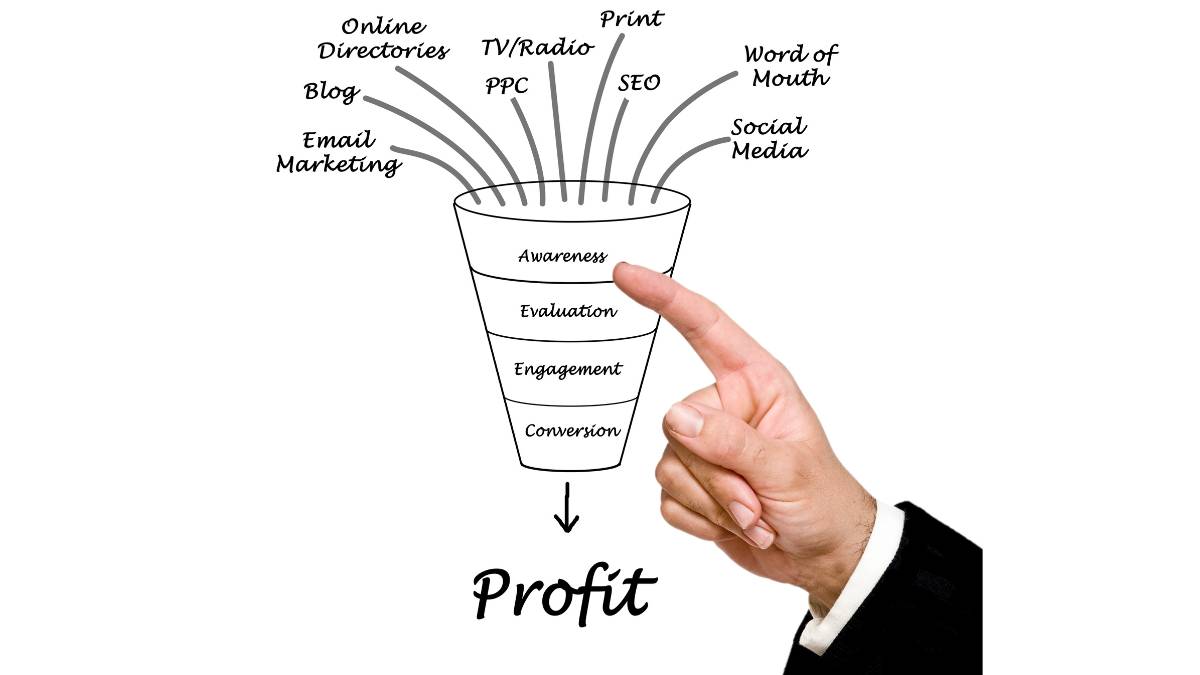
How to identify performance bottlenecks in ad funnels isn’t just about staring at numbers; it’s about noticing where things slow down, where clicks don’t turn into conversions, or where people just disappear. Start by mapping the funnel: awareness, engagement, conversion, retention. Then watch the metrics that matter at each step: CTR, bounce rates, conversion percentages, and time on page. Sometimes the issue is a weak ad or off-target audience; other times it’s a slow landing page, confusing form, or checkout friction. Even after purchase, retention can leak. The trick is to combine careful observation, a few targeted tests, and steady tweaks. Small changes, done thoughtfully, often make the biggest difference.
Table of Contents
Introduction
What Are Ad Funnels & Why Performance Bottlenecks Matter
An ad funnel is simply the path people take from first exposure to your brand to becoming a customer, and ideally, sticking around. Most funnels follow a familiar flow:
Awareness – Engagement – Conversion – Retention
Sounds straightforward. In practice, this is where things quietly break.
A performance bottleneck is any point in that funnel where momentum drops. Traffic comes in, but doesn’t click. Clicks happen, but users bounce. Conversions start but don’t finish. Or worse, sales happen once and never again.
These bottlenecks don’t always announce themselves. Revenue may still come in. Campaigns might look “okay” on the surface. But under the hood, inefficiencies pile up. Costs rise. Scaling gets harder. Teams start guessing instead of fixing.
Identifying bottlenecks early matters because:
- Small leaks compound fast as spending increases
- Fixing the wrong stage wastes time and budget
- Funnel health determines how far performance can scale
This guide walks through a practical, data-driven way to spot exactly where performance breaks down, and why. Not theories. Not vanity metrics. Just how real funnels behave when something isn’t working.
Who This Guide Is For
This is for anyone responsible for paid growth and funnel performance, including:
- Performance and growth marketers managing paid media
- eCommerce teams focused on conversion efficiency
- SaaS and lead-gen marketers dealing with long funnels
- Founders or operators reviewing ad performance beyond surface metrics
If ads run on platforms like Facebook, Google, LinkedIn, or TikTok, and results feel inconsistent or harder to scale, this framework applies.
Understanding Ad Funnel Performance & Key Metrics
What Is Ad Funnel Performance Tracking?
Ad funnel performance tracking is about visibility across the entire journey, not just the entry point.
Many teams stop at campaign-level metrics: clicks, CPC, or ROAS. Those numbers matter, but they don’t explain why performance shifts. Funnels break in between the obvious checkpoints.
True funnel tracking answers questions like:
- Where exactly are users dropping off?
- Which stage limits overall performance?
- Is the problem traffic quality, experience, or conversion friction?
Without top-to-bottom visibility, optimization turns into guesswork. With it, bottlenecks become obvious.
Core Ad Funnel Metrics You Must Track
Each funnel stage has signals that reveal whether it’s doing its job.
Top of Funnel
Impressions – Clicks (CTR)
Indicates whether ads are resonating with the audience. Low CTR often points to creative fatigue, weak messaging, or poor targeting.
Post-Click Engagement
- Bounce rate
- Time on page
- Scroll depth
These show whether the landing experience matches expectations set by the ad.
Conversion Performance
Step-by-step conversion rates
Not just final conversion rate, but how many users move from each action to the next.
Form completion or checkout progression
Cost & Efficiency Metrics
- CPM, CPC
- CAC
- ROAS
Cost metrics help confirm whether inefficiencies come from the platform, the funnel, or both.
Retention & Value
- Repeat purchase rate
- Lifetime value (LTV)
A funnel that converts but fails to retain often looks profitable early ; then quietly collapses.
Each of these metrics matters because bottlenecks rarely show up in isolation. A “bad” ROAS could be a traffic issue, a landing issue, or a conversion issue. Funnel metrics tell you which one.
Common Funnel Drop-Off Signals
Certain patterns almost always indicate a bottleneck somewhere:
Sharp drop-offs between funnel stages
Especially when traffic volume stays consistent.
Sudden spikes in bounce rate or abandonment
Often tied to messaging mismatches, UX issues, or page performance.
Changes in time to conversion
Longer decision cycles can signal added friction or reduced trust.
Costs rising without volume growth
Usually means inefficiency downstream, not just higher competition.
When these signals show up, the goal isn’t to immediately “fix” something. It’s to identify where the funnel stops doing its job, and why.
That’s where the real work begins.
How to Identify Performance Bottlenecks in Ad Funnels
Funnels aren’t neat lines on a graph. They’re messy, human, and full of little choke points that don’t always show up at first glance. Figuring out where things get stuck usually takes a mix of observation, numbers, and a little intuition.
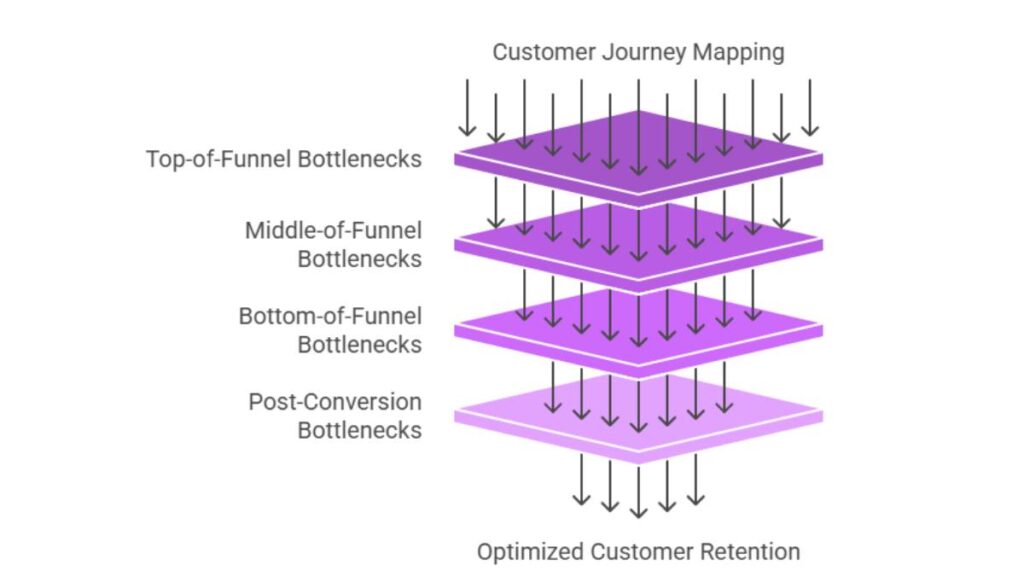
1. Map Your Funnel & Define Funnel Stages
Before trying to fix anything, it’s worth actually mapping the funnel. Think of it like tracing the path of a customer through a busy street; if you don’t know where the bottlenecks are, you’ll just keep piling cars into the same jam.
Typical stages look something like this:
Impressions – Clicks – Landing Page Engagement – Conversions – Retention
Different businesses tweak that a bit:
- SaaS: Awareness – Trial Signup – Onboarding – Paid Conversion – Renewal
- eCommerce: Ad Click – Product Page – Add to Cart – Checkout – Repeat Purchase
- Lead Gen: Ad Impression – Form Click – Lead Submission – Nurturing – Sale
A few practical things to keep in mind:
- List every single step, even the tiny ones, like clicking a CTA in an email.
- Note what “good” looks like at each stage. That could be CTR, bounce rate, or conversion %.
- Check your tracking. If pixels or tags aren’t firing properly, it’s like trying to measure a leaky pipe with a broken gauge.
It’s not glamorous work, but without it, any “optimizations” are just guesswork.
2. Diagnose Top-of-Funnel Bottlenecks
The top of the funnel is about getting noticed and getting that first click. If traffic isn’t clicking, nothing else matters.
Here’s what usually trips things up:
- Ads that don’t grab attention or feel stale
- Audiences that are too broad or off-base
- Offers that don’t really resonate with the people seeing the ad
Signals to watch for:
- CTR is low even though impressions are deep.
- Engagement drops when frequency rises; ad fatigue
- Relevance or engagement scores slipping
Sometimes the fix isn’t creating brand-new ads. Tweaking targeting, adjusting the offer, or making small creative changes can move the needle more than a complete overhaul.
3. Diagnose Middle-of-Funnel Bottlenecks
Clicks are coming in, good. But now people actually need to interact and take the next step. This is where hesitation shows up.
Things that often slow people down:
- Slow pages, or ones that feel cluttered
- Messaging on the page that doesn’t match the ad promise
- A mobile experience that’s frustrating
Metrics that reveal friction:
- Bounce rate: Are people leaving immediately?
- Scroll depth: do they reach the key content?
- Time on page: are they engaging or just skimming?
Little tip: numbers are good, but watching actual sessions, even a few, can reveal things that stats miss. You’ll see hesitation, confusion, and tiny obstacles that silently kill conversions.
4. Diagnose Bottom-of-Funnel Bottlenecks
Conversions start happening, but some people still fall off. Checkout or form friction is usually the culprit.
Common issues:
- Forms that are too long or feel tedious
- Unexpected costs or confusing steps
- Weak or unclear CTA copy; “Submit” is not inspiring
Compare conversion rates to what you’d expect. Sometimes, a tiny tweak, changing button text, trimming a field, or adding a small trust signal, can have an outsized effect.

Apply Now: Performance Marketing Course
5. Post-Conversion Bottlenecks & Retention Issues
Conversion is just the start. Retention, repeat purchases, upsells; this is where the funnel really earns its keep.
Things that trip teams up:
- Follow-ups that are slow or inconsistent
- Onboarding that doesn’t guide users properly
- Lack of personalization for next steps
Retention often gets ignored, but losing people after conversion quietly kills ROI. Tighten this stage, and the gains from everything else multiply.
Breaking the funnel down this way makes leaks obvious. Each stage has its own patterns, its own quirks. The key is not to panic and tinker everywhere at once. Small, careful observations; then measured tweaks; often do more than major overhauls.
Diagnostic Techniques & Tools for Funnel Bottleneck Identification
Figuring out what’s going wrong in a funnel isn’t as neat as looking at a single chart and nodding. It’s messy, and it usually takes a few angles to get a clear picture.
Analytics and Observation:
Google Analytics or any funnel tracking tool can show drop-offs, but don’t just look at numbers. Sometimes a 5% bounce spike hides a bigger story.
Ad platform dashboards: Facebook, LinkedIn, Google; give insight into CTR, engagement, and which segments actually care.
Heatmaps and session recordings can be eye-opening. You see real people pause, scroll back, hesitate…stuff that metrics alone miss.
Using Benchmarks Carefully:
Benchmarks are handy, but don’t treat them as gospel. A CTR that looks low compared to average might actually be fine for your traffic quality. Look for sudden shifts, not just static numbers.
Data Validation:
Always double-check your tracking. Pixels, UTM tags, conversion events; a misfire anywhere can make the funnel look worse than it is.
Compare across sources. Sometimes one tool tells one story, another tells a slightly different one. Figure out why.
Testing Smartly:
A/B and multivariate tests are gold here. Change one thing at a time; you’ll never know what actually worked.
Little tweaks, a headline, a button color, the copy on a CTA, can sometimes move the needle more than a total redesign.
The key: approach this step like detective work. Look, observe, confirm, and then adjust.
How to Fix and Optimize Bottlenecks Once Identified
Once the leaks are spotted, fixing them doesn’t have to be complicated. Often it’s the little, obvious things that get overlooked.
Top-of-Funnel Adjustments:
Tighten audience targeting. A great ad won’t help if it’s in front of the wrong people.
Refresh creative; sometimes changing the angle or tone is enough to get attention again.
Middle-Funnel Fixes:
Make the landing page deliver on the ad promise. If they click expecting one thing and see another, bounce happens fast.
Speed matters. Even a second or two of lag can cost a lot of users.
Remove distractions. Guide attention to the next step; don’t overwhelm visitors with too many options.
Bottom-Funnel Tweaks:
Simplify checkout or forms. Every extra click or field is another place for people to drop off.
Add trust elements: reviews, security badges, guarantees; subtle things that make people feel safer hitting “buy” or “submit.”
Post-purchase workflows or onboarding can make a huge difference in repeat engagement. Don’t leave users hanging.
Retention & Re-Engagement:
Gentle email sequences or helpful nudges keep people coming back. No need for spammy blasts.
Loyalty programs or small incentives for repeat actions are often underused but effective.
Focus on one fix at a time. Rushing to “optimize everything” rarely works; it just adds noise and makes it harder to see what actually changed.
VI. Examples
Theory is fine, but seeing it in action helps it stick.
Low CTR fixed by audience focus: A campaign had tons of impressions but very few clicks. Narrowing to the right segment improved engagement by a noticeable margin; no creative changes needed.
Landing page bounce reduced by simplification: The page was slow and cluttered. Cutting down unnecessary sections and clarifying the key CTA reduced bounce and increased conversions.
Checkout abandonment solved by streamlining: A multi-step checkout was intimidating. Condensing it into one clean page and adding trust cues lifted completion rates quickly.
Small, targeted changes often outperform big, flashy overhauls. It’s about spotting the friction points, experimenting carefully, and keeping an eye on the actual results.
Common Mistakes When Diagnosing Ad Funnel Bottlenecks
It’s easy to make mistakes when you’re staring at a funnel and trying to figure out why it’s leaking. Some are obvious, others sneak in quietly, but they all cost time, money, and sometimes sanity.
Fixing ads without checking the data first. Just changing the creative or headline because it “feels off” rarely solves the real problem. Often, the bottleneck is somewhere else in the funnel.
Tweaking too many things at once. If a landing page, form, and CTA all change at the same time, it’s impossible to know what worked. Small, deliberate changes are safer and smarter.
Forgetting mobile users. Desktop and mobile behavior aren’t the same. Buttons that feel fine on a laptop can be tiny hurdles on a phone, and slow pages frustrate mobile users more quickly.
Ignoring tracking glitches. Missing pixels or misconfigured analytics make everything look worse (or better) than it really is. Always verify the data before making decisions.
The key takeaway? Take it slow. Observe carefully, test deliberately, and don’t let gut feelings drive the fixes.
Conclusion:
Funnels aren’t static. They shift with audience behavior, creative changes, and even minor tweaks to pages or ads. That’s why a systematic approach to finding bottlenecks matters. Small, targeted fixes often pay off more than big, flashy changes.
Here’s a practical way forward:
Audit the funnel over a month. Look at each step carefully. Track the numbers, but also pay attention to patterns that numbers don’t always show.
Focus on the biggest leaks first. Where most traffic is stalling or dropping off is where attention matters most.
Iterate instead of overhauling. Make one change at a time and watch what happens.
Check continuously. Funnels evolve. New campaigns, traffic, or offers can shift behavior, so keep an eye on the flow.
Think of a funnel like a machine; small tweaks to the right gears keep it running smoothly. Ignore it, and small leaks become big problems fast.
FAQ:
1. What is a funnel performance bottleneck?
It’s the stage where people slow down or drop off in your funnel more than expected. Could be clicks, conversions, or even repeat purchases.
2. How do I know where my ad funnel drops off?
Track each stage carefully. Look for sudden dips in engagement, conversions, or time on page. Those are the warning signs.
3. Which metrics best show funnel issues?
CTR, bounce rates, conversion rates at each step, engagement time, and retention are the main signals to watch.
4. Can tools help find funnel bottlenecks?
Absolutely, but tools alone don’t solve anything. Numbers give clues; interpreting them and testing fixes is what actually makes a difference.
5. How often should the funnel be audited?
At least monthly for active campaigns. Also, any time there’s a new ad, landing page, or offer, a quick check can save a lot of wasted spend.