
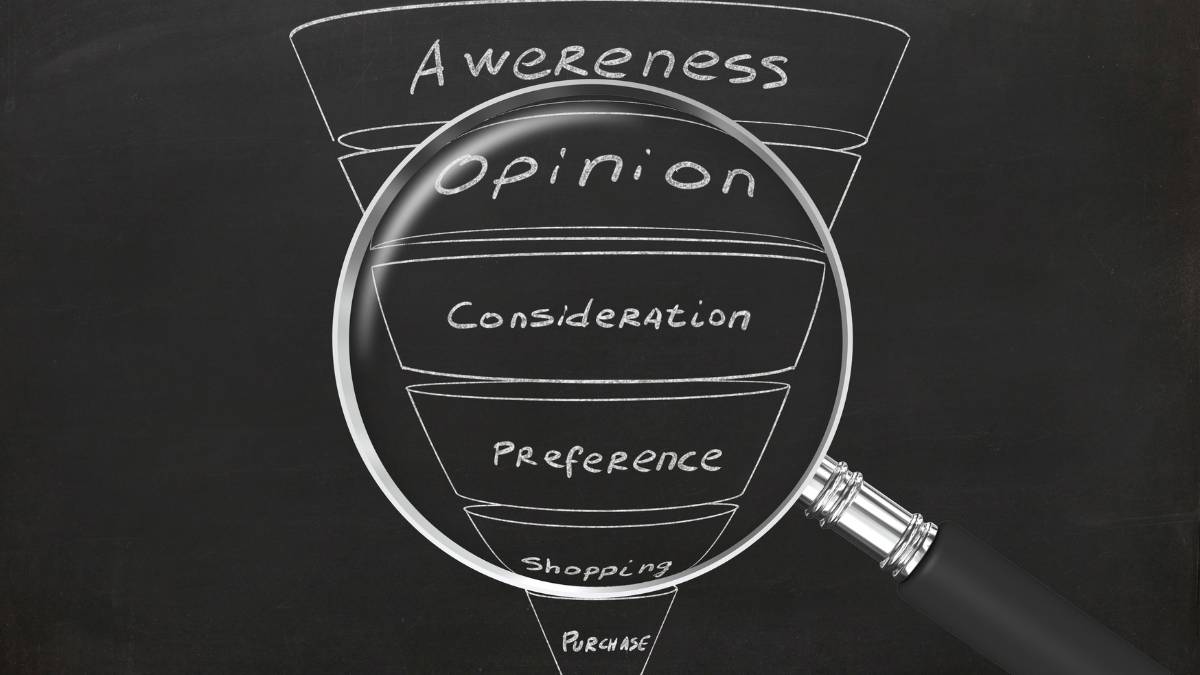
A lot of teams want better output from AI, but the real gap usually sits in how the prompts are written. This blog digs into how to write prompts for marketing funnel optimization in a way that actually fits how people move through a funnel, not how neatly the theory looks on paper. Each stage needs a different kind of nudge; awareness wants curiosity, the middle needs reassurance, and the last step… well, that’s where clarity matters most. When prompts carry the right context and small details about buyers, the AI stops guessing and starts giving useful stuff. The guide breaks it all down and shares prompts you can use without overthinking.
Table of Contents
Introduction:
What Is Marketing Funnel Optimization & Why Prompting Matters
Marketing funnel optimization sounds complicated, but at its core, it’s really about helping people move through a buying journey without getting confused or dropping off. Most timelines don’t break because the product is bad; they break because the messaging doesn’t match what the buyer is thinking at that moment. Someone’s curious but gets hit with a sales pitch. Another person is ready to buy but only sees fluffy content. That kind of misalignment slows everything down.
This is where prompts actually pull their weight. When the instructions fed into an AI tool are vague, the ideas that come back feel vague too. But once the prompt spells out who the audience is, what stage they’re in, and what kind of output you need, the response becomes much sharper. It starts reflecting how real customers behave, not just generic advice floating around online.
Modern search systems also tend to handle clear, structured explanations better than long, wandering blocks of text. They look for content that breaks things down cleanly: problem, reason, solution. So this guide leans into that style while still keeping the language grounded and human.
The whole goal here is simple: show how prompt structure can change the clarity of your funnel strategy, and give you stage-specific templates that aren’t theoretical; they’re practical enough to drop straight into your workflow.
Understanding the Marketing Funnel (Awareness – Conversion – Retention)
Most marketers talk about the funnel like it’s a straight line, but in reality, people jump around. Still, the basic framework, awareness, consideration, decision, and retention, helps make sense of the mental shifts people go through.
At the top of the funnel, someone is just noticing a problem or a category. They’re not ready to compare features yet. TOFU prompts need to spark interest, point out the underlying issue, or frame the opportunity. Think light, helpful, curiosity-driven content.
In the middle of the funnel, the tone changes. People are asking more specific questions. They’re weighing pros and cons. They want clarity. MOFU prompts should bring out comparisons, explanations, and objections that typically come up during evaluation. This is where the messaging earns trust.
By the bottom of the funnel, hesitation is the last hurdle. The prospect understands the problem and the solution; they just want reassurance. BOFU prompts tend to work best when they include real product details, proof, guarantees, and anything that reduces doubt.
And then there’s retention, which many teams forget about. Once someone becomes a customer, the conversation shouldn’t stop. Prompts for this stage focus on helping people get value, making their experience smoother, and suggesting relevant next steps when the timing feels right.
LLMs respond better when the funnel stage is spelled out plainly. If the prompt says “create a MOFU email for someone comparing options,” the tone shifts immediately. It becomes more direct, more useful, and far closer to what a real person expects at that point in their journey.
Fundamentals of Writing Effective Prompts for Funnel Optimization
Good prompts are built on clarity. Not fancy wording or clever phrasing; just clarity about who the message is for, where they stand, and what you want the output to look like. When that foundation is strong, the work becomes noticeably easier.
Everything begins with the audience. A prompt that simply asks for “content for buyers” produces something bland. But once the prompt mentions what the buyer struggles with, how aware they are, or what they’re trying to achieve, the tone shifts. It feels written for someone specific.
Then comes the funnel stage. It’s surprising how much this one detail shapes the response. TOFU messaging sounds lighter. MOFU messaging becomes more grounded. BOFU messaging gets straight to the point. Without naming the stage, the AI has to guess, and guessing rarely leads to good copy.
The format matters more than people expect. If the prompt doesn’t say whether the output should be an email, a list of angles, or a landing-page structure, the system fills the blanks however it wants. A simple line describing the format fixes most of that drift.
Constraints also help: tone, length, structure, and any small details that keep the message on track. They don’t need to be strict. Just enough to stop the content from sounding generic.
Prompts that are organized cleanly, short setup, and then a direct request tend to produce the most usable results. They’re easier for systems to interpret and easier for marketers to put into action. And since the language naturally includes terms like AI marketing prompts or marketing funnel prompts, it lines up with how practitioners already think about this work.
How to Write Prompts for Marketing Funnel Optimization: Stage-by-Stage Prompt Structure
1. Writing TOFU Prompts: Awareness & Lead Generation
At the top of the funnel, prompts need to widen the net without losing direction. Most teams go wrong by giving vague instructions like “write an awareness post.” That sort of thing produces generic content. What works better is anchoring the prompt around real pain points and the specific angle you want the content to take.
Start by shaping the context clearly:
- Who the audience is
- What’s bugging them or slowing them down
- Where the content will live (blog, Reel, carousel, email)
- The angle you want to highlight
A simple rule: TOFU prompts should make the AI think in terms of unmet needs, curiosity triggers, and competitive tension. If you skip that, you’ll get fluff.
Useful ways to enrich TOFU prompts:
Mention the top frustrations your audience talks about.
Add a competitive twist: “Explain what people get wrong because they listened to generic advice.”
Ask for formats that naturally attract attention; hooks, headlines, scroll-stoppers, etc.
Prompt templates that tend to perform well:
“Create five social media hooks highlighting the top pain points [audience] faces when trying to [goal]. Keep them sharp, curiosity-driven, and easy to understand.”
“List blog topics that help [audience] understand why [problem] slows them down, and show the angle that separates us from common competitors.”
“Suggest lead magnet ideas that solve one immediate pain point for [audience].”
Common TOFU mistakes:
- Asking for a tone without defining the audience
- Forgetting to give the platform
- Requesting “viral” content without explaining the angle
- Writing one long, overloaded prompt instead of a clean one
Keep TOFU prompts simple, sharp, and rooted in problems your audience actually cares about.
2. Writing MOFU Prompts: Nurturing, Education & Trust Building
Middle-of-funnel prompts need a higher level of detail because this stage deals with objections, clarification, and trust. If you just say “write a nurturing email,” the output won’t speak to your buyer’s concerns. The prompt has to include the context that buyers usually think about halfway through the journey.
A reliable structure:
- Audience segment
- Main objection holding them back
- What they already know or assume
- The framework you want (AIDA, PAS, JTBD, etc.)
- Tone (helpful, calm, confident; not salesy)
You’re giving the AI enough footing to speak like someone who actually understands the buyer, not like a copy generator.
Apply Now: AI-Powered Performance Marketing Course
Practical MOFU prompt examples:
“Write a nurturing email for [audience] who are unsure about [objection]. Use a friendly tone and explain the misunderstanding behind this objection using the PAS framework.”
“Create a comparison that explains when [your approach] makes more sense than [other alternatives], using simple, relatable reasoning.”
“Rewrite this product explanation in a way that focuses on practical outcomes instead of features. Give two tone variations.”
Why frameworks help here:
They force the AI to organize the message in a way people follow naturally. MOFU content benefits from that structure more than any other stage.
Good extras to include:
- Ask for short and long versions
- Request multiple angles
- Mention typical buyer hesitations
MOFU prompting is about shaping clarity and confidence. When done right, the content feels like it answers the unspoken questions buyers usually carry around.
3. Writing BOFU Prompts: Conversion Optimization
Bottom-funnel prompts are where precision matters most. Buyers at this stage want reassurance, clarity, and a reason to act now; not generic motivation. Prompts should contain the elements that typically push conversions forward: the offer, the outcomes, a little social proof, and some form of risk-reversal.
A BOFU prompt with no details ends up sounding like a template. A detailed BOFU prompt can sound surprisingly close to the way high-performing sales teams write.
A solid BOFU prompt structure:
- Brief description of the offer
- The exact action you want the user to take
- A common objection or hesitation
- The kind of proof you want included
- Tone (clear, confident, not overly hyped)
Examples that tend to produce high-performing output:
“Write a landing page section that explains why [offer] works best for [audience] who are struggling with [specific problem]. Include a short testimonial-style proof and a confident CTA.”
“Create two CTA variations that emphasize reassurance, not pressure. Keep them concise.”
“Write a short comparison that shows why choosing [your solution] reduces risk compared to [common alternative].”
When prompting for CRO tasks, A/B tests, offer positioning, and CTA clarity, be extra clear about the constraints. Something like:
“Rewrite this CTA in 5 variations that remove hype and make the next step feel easy and low-risk.”
BOFU prompts work best when they include grounded details, not generic benefits.
4. Writing Retention & Upsell Prompts for Customer Lifecycle Marketing
Retention prompts need a more personal angle; less “marketing language,” more understanding of user behavior. Upsell prompts require subtlety, not pressure. You’re guiding people who’ve already trusted the brand once, so the prompt needs to reflect that.
To get good retention content, the prompt should mention:
- The customer’s stage or recent behavior
- Their likely mindset (satisfied, unsure, inactive, curious)
- What you want to encourage (review, repeat purchase, upgrade, re-engagement)
- Tone that respects the existing relationship
Examples of effective retention prompts:
“Write a simple post-purchase email that helps [customer type] get the most out of . Keep it friendly and practical.”
“Draft a review request that doesn’t feel demanding; just honest and appreciative.”
“Create an upsell message based on a customer who enjoyed [original product] and would benefit from [next product]. Keep it conversational and low-pressure.”
For churn-risk messages, clarity works better than persuasion. A straightforward check-in is usually enough:
“Write a short message for inactive customers who may have forgotten the value of . Keep it helpful, not salesy, and offer a simple next step.”
Retention and upsell prompts should sound like they come from a brand that pays attention, not from a script.
Also read: How to Use Prompts to Create Marketing Dashboards
How to Format Prompts So Google’s AI Overviews Can Use Your Content
1. SGE Ranking Strategy: How Google AI Overviews Parse Prompt Tutorials
When you’re writing a tutorial or explainer around prompts, clarity wins every time. Google’s AI Overviews tend to surface content that reads like it was built to answer questions cleanly. Not necessarily short; just clean. Headings that label each idea, steps broken into simple progressions, and explanations that don’t wander too far.
One thing that helps is keeping each section focused on one objective. If a heading says it’s about prompt structure, stick to prompt structure. When the content follows a neat problem – fix – example flow, it becomes much easier for systems to lift the right parts and showcase them.
Examples with labels also seem to work better than long theoretical paragraphs. A quick “Here’s a TOFU example:” followed by a concise template gets picked up faster because it looks ready-made. Think of your examples as small modules that can stand on their own.
The goal at this stage isn’t to be flashy. It’s to be unbelievably clear.
5.2 Structuring Prompt Examples for AI Snippets & SGE
Prompts land much better when they’re structured consistently. Instead of dumping everything into one block, break the prompt into its parts: context, task, constraints, and tone. It gives the reader a predictable pattern and makes the examples easier to skim.
Something like:
Context: who the audience is, what they’re thinking
Task: what you want created
Constraints: limits, format, angle
Tone: how you want it to sound
That kind of repeatable structure gets picked up more often, mostly because it looks ready to use. And when your prompts follow the same rhythm all the way through the article, it signals that the content is cohesive, not stitched together.
Even when giving multiple examples, stay consistent. If one prompt uses labels, keep them across all sections. It builds trust with the reader, and honestly, it just makes the whole thing easier to digest.
3. Adding Search Intent Signals for Higher SGE Visibility
When you’re trying to satisfy search intent, it helps to echo the kinds of questions people naturally type. Instead of hiding keywords inside big paragraphs, use them in headings or in short, clarifying lines. Ask the same questions your audience asks, just in a more helpful way.
For example:
“How to write prompts for TOFU lead generation?”
“What’s the right prompt structure for BOFU conversion optimization?”
These are the signals that tell readers, and AI systems, that the content lines up with what people are actually trying to solve.
Sprinkling in example queries also helps shape relevance. Not a whole list, but just enough to make the reader think, “Yes, that’s exactly what I wanted to know.” Done right, it turns the section into a natural fit for search-driven exploration.
Also Read: 20 Marketing project topics + ChatGPT prompts
Advanced Prompt Engineering for Funnel Optimization
Once you’ve nailed the basics, layering in advanced techniques can make your prompts a lot sharper. These aren’t fancy tricks; they’re more like structured ways to help the AI think the way a strategist thinks.
Chain-of-thought prompting works well for funnel analysis. Instead of asking for a final answer right away, you guide the model through the thinking steps. Something like, “First list the buyer’s likely objections, then recommend the best content type, then write the copy.” Breaking it up helps you get cleaner, more strategic outcomes.
Role prompting is another underrated move. When you start with “Act as a CRO strategist” or “Act as a lifecycle marketer,” the system frames its answers in a more practical way. It pulls toward analysis instead of generic content.
Multi-step workflows also help with bigger projects:
- Diagnose the funnel.
- Suggest strategies.
- Produce the copy.
- Adapt it for different platforms.
If you’re feeding your own data, analytics, customer notes, and past content, build it into the prompt as context instead of dumping everything at once. A little direction goes a long way.
Advanced prompting isn’t about complexity. It’s about structuring the thinking so the output feels closer to something a trained marketer would produce.
Also Read: How to Generate Prompts for AI Social Media Content
Common Mistakes When Writing Prompts for Marketing Funnel Optimization
You can usually tell when a prompt wasn’t set up right. The output feels vague, repetitive, or completely unrelated to the funnel stage. And most of the time, it’s the same set of mistakes.
The biggest issue is being too generic.
If you don’t mention the audience, their stage, or what the content is supposed to accomplish, the result will always feel disconnected.
Other common errors:
- Forgetting to specify constraints (length, tone, angle)
- Not naming the output format
- Trying to cover five tasks inside one bloated prompt
- Never refining the prompt after seeing the output
A good rule of thumb: after you read what the AI produced, adjust your prompt slightly. Add missing context, tighten the goals, or clarify the tone. Think of it as tuning the prompt rather than rewriting it from scratch.
Prompt writing isn’t a one-shot game. It’s an iterative process, and the more you refine, the more the content starts to sound like it was built intentionally for your funnel, not thrown together in a rush.
Copy-and-Paste Prompt Library for Marketing Funnel Optimization
These prompts are built so marketers can plug in their product, audience, and channel without slowing down. Each one follows a clean context – task – constraints structure, which helps you get consistent output every time.
TOFU (Awareness & Lead Gen) Prompts
Social Media Hook Prompt
“Create 10 short social hooks for an audience struggling with [pain point]. Keep them curiosity-driven, scroll-stopping, and aligned with [platform] norms.”
SEO Topic Prompt
“List 15 SEO-friendly topics someone at the earliest awareness stage would search for when dealing with [problem]. Categorize by intent.”
Lead Magnet Prompt
“Suggest 10 lead magnet ideas for [audience] who want to solve [problem]. Make each idea specific, useful, and fast to consume.”
MOFU (Nurture & Trust Building) Prompts
Nurturing Email Prompt
“Write a nurturing email for [audience] who are considering [solution] but still unsure because of [objection]. Tone: calm, educational, reassuring.”
Comparison Prompt
“Break down a simple comparison of [your product] vs [competitor]. Highlight practical differences that matter to someone evaluating solutions.”
Framework Prompt
“Explain [topic] using the AIDA framework for a buyer who’s researching but not ready to purchase yet.”
BOFU (Conversion & CRO) Prompts
Landing Page Prompt
“Draft high-intent landing page copy for [offer]. Include a strong CTA, objection handling, proof elements, and a clear value proposition.”
Sales Message Prompt
“Write a short persuasive message for visitors who are close to buying but hesitant due to [risk]. Make the CTA feel low-pressure but decisive.”
A/B Test Prompt
“Give me 5 headline variations for a conversion-focused landing page. Each version should target a different angle: urgency, clarity, benefit, curiosity, guarantee.”
Retention & Upsell Prompts
Post-Purchase Prompt
“Write a warm post-purchase email thanking the customer for buying and guiding them through the first steps to get value quickly.”
Upsell Prompt
“Suggest an upsell message for customers who purchased and typically need [related solution] next. Keep it subtle but helpful.”
Churn-Risk Prompt
“Create a short check-in message for inactive users. The goal is to understand what’s blocking them and offer simple next steps.”
Conclusion:
Prompting is becoming a core skill for marketers, not an add-on. As customer journeys grow more complex, prompts act like a bridge between raw data, buyer behavior, and the decisions teams need to make quickly. What works today won’t hold forever. Funnels shift, channels evolve, and buyer expectations rise every few months.
The marketers who win are the ones who treat prompting like an iterative system. They refine inputs, test variations, feed better context, and keep adjusting until the output matches the stage of the funnel they’re targeting. Clear instructions, clean structures, and consistent formatting are the things that give you predictable results.
If you use the templates above, you’ll have a solid starting point. But the real power comes when you adapt them to your own funnel signals, customer language, and performance insights. Start small, test one section of your funnel at a time, and build out a library that reflects how your buyers actually move.
FAQs
1. What are marketing funnel optimization prompts?
These prompts act like small instructions that point AI toward the right kind of message for each funnel stage. Think of them as reminders of what the buyer is thinking at that moment: early curiosity, comparison, hesitation, or post-purchase needs. When written well, they keep the whole funnel feeling intentional instead of scattered.
2. How do I write effective prompts for each funnel stage?
A good prompt spells out the stage, the audience, the job to be done, and the tone. Simple things, like saying it’s for TOFU or MOFU, give the model a clear lane to stay in. Add a bit of context about the pain point or intent level, and the output becomes noticeably sharper and more usable.
3. Why do prompts matter for marketing funnel optimization?
Without direction, AI tends to drift into broad, “sounds nice but says nothing” territory. Clear prompts force it to consider what buyers actually care about at each step: motivation, doubts, tiny frictions. That’s usually where the conversion lift comes from. Not big magic, just better guidance.
4. What’s the best prompt structure for TOFU content creation?
For TOFU, the prompt works best when it starts with the audience’s tension or curiosity, then names the format and the angle. Awareness content only lands when it feels helpful or interesting, not sales-y. So steering the AI toward education or a simple insight tends to produce content people actually stay for.
5. How do I create BOFU prompts for conversion optimization?
BOFU needs specifics: what the offer is, what usually holds people back, and what kind of proof matters most. Adding the CTA type helps too. These little details push the AI to write copy that lowers the “should I risk this?” feeling buyers get right before they make a decision.
6. What makes a prompt SGE-friendly?
SGE-friendly prompts use tidy sections, simple headers, and short explanations that stay on one idea at a time. When information is cleanly separated, the model picks it up more accurately. It’s less about fancy formatting and more about making sure nothing gets buried or mixed up.
7. How do I write prompts for lead nurturing and MOFU emails?
MOFU prompts work well when they include what the buyer is unsure about and the tone you want: steady, calming, or just straightforward. Calling out the exact hesitation helps the AI write emails that feel more like support than pressure. It’s a small shift, but it makes the message feel more human.
8. Can I use the same prompt for every funnel stage?
It usually backfires. Each stage is driven by a different emotion: curiosity at the start, reassurance in the middle, clarity near the end. One prompt can’t cover all that. Tailoring them keeps the message aligned with what the buyer actually needs in that moment.
9. What are common mistakes in marketing funnel prompts?
Most issues come from missing context; no audience details, unclear tasks, or prompts that try to do too many things at once. When that happens, the output loses focus. Narrower prompts with a single purpose tend to produce far stronger, less generic content.
10. How can I improve prompt performance over time?
The easiest way is to fold in real data as you learn: actual objections, behavior patterns, even comments from customers. Each update sharpens how the AI responds. It’s a gradual process, but those small tweaks end up making the whole funnel more effective.