
Johnson & Johnson Case Study: Strategy, Growth, and Lessons from a Global Healthcare Giant looks closely at how one of the world’s largest healthcare companies has managed scale, risk, and responsibility over decades. This blog breaks down the business model, leadership philosophy, and strategic choices that shaped Johnson & Johnson’s rise, along with the crises and legal challenges that tested it. From the Tylenol recall to modern lawsuits, from decentralized management to long-term R&D bets, the case study connects strategy with real-world consequences. It’s written for readers who want more than surface-level praise, offering practical insights into ethics, diversification, crisis management, and why Johnson & Johnson remains a reference point in business schools and boardrooms alike.
Table of Contents
Introduction:
Why the Johnson & Johnson Case Study Matters in Global Business and Healthcare
Johnson & Johnson tends to show up in serious business conversations for one simple reason: it’s messy, complex, and real. Not the polished, everything-went-right kind of success story. The kind where big decisions had consequences, pressure came from all sides, and leadership had to choose between what looked good on paper and what felt right in practice.
At a glance, it’s a healthcare giant. Dig a little deeper, and it becomes a case study in how companies grow while constantly managing risk: scientific, legal, reputational, and ethical. That mix is exactly why business schools keep coming back to it. There’s no single framework that explains Johnson & Johnson. You have to look at the whole system.
This case study matters because it shows how strategy actually plays out over decades, not quarters. It highlights how values influence decisions when things go wrong, not when everything is calm. And it makes one point very clear: in healthcare, trust is not a brand asset you can buy later. You either protect it early, or you spend years trying to earn it back.
That’s what makes Johnson & Johnson worth studying. Not perfection. Persistence.
Company Overview of Johnson & Johnson
Johnson & Johnson Company Background and History
Johnson & Johnson was founded in the late 1800s, at a time when modern medicine was still figuring itself out. The original focus was practical and grounded; sterile surgical products that reduced infection risk. Nothing flashy. Just useful, reliable, and necessary.
That mindset stuck.
As healthcare evolved, the company didn’t jump on trends blindly. It expanded deliberately, following where long-term medical demand was headed. Pharmaceuticals, medical devices, consumer health; each move was built on existing capabilities rather than chasing unrelated growth.
Over time, this created a company that feels deeply embedded in healthcare systems around the world. Not a disruptor. More like infrastructure. And in this industry, that distinction matters.
Johnson & Johnson Business Segments Explained
Johnson & Johnson’s structure looks complicated at first, but there’s logic behind it.
Pharmaceutical segment
This is where high-margin growth comes from. Prescription drugs across oncology, immunology, neuroscience, and infectious diseases. Long development cycles, heavy regulation, and real scientific risk, but also strong returns when products succeed.
Medical devices segment
Less headline-grabbing, but incredibly important. Surgical tools, orthopedics, vision care. Products that hospitals rely on daily. Once integrated into clinical workflows, they’re hard to replace.
Consumer health products segment
The most visible side of the brand. Everyday products that build familiarity and trust at scale. Lower margins, yes, but also a steady connection to consumers outside hospitals and clinics.
The real strength isn’t any single segment. It’s how they balance each other when one area faces pressure.
Johnson & Johnson Global Presence and Market Position
Johnson & Johnson operates across dozens of countries, but the real advantage isn’t just reach. It’s optionality.
A broad global footprint allows the company to:
- Spread regulatory and market risk
- Adjust faster to regional healthcare policies
- Avoid overdependence on any single system
In the healthcare landscape, Johnson & Johnson sits in an unusual position. It competes with pharmaceutical specialists, medical technology leaders, and consumer brands; all at once. That creates complexity, but also insulation. When one market tightens, another often carries the load.
Few companies manage that balance without losing focus. That’s part of what keeps this case study relevant.
Johnson & Johnson Business Model Analysis
Johnson & Johnson Revenue Model and Profit Drivers
The Johnson & Johnson revenue model is built for endurance, not speed. Instead of betting the business on a handful of products, it spreads exposure across categories with different risk profiles.
Pharmaceuticals deliver strong margins through patented drugs. Medical devices bring predictable institutional demand. Consumer health adds volume and brand continuity. None of these alone defines the business. Together, they stabilize it.
Healthcare demand doesn’t behave like consumer tech or retail. It doesn’t spike overnight, and it doesn’t vanish either. Johnson & Johnson’s model is designed around that reality.
Johnson & Johnson Innovation Strategy and R&D Investment
Innovation at Johnson & Johnson isn’t treated as a buzzword or a side department. It’s structural.
Consistent investment in R&D supports:
- A deep and diverse drug pipeline
- Ongoing improvement in medical technologies
- Long-term differentiation in crowded markets
Not every project works. That’s expected. What matters is scale and patience. The company can absorb failures without destabilizing the entire business, which is a luxury smaller players don’t have.
Johnson & Johnson Supply Chain and Manufacturing Strategy
In healthcare, supply chains carry reputational weight. Shortcuts don’t stay hidden for long.
Johnson & Johnson’s manufacturing and supply strategy prioritizes:
- Regulatory compliance across regions
- Redundancy to manage disruptions
- Quality control over cost optimization
It’s not the fastest or cheapest approach. But it’s built to hold up under scrutiny, regulatory, public, and legal. And in this industry, resilience tends to outperform efficiency in the long run.
Taken together, this business model explains why Johnson & Johnson remains steady through cycles that disrupt less diversified competitors. It’s not exciting in the short term. It’s effective over time.
Johnson & Johnson Case Study Analysis
This is where the Johnson & Johnson story gets interesting. Not because everything worked perfectly, but because it didn’t, and the company still managed to move forward without losing its footing.
Strategic Growth Decisions in the Johnson & Johnson Case Study
Johnson & Johnson never chased growth in a straight line. The strategy leaned toward balance, sometimes to the frustration of investors who wanted faster returns.
A few patterns stand out:
Portfolio diversification as a defense mechanism
Pharmaceuticals, medical devices, and consumer health weren’t built as silos. They were built as shock absorbers. When one area slowed or faced scrutiny, the others carried weight.
Acquisitions with restraint
Mergers and acquisitions weren’t about headlines. They were usually targeted, filling capability gaps, expanding therapeutic areas, or strengthening research depth. Not empire building.
Multi-sector risk management
Healthcare is unpredictable. Regulations shift. Science evolves. Lawsuits happen. Operating across sectors reduced the risk of any single failure becoming existential.
The strategy wasn’t flashy. It was patient. And over time, that patience compounded.
Johnson & Johnson Leadership and Management Philosophy
One of the most misunderstood aspects of Johnson & Johnson is its leadership model. It’s not centralized in the way most global corporations are.
Decentralized management structure
Individual operating companies have real autonomy. Decisions happen close to the market, not several layers up.
Clear guardrails, not micromanagement
Leadership sets direction and values, then trusts teams to execute. That trust speeds decisions, especially in fast-moving or regulated environments.
Accountability travels downward
Autonomy comes with responsibility. When something breaks, it’s owned locally, not buried under corporate language.
This structure isn’t easy to manage. But it allows scale without suffocation.
The Johnson & Johnson Credo and Corporate Values
The Credo isn’t a marketing artifact. It’s a decision filter. And it’s been tested.
It places responsibility in a specific order:
- Patients and consumers first
- Employees next
- Communities and society
- Shareholders last
That order matters, especially during crises. The Credo doesn’t remove complexity, but it simplifies priorities when time and trust are limited. Over decades, it shaped how the company responded when the stakes were highest.
Johnson & Johnson Crisis Management Case Study
Johnson & Johnson Tylenol Crisis Case Study
The Tylenol crisis remains the most referenced moment in the company’s history, and for good reason.
When product tampering led to consumer deaths, the company faced an impossible decision. Pull a best-selling product from shelves nationwide, or wait for certainty.
They chose speed over hesitation.
- Immediate nationwide recall
- Clear, direct communication
- Full cooperation with authorities
- Willingness to absorb financial losses
At the time, it wasn’t obvious this was the “right” move. It was expensive. Public fear was high. But the response showed something rare: decisiveness rooted in responsibility, not legal maneuvering.
Lessons from the Tylenol Crisis for Modern Businesses
This crisis still gets cited because the lessons are uncomfortable and relevant.
Transparency buys time
Silence invites speculation. Clear communication stabilizes uncertainty.
Consumer-first decisions age better
Short-term losses hurt less than long-term trust erosion.
Reputation recovery is strategic, not reactive
The way a crisis is handled becomes part of the brand story, whether a company likes it or not.
Many companies study this case, hoping for a playbook. The real takeaway is simpler: values only matter when they’re expensive.
Johnson & Johnson Legal and Ethical Case Studies
Johnson & Johnson Talcum Powder Lawsuit Case Study
The talcum powder litigation marked a very different chapter. Slower. More complex. Far less clear-cut.
At the center were claims about health risks, scientific interpretation, and product safety over decades. The legal process stretched on, shaping public perception in real time.
Key challenges included:
- Conflicting scientific opinions
- Media scrutiny and consumer concern
- Long-term brand impact, especially in consumer health
Unlike the Tylenol crisis, this wasn’t resolved quickly. It forced the company to navigate legal defense, regulatory review, and public trust simultaneously, often with no clean resolution.

Apply Now: Digital Marketing Course
Johnson & Johnson Opioid Lawsuit Case Study
The opioid litigation brought a different kind of pressure. Here, the focus wasn’t product safety alone, but responsibility within a broader public health crisis.
The company faced allegations around marketing practices and its contribution to opioid misuse. Settlements followed, along with structural changes.
The long-term effects went beyond fines:
- Strengthened compliance and oversight
- More conservative approaches to risk communication
- Greater scrutiny of marketing ethics across healthcare
These cases reshaped how Johnson & Johnson approached governance and accountability. Not quietly. And not without cost.
Together, the legal challenges revealed something important: even companies built on strong values are vulnerable. What matters is how they adapt after those vulnerabilities are exposed.
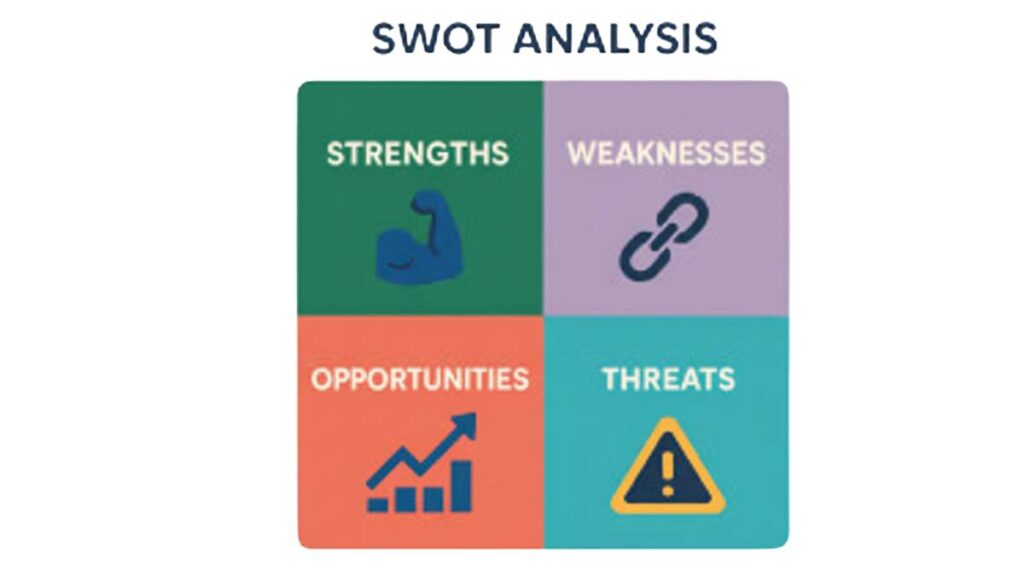
SWOT Analysis of Johnson & Johnson
A SWOT analysis sounds clinical, but with Johnson & Johnson, it tells a more layered story. The company’s strengths are obvious. The tensions underneath them matter just as much.
Strengths of Johnson & Johnson
Johnson & Johnson’s biggest advantage isn’t size alone. Its credibility.
Strong brand equity built over decades
In healthcare, trust compounds slowly. Once earned, it travels across product lines and geographies.
Diversified healthcare portfolio
Pharmaceuticals, medical devices, and consumer health don’t just drive revenue; they stabilize the business when one area hits turbulence.
Deep scientific and regulatory expertise
Navigating healthcare regulations isn’t a side skill here. It’s institutional knowledge.
Weaknesses of Johnson & Johnson
Scale brings protection, but it also brings exposure.
Ongoing legal and litigation risk
Operating at this size means scrutiny never really fades. Legal challenges consume time, capital, and leadership attention.
Dependence on key pharmaceutical products
Blockbuster drugs still matter. Patent expirations and pipeline delays can ripple through financial performance faster than expected.
Opportunities for Johnson & Johnson
The healthcare landscape is shifting, and Johnson & Johnson is positioned to move with it.
Growth in emerging markets
Rising healthcare access and aging populations create long-term demand.
Biotechnology and personalized medicine
Advances in genomics and targeted therapies align well with the company’s R&D depth.
Digital health and data-driven care
Integration of devices, diagnostics, and data opens new pathways beyond traditional products.
Threats Facing Johnson & Johnson
The risks are structural, not temporary.
Increasing regulatory pressure worldwide
Healthcare policy shifts can reshape entire markets overnight.
Intensifying competition
Agile biotech firms and specialized med-tech companies move fast, often without legacy constraints.
Public trust erosion during prolonged legal battles
Even strong brands feel strain when controversy lingers.
Competitive Analysis in the Johnson & Johnson Case Study
Johnson & Johnson doesn’t compete in a single arena. That’s both a strength and a strategic challenge.
Johnson & Johnson vs Pfizer Case Study Comparison
The contrast with Pfizer is instructive.
Product focus
Pfizer leans heavily into pharmaceuticals, especially vaccines and specialty drugs. Johnson & Johnson spreads its bets across healthcare categories.
R&D strategy
Both invest heavily, but Johnson & Johnson’s research spans drugs, devices, and consumer health, reducing reliance on any single pipeline.
Pfizer often moves faster in focused areas. Johnson & Johnson moves wider and steadier.
Johnson & Johnson vs Roche and Novartis
Against Roche and Novartis, the competition shifts toward science and scale.
Innovation pipelines
Roche leads in diagnostics and oncology integration. Novartis pushes deep into advanced therapies. Johnson & Johnson competes by combining therapeutic depth with operational breadth.
Global expansion strategies
All three operate globally, but Johnson & Johnson’s consumer and device presence gives it entry points beyond hospitals and specialty clinics.
In short, competitors may outperform Johnson & Johnson in specific categories. Few match its overall reach across the healthcare ecosystem.
Financial Performance Insights from Johnson & Johnson Case Study
Financials are where strategy shows its consequences. Over time, Johnson & Johnson’s numbers reflect restraint more than aggression.
Revenue Growth Trends and Profitability Analysis
Revenue growth has been steady rather than explosive. That’s intentional.
Long-term consistency over short-term spikes
The company favors predictable performance across cycles.
Balanced margins across segments
Pharmaceuticals drive profitability, while devices and consumer health smooth volatility.
This approach doesn’t always excite markets in the short run, but it builds resilience when conditions tighten.
Impact of Legal Costs on Johnson & Johnson Financials
Litigation has been a real financial factor, not a footnote.
Significant litigation reserves
Capital set aside for settlements affects cash flow and investor narratives.
Pressure on investor confidence during prolonged cases
Uncertainty weighs more heavily than the settlements themselves.
Still, the company’s scale allows it to absorb these costs without destabilizing core operations. That doesn’t make legal exposure painless, but it keeps it survivable.
Taken together, the financial picture reinforces a familiar theme: Johnson & Johnson isn’t optimized for speed or hype. It’s built to last, even when the road gets uneven.
Key Lessons from the Johnson & Johnson Case Study
If there’s one reason this case study keeps resurfacing, it’s because the lessons aren’t theoretical. They’re earned. Often the hard way.
Ethical leadership isn’t optional in healthcare
When products affect human lives directly, ethics stop being a brand value and start becoming an operating system. Johnson & Johnson’s history shows that decisions made under pressure, recalls, disclosures, and settlements shape reputation far more than marketing ever could.
Diversification is a risk strategy, not just a growth play
Operating across pharmaceuticals, devices, and consumer health wasn’t about domination. It was about survival. Different timelines, margins, and regulatory cycles protect the business when one area stumbles.
Crisis management is a long-term investment
Quick fixes don’t hold. The Tylenol crisis proved that decisive, consumer-first actions can cost millions in the moment and save billions over time. The opposite is also true. Slow or defensive responses linger.
Values only matter when they’re tested
The Credo didn’t earn its reputation during calm years. It earned it during moments when following it was uncomfortable and expensive.
Why the Johnson & Johnson Case Study Is Still Relevant Today
This case study isn’t locked in the past. If anything, it’s becoming more relevant as scrutiny increases across industries.
For modern startups and enterprises
Growth at all costs doesn’t age well. Johnson & Johnson shows what happens when companies plan for volatility instead of pretending it won’t arrive.
For healthcare, pharma, and consumer brands
Regulation, public trust, and ethics are no longer edge considerations. They sit at the center of strategy. This case shows how deeply those elements affect outcomes.
For ESG, compliance, and governance conversations
Long before ESG became a boardroom acronym, Johnson & Johnson was already operating inside its constraints. Not perfectly, but visibly. That transparency is what keeps the discussion grounded.
The reason this case study lasts is simple: it reflects the real tension between growth and responsibility. And that tension isn’t going anywhere.
Conclusion:
When everything is said and done, the Johnson & Johnson case study isn’t about flawless execution or heroic leadership moments. It’s about durability. About what it takes to operate in an industry where mistakes are public, regulation is relentless, and trust takes years to build but can crack in a week.
The company’s story pulls together several threads that rarely coexist at this scale:
- Long-term strategic thinking without chasing every market shift
- A decentralized structure that favors accountability over control
- A values system that actually influences decisions, especially when those decisions hurt financially
There have been missteps. Legal battles. Public criticism. Real consequences. But that’s part of why this case remains useful. It reflects the reality of managing a global healthcare brand in the open, not in theory.
Johnson & Johnson continues to be a benchmark because it shows how strategy, ethics, and operations collide over time, and how companies live with the outcomes of those collisions.
FAQs: About the Johnson & Johnson Case Study
1. What is the Johnson & Johnson case study about?
At its core, the Johnson & Johnson case study examines how a global healthcare company balances growth, innovation, ethics, and risk over decades. It looks at strategy, leadership structure, crisis response, and long-term brand management.
2. Why is the Tylenol crisis a famous Johnson & Johnson case study?
The Tylenol crisis is widely studied because of how quickly and decisively the company acted. The nationwide recall, transparent communication, and consumer-first decisions became a reference point for ethical crisis management.
3. What can businesses learn from Johnson & Johnson lawsuits?
The lawsuits highlight how legal risk can reshape strategy, governance, and public perception. They show the importance of compliance, accountability, and adapting leadership practices after prolonged scrutiny.
4. Is Johnson & Johnson a good example of ethical leadership?
It’s a nuanced example. The company has made strong ethical decisions in some moments and faced criticism in others. What stands out is how openly those decisions have shaped policy, structure, and long-term behavior.
5. How did Johnson & Johnson’s decentralized management structure affect its growth?
The decentralized model allowed operating companies to move faster and stay closer to their markets. At the same time, shared values through the Credo helped maintain consistency across a complex organization.
6. What role did research and development play in the Johnson & Johnson case study?
R&D has been foundational. Sustained investment in pharmaceuticals and medical devices supported innovation, protected margins, and reduced reliance on any single product or market shift.
7. How did Johnson & Johnson balance profitability with ethics in major crises?
In moments like the Tylenol recall, the company accepted short-term financial loss to protect consumer trust. Those decisions reinforced credibility and helped preserve long-term brand value.
8. What impact did lawsuits have on Johnson & Johnson’s long-term strategy?
Legal challenges led to changes in compliance frameworks, governance oversight, and portfolio decisions. They also influenced how the company communicates risk to investors and the public.
9. Why is the Johnson & Johnson case study frequently used in MBA and business strategy courses?
Because it combines scale, complexity, ethical tension, and real-world consequences. It offers lessons in diversification, leadership, crisis management, and governance that apply far beyond healthcare.