
L’Oréal Case Study: Marketing Strategies and Campaigns 2026 takes a close, practical look at how one of the world’s biggest beauty brands actually operates in today’s market. This isn’t a surface-level brand story. The blog breaks down L’Oréal’s 2026 marketing strategy piece by piece; from digital-first execution and AI-led personalisation to omnichannel distribution, sustainability messaging, and large-scale innovation initiatives like Brandstorm. It also looks at what worked, where pressure points exist, and how global strategy is adapted locally without losing brand clarity. For marketers, founders, and students, this case study connects strategy to real outcomes, showing how scale, technology, and human insight come together in modern brand building.
Table of Contents
Introduction to L’Oréal Case Study 2026
L’Oréal doesn’t market the way most beauty brands do. That’s not a compliment or a criticism. It’s just a fact that becomes obvious once you watch the brand long enough. Trends come and go. Platforms change. Algorithms flip. L’Oréal adjusts, but it rarely pivots dramatically. There’s a steadiness to it.
In 2026, that steadiness matters. Beauty marketing is louder than ever, and also easier to ignore. Consumers have seen every promise before. Flawless skin. Instant results. Revolutionary formulas. Most of it blends together. L’Oréal’s approach stands out because it doesn’t rely on urgency. It relies on structure.
This case study looks at that structure. Not in a theoretical way, but in how it shows up across strategy, campaigns, and execution. The goal isn’t to praise the brand. It’s to understand how a global leader keeps marketing effective without turning it into noise.
1. What This Case Study Actually Looks At
This isn’t a campaign roundup or a highlight reel. It focuses on how L’Oréal builds marketing systems that hold up over time. The kind that still makes sense after the campaign is over.
The discussion covers digital strategy, global and local campaigns, innovation initiatives like Brandstorm, and how marketing ties back to business priorities. But more than that, it looks at how these pieces connect. Because at L’Oréal’s scale, disconnected marketing doesn’t survive for long.
What’s included here are the patterns. The trade-offs. The decisions that don’t always get talked about publicly, but show up clearly when you look closely enough.
2. Why L’Oréal’s 2026 Strategy Is Worth Studying
Every brand today claims to be digital-first. Every brand talks about community, purpose, and personalisation. Very few execute all of it without stretching themselves thin.
L’Oréal operates under the same pressures as everyone else. Rising costs. Fragmented attention. Faster trend cycles. The difference is how it responds. Instead of overcorrecting, it layers. Brand work continues. Performance is measured. Innovation is tested, not worshipped.
For marketers, that balance is the real lesson. Not copying tactics, but understanding how to avoid swinging too hard in any one direction. Especially when scale is involved.
3. A Brief Look at the Brand Itself
L’Oréal is often described as a beauty company, but that only tells part of the story. It’s closer to a research-led organisation that happens to operate in beauty. That mindset affects everything, including marketing.
The brand portfolio spans mass, luxury, professional, and dermatological categories. Different consumers. Different expectations. Yet there’s a consistency in how the brand communicates. Claims tend to be grounded. Messaging assumes the audience is paying attention, not skimming.
In 2026, that confidence shows. L’Oréal doesn’t rush to explain itself. It doesn’t shout. It rarely needs to.
Company Snapshot: Who L’Oréal Really Is
Marketing reflects how a company thinks internally. With L’Oréal, that thinking has been shaped over decades, not quarters. You can see it in how decisions are made and, just as importantly, how they’re paced.
1. Where the Brand Came From
L’Oréal didn’t start as a lifestyle brand. It started with hair colour and chemistry. That origin matters. From the beginning, credibility mattered more than aesthetics alone.
As the company expanded, it didn’t discard that foundation. It added to it. New categories came in. Brands were acquired. Markets opened up. But the underlying logic stayed consistent: expertise first, storytelling second.
That history explains why L’Oréal marketing today feels measured. There’s no panic in it. No desperation to stay relevant.
2. Values That Actually Shape Marketing
“Beauty for all” is often repeated, but what matters is how it’s applied. At L’Oréal, it shows up in quiet ways. In representation that doesn’t feel staged. In product explanations that focus on function, not fantasy.
The brand leans heavily on credibility. Claims are specific. Language is careful. Sustainability and inclusion aren’t treated like seasonal talking points. They’re baked into how the brand shows up, repeatedly, without much fanfare.
That restraint builds trust. And trust, once earned, changes how marketing performs.
3. Operating at a Global Scale
L’Oréal operates in over 150 countries. That level of reach creates complexity most brands never face. Cultural nuance. Media habits. Price sensitivity. Local beauty standards. All of it varies.
What’s interesting is how marketing adapts without splintering. Global direction exists, but local teams have room to adjust. Language changes. Faces change. The core idea doesn’t.
That balance isn’t easy to maintain. It’s one of the reasons L’Oréal remains relevant across very different markets.
L’Oréal Marketing Strategy 2026: The Bigger Picture
In 2026, L’Oréal’s marketing strategy feels less about acceleration and more about control. Not slowing down, but moving deliberately.
1. What the Brand Is Actually Aiming For
Growth is still the goal. That hasn’t changed. But growth is defined more carefully now. It’s about repeat customers, stronger relationships, and clearer positioning across brands.
Marketing supports this by focusing on the entire journey, not just the first click. Discovery matters, but so does education. Retention gets as much attention as acquisition.
Channels aren’t treated equally. They’re treated intentionally.
2. The Constraints Shaping Decisions
The beauty space is crowded. Everyone has a story. Everyone has a launch. Consumers feel that saturation. L’Oréal’s strategy reflects an awareness of fatigue.
Instead of pushing harder, the brand often simplifies. Fewer claims. Clearer messaging. Less noise. That choice shows discipline, especially when short-term wins are tempting.
3. Universalisation in Practice
Universalisation is often misunderstood as “one idea for everyone.” In reality, it’s closer to “one foundation, many expressions.”
Marketing ideas travel globally, but execution bends locally. Creators are local. Context is local. The brand voice remains consistent, but it doesn’t feel imported.
That flexibility keeps campaigns from feeling generic.
4. Managing Premium and Mass Together
Running luxury and mass brands under one roof creates tension. L’Oréal handles it by keeping roles clear.
Premium brands lean into aspiration and depth. Mass brands focus on accessibility and education. Marketing reinforces those differences instead of blurring them. Over time, that clarity protects both ends of the portfolio.
Target Audience and Buyer Thinking in 2026
L’Oréal doesn’t market to age groups. It markets to behaviours. That shift has been underway for years, and by 2026, it’s fully visible.
Consumers are segmented by how they interact with beauty. Some research obsessively. Some rely on creators. Some value results above all else. Others care deeply about ethics and sustainability.
Urban, digital-first consumers make up a significant portion of the audience. They don’t respond well to exaggeration. They notice inconsistencies. Marketing here focuses on clarity and proof rather than persuasion.
Pain points are acknowledged, not glossed over. Too many products. Too many promises. Not enough guidance. Messaging responds by simplifying, explaining, and showing rather than telling.
Persona-based communication allows the brand to stay relevant without losing coherence. Different tones, same backbone. That’s harder than it sounds. L’Oréal has had time to practice it.
Core Components of L’Oréal Marketing Strategy 2026
This is where L’Oréal’s marketing starts to make real sense. Not in isolation, but as a system that’s been stress-tested over time. By 2026, the brand isn’t experimenting anymore. It’s refining. Tightening. Removing friction. What looks complex from the outside is actually very deliberate once you break it down.
At its core, L’Oréal’s strategy is built around integration. Channels don’t compete with each other. Brand and performance don’t sit in separate rooms. Global and local teams aren’t pulling in opposite directions. Everything is expected to connect, and if it doesn’t, it usually doesn’t last.
1. Integrated Digital Marketing Strategy
L’Oréal treats digital as infrastructure, not a campaign layer added on top. By 2026, digital isn’t “where marketing happens.” It’s how marketing functions day to day. Content, commerce, community, and conversion are closely linked, often within the same consumer journey.
Social platforms play a central role, but not in a one-size-fits-all way. Instagram remains important for visual storytelling and product education. YouTube is used more patiently, often for longer-form explanations, routines, and brand narratives. TikTok, meanwhile, is handled with restraint. Trends are used, but rarely chased blindly. The brand shows up when it has something to add, not just something to post.
Influencer marketing is deeply embedded, but it’s more selective than it used to be. Big names still matter for reach and credibility, especially for flagship launches. At the same time, smaller creators do much of the heavy lifting when it comes to trust and relatability. What’s noticeable is how controlled the messaging feels without becoming rigid. Creators are given room to speak naturally, but the brand’s values and claims remain consistent.
Organic presence hasn’t been neglected either. Educational content continues to play a large role. Not flashy, not dramatic. Just useful. Explaining ingredients, routines, results, and limitations. That clarity builds authority quietly over time.
Paid media exists to support momentum, not replace it. Performance campaigns are clearly structured, but they’re rarely disconnected from brand storytelling. Even conversion-led messaging still sounds like L’Oréal. That consistency matters more than most brands realise.
E-commerce is fully woven into the experience. Discovery often leads directly to purchase, without awkward handoffs. Mobile, in particular, is treated as a primary environment, not a compressed version of desktop thinking.
2. Omni-Channel Marketing and Distribution Strategy
L’Oréal doesn’t believe in choosing between online and offline. It assumes consumers will move between both, often in unpredictable ways. Marketing reflects that reality.
Digital touchpoints support in-store decisions. In-store experiences reinforce what people saw online. Product education flows across channels instead of restarting every time. This sounds obvious, but it’s hard to execute consistently at scale.
Direct-to-consumer platforms play a growing role, especially for data and relationship-building. Marketplaces remain important for reach and convenience. Retail partners and salons continue to matter for credibility and experience. None of these channels is treated as temporary or secondary. Each one has a defined role.
Marketing adapts accordingly. Messaging shifts slightly depending on context, but the core idea stays intact. That coherence is one of L’Oréal’s quiet strengths.
3. Innovation-Driven Marketing Beauty Tech and Data
Innovation at L’Oréal isn’t positioned as spectacle. It’s positioned as a utility. New experiences are introduced only when they solve a real problem for the consumer.
Personalisation plays a growing role in how products are recommended and explained. Not in a creepy, overfitted way. More like guided discovery. Helping consumers narrow choices instead of overwhelming them.
Virtual experiences are used to reduce hesitation, not replace physical interaction entirely. Trying before buying, understanding shades, and visualising results. These touchpoints remove friction from the decision-making process.
Behind the scenes, insights gathered from consumer behaviour influence messaging, timing, and product focus. Marketing feels more responsive as a result, but not reactive. There’s still a sense of control.
4. Sustainability and Purpose-Led Marketing
Sustainability at L’Oréal isn’t framed as a campaign that needs constant amplification. It’s treated as an expectation. That changes the tone of how it’s communicated.
Product positioning increasingly includes environmental considerations, but without moralising. Information is shared. Progress is explained. Claims are specific. Marketing avoids grand promises and focuses on tangible steps.
Purpose-led messaging shows up most clearly in representation. Diversity isn’t highlighted as an initiative. It’s normalised. Different ages, skin tones, genders, and needs appear naturally across campaigns. That consistency matters more than any single statement.
5. Localised Marketing and Cultural Relevance
Global scale only works when local relevance is respected. L’Oréal understands this well. Campaign frameworks may be shared, but execution is rarely identical across markets.
Local teams adapt visuals, language, creators, and sometimes even product focus. Cultural nuance is treated as a strategic input, not a final check. Multilingual content isn’t just translated. It’s rewritten to fit the local context.
Promotion tactics shift by region, too. What works in one market may feel forced in another. L’Oréal allows that flexibility without losing its core identity.
That balance between structure and freedom is hard to maintain. In 2026, it’s one of the reasons L’Oréal’s marketing continues to feel relevant, even at a global scale.
Major L’Oréal Marketing Campaigns in 2026
By 2026, L’Oréal’s campaigns don’t feel like campaigns in the old sense. They behave more like long-running ideas that keep showing up in different places, in different moods, depending on where the audience is. There’s still scale, obviously. But the tone is calmer. More confident. Less desperate for attention.
The big brand campaigns still anchor everything. L’Oréal Paris, Maybelline, Lakme; these names don’t disappear between launches. What changes is how the story unfolds. A campaign might start with a hero film, but that’s just the opening note. Most of the work happens after. Short videos cut for social, creators putting their own spin on the message, and comments shaping follow-up content. Nothing feels frozen. The campaign breathes.
“Because I’m Worth It” is a good example. The line hasn’t changed, but the way it’s used has. In 2026, it shows up quietly inside stories about everyday confidence: a working professional getting ready for the day, someone experimenting with a new look without asking permission, a moment that feels personal rather than performative. The brand doesn’t explain the emotion anymore. It trusts the audience to feel it.
Diversity-led campaigns also look different now. They’re not announced with a drumroll. They’re just… there. Different skin tones, body types, ages, and genders. Not as a statement, but as a default. That shift matters. It signals maturity. The brand isn’t trying to prove it’s inclusive. It’s acting like it already is.
Digital-first launches dominate the calendar. Many products live online long before they appear anywhere else. Discovery happens through short-form video, creator routines, side-by-side comparisons, and honest reactions. User-generated content plays a bigger role than polished brand assets. Slightly messy videos often outperform the perfect ones. That’s not a coincidence.
What ties these campaigns together is restraint. L’Oréal doesn’t chase every trend. It picks a few, adapts them to fit the brand, and lets the audience carry the rest.
L’Oréal Brandstorm 2026: Innovation & Talent Strategy
Brandstorm sits in an interesting place inside L’Oréal’s ecosystem. It’s part innovation lab, part talent magnet, part quiet listening exercise. And by 2026, it’s clear the company takes it seriously.
At face value, Brandstorm is a global competition for young talent. Teams work on real briefs, tackle real market problems, and present ideas that go far beyond theory. The 2026 theme,MEN. BEAUTY & CARE. GAME ON, reflects where the brand sees movement. Men’s grooming isn’t new, but the way men think about beauty is changing, slowly and unevenly. That tension creates opportunity.
What makes Brandstorm valuable isn’t just the ideas, but the perspective behind them. Participants bring cultural insight that large organisations often struggle to access quickly. They question assumptions. They spot friction points. They design for behaviour, not aspiration.
Some concepts focus on simplifying routines. Others challenge how masculinity is portrayed in beauty advertising. A few look at education, community, and trust-building rather than just products. Not every idea makes it to market, but many influence how teams think, plan, and communicate.
From a marketing standpoint, Brandstorm does something clever. It positions L’Oréal as a brand that listens before it leads. It also strengthens employer branding without feeling like a recruitment ad. Young audiences see a company willing to hand over the brief and take feedback seriously. That perception carries weight.
Over time, insights from Brandstorm have shaped product development, messaging, and even campaign formats. Its impact isn’t always visible on the surface, but it shows up in the decisions that follow.
Results, Metrics & Impact of Marketing Strategies
Looking at the outcomes of L’Oréal’s 2026 strategy, the numbers tell one story. Behaviour tells another. Both matter.
Reach continues to grow, but what stands out more is engagement quality. Content isn’t just being scrolled past. It’s being saved, shared, and recreated. People are responding, not just watching. That kind of engagement is harder to buy and easier to lose, which makes it a useful signal.
E-commerce performance remains strong, especially where content and commerce are tightly connected. Consumers move from discovery to purchase without feeling pushed. Mobile plays a big role here. So does clarity. Product pages, routines, and reviews are designed to answer doubts quickly, not bury them.
Influencer activity contributes steadily to earned media value, particularly when creators are clearly aligned with the brand. Overly scripted partnerships tend to fade fast. The ones that work feel natural, even slightly unpolished. That authenticity shows up in comments, not just metrics.
Market share growth isn’t uniform across regions, and that’s expected. What’s consistent is brand perception. Trust, innovation, and relevance come up repeatedly in consumer feedback. Those are long-term assets. They’re built slowly and damaged quickly.
Perhaps the most important result is balance. Short-term performance hasn’t come at the cost of brand equity. Campaigns drive action without eroding credibility. That balance is rare, especially at this scale.
L’Oréal’s 2026 results aren’t just about doing more marketing. They’re about doing it with intent, patience, and a clear sense of who the brand is, and who it’s talking to.
SWOT Analysis: L’Oréal Marketing Strengths & Weaknesses
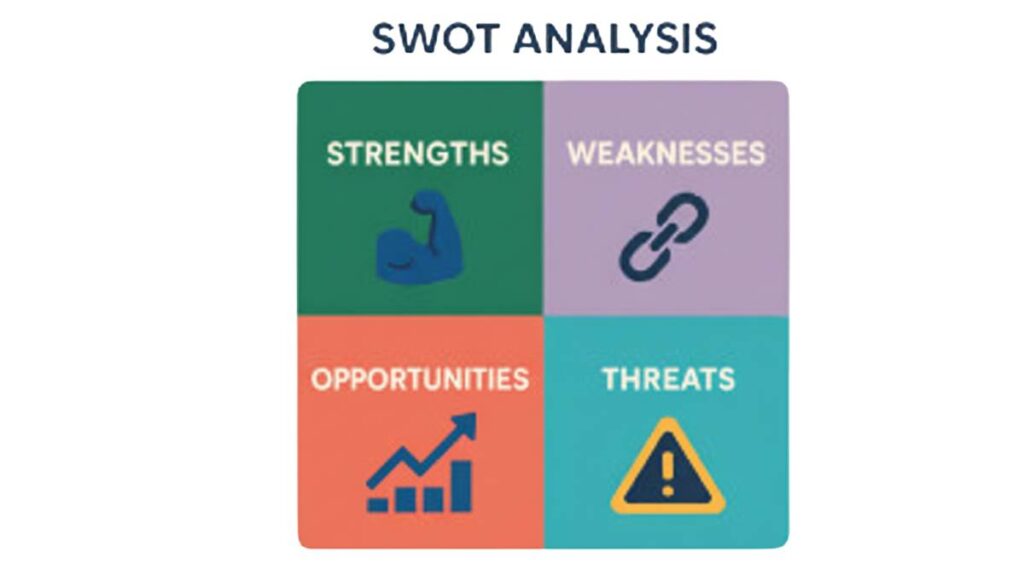
Looking at L’Oréal through a SWOT lens in 2026 gives a fairly honest picture. There’s a lot the brand does exceptionally well, and a few pressure points that come with operating at this scale.
The strengths are obvious, but still worth spelling out. L’Oréal’s brand equity is deep, not just wide. Consumers don’t just recognise the names; they trust them. That trust makes experimentation easier. New formats, new narratives, and even new categories can be introduced without starting from zero. Innovation is another clear advantage. Not flashy-for-the-sake-of-it innovation, but practical, consumer-facing progress that solves real problems or simplifies decisions.
Digital leadership also stands out. The brand understands how people actually discover beauty today: through routines, creators, peer opinions, and repetition. Messaging is rarely disconnected from context, which is where many large brands stumble.
That said, weaknesses exist. Content fatigue is real. When a brand shows up everywhere, all the time, even good content can start blending into the background. The challenge isn’t producing more, it’s knowing when to say less. Competition is another constant pressure. Indie brands move fast, speak casually, and often feel closer to niche communities. L’Oréal has to work harder to maintain that sense of closeness.
Opportunities continue to open up, especially in emerging markets and underserved segments. New consumer needs around inclusivity, affordability, and education leave room for growth. Technology-driven personalisation, when done thoughtfully, still has a long runway.
Threats mostly come from changing expectations. Consumers are quicker to question claims, spot inconsistencies, and move on. Local competitors with cultural nuance can also chip away at loyalty if global brands aren’t paying attention.
Overall, the balance leans positive. But it’s not automatic. Staying ahead requires constant adjustment.
Comparative Benchmarking: L’Oréal vs Competitors
When compared to other global beauty players, L’Oréal’s biggest edge isn’t budget or reach. It’s coherence. Many competitors excel in one area: strong social presence, sustainability storytelling, or sharp product innovation. L’Oréal manages to connect most of these threads without losing its identity.
In digital marketing, peers often chase trends aggressively. L’Oréal tends to be more selective. That restraint helps campaigns age better and feel less reactive. The brand also integrates performance and brand storytelling more smoothly than most. Sales-driven messages don’t completely abandon emotion, and emotional campaigns still point somewhere tangible.
On innovation, some competitors move faster, especially smaller or digital-native brands. But speed doesn’t always translate to scale. L’Oréal’s advantage lies in taking proven ideas and rolling them out across markets with consistency, while still leaving room for local nuance.
Sustainability is another area where comparisons get interesting. Several brands talk loudly about eco-consciousness. L’Oréal’s approach is quieter, more embedded into product narratives rather than isolated campaigns. That can make the impact less visible in the short term, but more credible over time.
The gap between L’Oréal and competitors isn’t about who’s “better.” It’s about who’s more balanced. In 2026, that balance still works in L’Oréal’s favour.
Lessons from L’Oréal’s 2026 Marketing Strategy
There are a lot of other brands that can take away from L’Oréal’s approach, even if they operate at a very different scale.
One clear lesson is patience. Not every campaign needs to peak immediately. Long-running ideas build memory. Familiarity compounds. That’s especially important in categories where trust matters.
Another takeaway is integration. Marketing works best when channels talk to each other. Social content supports commerce. Retail reinforces digital narratives. Nothing feels like an afterthought. This kind of alignment doesn’t happen by accident, but it pays off.
Personalisation also shows up here, not as a buzzword, but as a mindset. Understanding different consumer needs and speaking to them clearly, without overcomplicating the message, makes marketing feel helpful instead of intrusive.
Perhaps the most important lesson is human-centred thinking. L’Oréal’s strategy works because it respects how people actually behave. They scroll quickly. They trust peers more than brands. They value honesty over perfection. Campaigns that acknowledge this tend to last longer.
For marketers watching from the outside, the takeaway isn’t to copy tactics. It’s to adopt the discipline behind them. Know the brand. Know the audience. Then build slowly, deliberately, and with enough flexibility to adapt when things shift.
Future Outlook: L’Oréal Marketing Trends Beyond 2026
Looking ahead, L’Oréal’s marketing doesn’t feel like it’s heading toward some dramatic pivot. It feels more like a tightening of focus. The big ideas are already in place. What changes is how precisely they’re executed.
Personalisation, for example, won’t be a “wow” factor anymore. It will be table stakes. Consumers will expect brands to understand their skin type, their budget comfort, their climate, and even their lifestyle rhythm. When a brand gets it right, it barely registers. When it gets it wrong, it stands out in the worst way. L’Oréal seems to understand this shift. The future isn’t about doing more; it’s about doing fewer things with sharper relevance.
Another noticeable trend is restraint. The industry has gone through years of overproduction; more launches, more content, more noise. Fatigue is setting in. The brands that will win next are the ones that know when to pause, when to repeat a message instead of replacing it, and when to let a product earn its reputation slowly. L’Oréal’s long-running brand platforms suggest it’s already playing that game.
Consumer expectations will keep tightening, too. Claims will be questioned. Sustainability statements will need proof behind them. Marketing teams won’t be able to work in isolation anymore; alignment with product, supply chain, and retail will matter more than clever storytelling.
Beyond 2026, the roadmap looks steady rather than flashy. Build trust. Deepen relationships. Let innovation serve people, not impress them. That kind of future isn’t dramatic, but it lasts.
Conclusion:
L’Oréal’s marketing works in 2026 because it feels grounded. There’s confidence, but not arrogance; ambition, without panic. The brand knows who it is, and that clarity shows up everywhere; in messaging, in campaign choices, in how it speaks to different audiences without losing its voice.
What really stands out is balance. Innovation doesn’t overpower familiarity. Global scale doesn’t erase local nuance. Commercial goals don’t completely swallow emotional storytelling. That balance is difficult to maintain, especially at L’Oréal’s size, but it’s also the reason the strategy holds up year after year.
At its core, the brand understands something simple but often forgotten: beauty is personal, emotional, and contextual. Marketing that ignores this becomes noise. Marketing that respects it earns attention quietly.
That’s the strategic edge here. Not a single campaign or channel, but a way of thinking that keeps the brand relevant without chasing relevance.
FAQs: L’Oréal Case Study – Marketing Strategies & Campaigns 2026
1. What is L’Oréal’s marketing strategy in 2026?
The 2026 strategy is built around digital-first engagement, strong omnichannel presence, and consistent brand storytelling. The focus is less on short-term buzz and more on building familiarity and trust over time.
2. How does L’Oréal use digital marketing to drive growth?
Digital plays a central role, from discovery to purchase. Social platforms spark interest, content builds confidence, and commerce integrations remove friction. Everything is designed to feel connected, not fragmented.
3. What are the key marketing campaigns run by L’Oréal in 2026?
Most campaigns build on existing brand platforms rather than starting from scratch. Long-running ideas are refreshed to stay culturally relevant, instead of being replaced every season.
4. How does L’Oréal use technology in marketing?
Technology is used to make decisions easier for consumers. The goal isn’t complexity or novelty, but clarity; helping people choose the right product with less guesswork.
5. What role does influencer marketing play in L’Oréal’s strategy?
Influencers act more like collaborators than billboards. Credibility matters more than reach, and long-term partnerships tend to perform better than one-off promotions.
6. How does L’Oréal adapt its global marketing strategy to local markets?
Global direction sets the guardrails, but local teams shape the message. Language, visuals, and even tone are adjusted to reflect regional beauty habits and cultural cues.
7. What is L’Oréal Brandstorm, and how does it impact marketing innovation?
Brandstorm brings external thinking into the organisation. It’s as much about mindset as ideas, encouraging experimentation while staying aligned with real business needs.
8. How does sustainability influence L’Oréal’s marketing strategy?
Sustainability is treated as an ongoing commitment, not a campaign theme. It shows up in product positioning, messaging choices, and what the brand chooses not to exaggerate.
9. How does L’Oréal’s marketing strategy compare with competitors?
Compared to other beauty brands, L’Oréal stands out for consistency. It doesn’t rely heavily on hype cycles and tends to build momentum gradually.
10. What can marketers learn from the L’Oréal case study?
Strong marketing comes from discipline. Clear positioning, patience with ideas, and a deep understanding of consumer behaviour matter more than chasing every new trend.